
C Mitchell Knapp
This sermon was given at the Wisconsin Dells, Wisconsin 2012 Feast site.
This transcript was generated by AI and may contain errors. It is provided to assist those who may not be able to listen to the message.
Good morning, everyone. I can't tell you what a pleasure it is to be here, except to describe it as a great pleasure. I'm just very, very happy to be here. My wife and I just absolutely love to come to the Delves. We've been here many times. Linda was here in 1972. And my first one was in 1975, and we came here for several years straight. This was just the feast.
I was thinking, the Delves is the feast. We enjoy other places. We love other places. I say the Delves and Squaw Valley. Those two places are really the feast. And so is everywhere else. You know, it's the feast. But we do love it here.
And it's so nice. Today is beautiful weather. It's snowed and it's been very hot, different times here at the Delves. But it's really not the beauty of the place, although it's gorgeous and it's lovely. But it's the beauty of the friends, the friendships.
We expect to be permanent, eternal friendships. And that is just so valuable. And along with others, I mentioned, you know, look out here and it's just one excellent attendance. But we remember when everything was packed. And I do have. There's something in here. There's a little sorrow for having missed.
And I have some good friends that I expected to be eternal friendships and still have hopes. You know, I don't. And we don't think they're lost because they have left our fellowship at all those who have at all. But there's a sadness, you know, when you have a division. But that's overwhelmed by the joy of keeping the feast of the Lord. And this is what we're doing, keeping the feast of the Lord. And here, of course, we're celebrating 40 years in this location, in this place.
So, happy feast to you. Now, this is just wonderful to be back here.
Now, you know the story of Solomon. You know a lot about that. Who became king as a very young man.
In a vision, God gave him a choice of special gifts. He had a vision. He woke up and he realized it was a vision. But he had made a conscious choice in the vision. And he was... his father was gone. He missed him terribly. David had poured his life into Solomon's life because he was going to follow him as king.
And he had coached him rather thoroughly. And so, it was easy in one sense. Solomon knew what the most important things were. Because his dad had, you know, coached him so well. And so when God said, what do you want? Anything you want, I will give you. And of course, later, God said the same thing to all of us.
Anything you ask, I will give it to you. Same thing. David, in so many ways, just has gone before us. He's just one of the leaders of the firstfruits. And so many things in his life. It's just like that for us. So, in his choice, he said, well, this great people, I'm just... I don't know anything. I don't know how to go out or come in. Give me wisdom. That's what I want. And God was so very pleased. He said, well, you've asked wisdom to serve and to help others with. And therefore, I'll give you what you didn't ask for. Lots of money and great wisdom. In addition to the great wisdom, lots of money and strength and ability and a great, glorious kingdom. And if you remain true, length of life. And he didn't remain true and he didn't live that long. That was a conditional part of it. But essentially, God gives us the same offer. What do you want? Anything you want, I'll give it to you. And if you want things and keep asking over the years, asking for things and stuff, he gives stuff. But you'll kind of back off on that. Because we're paying attention to stuff. So I have a friend who was in this situation of just having all kinds of trials. And I asked her, why are you so content? And she said, well, it didn't happen, you know, quickly, that's for sure. Took a lot of trials, which I'm thankful for every one of them. Because trials are how God gets you from point A to point B. You know, when you're thinking, but she said, I finally realized I should stop asking for stuff and for God to do stuff for me, do things for me. And ask Him for contentment and appreciation of thankful hearts. And just to enjoy the fine gifts that He in His wisdom would give to me. And it changed her life. I could see it, you know, she was just a different person in some ways. And I learned a really big lesson from that, too. That's slightly off topic, but still part of the lesson here. So, in what we find is that God gave Solomon wisdom. This is in...I'll read 1 Samuel...pardon me, 1 Kings 3, and I'll read 4, verse 29, starting in 3. That's the story. So I'll go to 1 Samuel 4. But what we have is the story after that describes God giving wisdom to Solomon and understanding, exceeding great, exceeding much, it says. And He had a wonderfully rich and prosperous 40-year reign where everybody had peace inside the country. The wars were outside of the country, very much like America. And just because God gave it to them, it was just wonderful, even though Solomon, you know, did go off the track in several ways. But verse 29 is really interesting. This is 2 Samuel 4.29. It can't be because that's where I am, and 2 Samuel only has. 12 verses, and like I said before, it was 1 Kings. First Kings reminds me of the...speaking of movies, the king and I, that old movie, he contradicted himself. And the old Brenner, who's the king, says, never mind my orders, just do what I say. So don't pay attention to what I say, just turn to the right verse anyway. First Kings 4.29. That's 3.28. Okay, 4.29. It was here earlier.
Okay, God gave Solomon wisdom and very much understanding and largeness of heart. I read that over the years. What does largeness of heart mean? Even to the sand that is of the seashore. Now, this verse speaks of a characteristic of the mind of God. It's very important to us, and it relates directly to the feast.
It bears directly on the meaning and the purpose of the feast and those who keep it, which is us, right here. So just what is this largeness of heart? It's always good to look at the definitions of the words. The Hebrew word for largeness means either literally or figuratively, width.
And then breadth, largeness, that's a direct translation, depth, thickness, or wideness. So you can see the great spiritual insight we get from the definition. Not much. It just means largeness. It's not a technical term. It is a general term. So what did he mean by it? It's like God gave him wisdom. God grant me that I may have wisdom. And would you supersize that? You know, just lots and lots. And you know, that's what we need. That's what Solomon asked for. But haven't you asked that very same thing? Haven't you many times asked God for wisdom and extra understanding? This is beyond me. I need more than I have. And you've given me this job to do. You've given me this life to live. And I don't know what to do. Give me a lot of wisdom. That's basically what Solomon asks. And so it's described as largeness of heart. But it goes further. The common areas, by the way, don't help much. They point out the obvious man. The obvious thing. And I was thinking about the obvious man's biblical commentary, which it doesn't exist. It's a comic strip, but it's really great. It's saying the obvious thing, which happens. Basically, in addition to general wisdom, God made him really, really smart. He's the smartest man in the world. It's just, like I say, it's not a technical term. It's very general. And that's about it as far as word definition, etymology, and that type of thing. But the Bible does show us that Solomon is a type, or that is the gift to Solomon, is a type of what God has in store for us. How his plans for us are so much greater than we could ever imagine. And even at this point, after low these 40 long years, or more, for some people, of having been called into the truth. And we understand, we can read the words, and we understand it partially, but we're growing in that. It's so much greater than we have thought up to this point.
God has in mind for us something that is just beyond our capacity to understand. And what's more, it's linked to the process he uses to give us this gift and make our hearts larger. It sounds like a pretty big and exciting statement, and it really truly is what God has in mind for us. And this same gift that he offers to us, this largeness of heart, although we don't really use this as a term, usually.
But anyway, it's a characteristic of God's nature and his thinking. We're familiar with the spiritual growth process of God calling and giving gifts to us. He gives us his law and insight into it, how to live. And then we respond by obediently fulfilling that understanding, living up to what he says. And then in the process, God creating a greater wisdom in our spiritual character.
This is known as God writing his law on our hearts in Jeremiah. This is the spiritual creation of conversion that David talked about in King David. King Dave talked about in Psalm 51, where he said, There's a spiritual creation going on. It has to do with our heart, not just our mind, not just the facts, but our emotions and our loyalties and our love. For God, I used to have, I think Mr. Shaw mentioned this, I used to have a problem saying, using the word love and relating to God, I love God.
And that's because of all the garbage. Love has over a hundred meanings. We love the Lord. We love our wife and our friends and our children. And we love pizza. You know, it's different. And so the word loses some of its meaning. I have come to understand that more.
And Mr. Shaw mentioned this, you know, that we need to grow in our thinking of that term. But that's what God is doing. He's giving us in this largeness of heart, because He's creating something, spiritual in our mind, that wasn't there before.
Now, this largeness of heart refers, then I mentioned, to an attribute of God's mind that He builds into our minds. It's something that He has that He gives to us and creates into us spiritually. It has to do with God's unlimited nature. He doesn't have any limits on our thinking.
We're extremely limited. We are physical, and therefore we're weak. And we're temporary in the first place. The nature of physical is temporary. We're subject to time. We're subject to speed. Suffering. We have suffering. Part of life. All the misery of what we call human nature.
We're subject to tiredness and lack of energy. Anybody here that would like, let's say, 50% more energy here at the feast than they have? That would be great. And tiredness. Anybody here? I mean, that alone would be a wonderful thing to take away. We are subject to the aging process. Eventually, death. We just are absolutely subject to many, many limitations, as God has given us this wonderful life, but it's temporary.
But God doesn't have any limitations. He lives in eternity, whatever that means. He tells us, but we don't understand at all fully what that means. It's a different dimension. It's a different plane of living, which He describes to us as glory. He lives in glory and in eternity. Revelation 21 gives us a brief description in a negative way. That is, things that won't be in the kingdom. You'll wipe away all tears from the rise. There will be no more death, no sorrow, no crying, and not even any pain. When you think about a world where there's absolutely zero of any of those things, that's a little beyond.
Because a lot of times we understand good times by the possibility of bad times. Another example is, you don't really know what a mountain is unless you have the valleys in between or the canyons. If everything's a mountain, then it's not a mountain. It's a plateau. It doesn't matter how high it is. A world without any negatives is beyond our capacity to really understand. But it's a hint as to what glory is. It doesn't have the negatives of human life, but it has all these other positives that we're not familiar with yet.
We've described this as a God-plain level of glorious life or God-plain relationships, because that's the main essence of spiritual life, is the relationships. It has no limitations. I'll say some things you can't understand. It has no limitations at all. No negatives at all. It's also the ability—and we can't understand this, get an idea of this—to continue to grow forever. But there is always the capacity to understand more, to become closer, to understand another person or other people better. There's always the capacity for growth.
Not only that, but this growth in our mentality, in our ability to think, our wisdom, and all those things, is an expansion at ever-increasing rates. You can grow as fast as you can grow now, but by growing, you can grow even faster. I think at this point, it's like an airplane. You start lifting off the ground. We're getting into unfamiliar territory as far as thinking. Because it gets into the spiritual and things that God explains, He talks about exponential growth, even though the word isn't used in the Bible.
Exponential growth. That is, to put it on a graph, you're going along and start increasing. As you grow, the rate of increase begins to increase. The acceleration, that's the rate of the rate. It starts going up, and so pretty soon, like the population, we had a Bible study the other day and did a graph of the population. We saw that 4,000 years into history, it wasn't that big. It was, what, 350 million or something like that at the time of Christ.
But then, in the last three centuries, the graph has just gone straight up, and you realize we're in trouble. We've got too many people coming along and not enough developed resources. The resources are there, we just don't know how to develop them. That's another story. But this is the kind of growth that God thinks with. He's not limited. And we can show some examples here.
The idea of exponential growth in our own thinking, in our own creative brilliance as we grow to be like God, we have described as, and you may recall hearing this described in years past, with great enthusiasm, like I have, the incredible human potential, referring to the vision we have of what God has for us. So, back to Solomon, this idea of largeness of heart, this gift to Solomon, was a type of God giving us so much more than we could ever conceive of.
It is beyond us. This is one of the purposes of the Feast. Each time, so far, each message, we've had referred to the purpose of the Feast. We've had several wonderful aspects of that pointed out to us, the overall purpose. I won't review those, but I don't think I'd better take the time to review them. But here's another. The overall purpose is to learn to fear and love the Lord your God always. Deuteronomy 14, 23. To fear and love, and that encompasses everything. But I did also, to expand that, to educate, inspire, to refocus, and renew our vision of the high calling that we have, to God's kingdom that we have received. We've called it the Incredible Human Potential. Mr. Armstrong's book and his many, many sermons and explanations of that. It's just incredible or unbelievable what God has for us. So it's a specific aspect of the purpose for keeping this Feast, is to understand this great aspect of His thinking, the mind of God. We touched on this already, of course, during the Feast, but this exponential growth in God's thinking, how big He thinks. That's what the Feast focuses on, because it takes us to the vision of what the end of this is. And therefore, how big we should be learning to think. Now, we know a lot about the Millennium, and a little past that, the White Throne Judgment, but after that we know a precious little. We just have hints, as it were. When everything is tidied up and Christ turns the organization, organized and unified family, the whole family is together as it should be in unity, and He turns that over to the Father. And then we'll be ready to start. And the question is, what will we be ready to start? What is it that God is going to do? We don't know very much about this. So, if Paul comments on this in 1 Corinthians 2, verses 9 and 10, I'd like to read that, then, in this context. 1 Corinthians 2 and verse 9, just breaking in here. As it is written, eye is not seen, nor ear heard. This is 1 Corinthians 2 verse 9. Neither has entered into the heart of man. It's just something that isn't there. We don't have the capacity to understand this in depth, the things which God has prepared for them that love Him. But then he follows this up. Interesting to note, he prepares this for those who learn to love Him in this life. It's not just for absolutely everybody. It's offered to everybody so that we can learn to love God. But that's what he's prepared for those who learn that and really learn devotion and dedication, appreciation and love for God. He says, but God has revealed them to us by His Spirit. And, of course, that's a wonderful thing to know that we have the key. But also, we're still in the dark to a great degree, even though we have the key of what the incredible vision of the potential of human beings is, what God's offering to us. He also talks later about, we see through a glass, or one of these polished brass mirrors, which is a mirror, but you can't see very well. We see through a glass darkly. We know in part, but later we'll be enlightened to everything. But he has a plan to put everything, it says, all things in subjections under His feet, Hebrews 2, verse 8.
Man is to be raised to the level of God's existence, and that's just beyond us. Almost nobody even understands this, and the ones that have heard of it, almost nobody believes this in the whole world, the true gospel. In other words, God's most important purpose in the whole thing. And nobody believes that, there are very few. And I do believe, for sure, that we have a corner on that market, as was mentioned also. Nobody has this truth. So we should spend, this should be the spear point of our gospel, of what we preach, and of our lives, each of our lives. That we have the potential, God is going to put everything under, and it says, everything, we're going to be in the family of God, way above angels. This is what Jesus and the apostles preached, but just, you know, not very many believe it. Now, let's move to another consideration, and look at this from a little bit different angle. Psalm 19.1, the heavens declare the glory of God, and the firmament shows His handiwork, or His craftsmanship.
The heavens declare this, Psalm 19, verse 1. Romans 1.20, of course, this is more commonly quoted, or very commonly quoted, this is Romans 1, verse 20, For the invisible things of Him from the creation of the world are clearly seen, being understood by the things that are made, even His eternal power and Godhead, so that we are without excuse.
We're very familiar with this. We believe it deeply, and we understand it. I'd like to read another translation in New Living. For ever since the world was created, people have seen the earth and sky. Through everything God has made, they can see clearly His invisible qualities, His eternal and His divine nature. We can look, and as we study the heavens, for example, the things He has made, we can see His nature and His work habits, His craftsmanship. And it says, so they just don't have any excuse. God has set it up so nobody has an excuse to say, well, I'm just not sure whether God exists or not, or I know He doesn't exist, or anything like that.
There's just no excuse, he says. Paul reflecting Psalms there. So, here's a question I'd like to consider. Why did God create the universe? We're going to have a clip later in the feast, just a little clip about the universe. Maybe you've seen this on YouTube or various other videos.
I thought about showing it here. It would be great, but we don't really have time for it. But there are several videos, popular videos out, where it shows the earth and the sun, how far apart they are, and what a huge, vast difference there. The sun is big and the earth is little. Then you back off and you see the sun, and that's compared to Alpha Centauri or something, or one of the others.
I think that's the closest. The next is the closest, but that pair of stars out there. You see our sun in this huge sun. If we had that star for our sun, we'd go all the way out to the area of Jupiter. We'd be in the middle of the sun. That sun is so large. Then you've seen these, probably.
You back out and you see the Milky Way. Then you back out and you see a lot of others. Then you back out further. There are some areas that half a galaxy's worth is just a big cloud of gas. How in the world do you have a star cloud? How do you have a cloud that's half a galaxy? We can't understand those kinds of things, large numbers and so on, without what is called in psychology, chunking, memory chunking.
A real tiny example. You can't remember all 11 or all 10 digits of a telephone number, but you know they're in such-and-such area code, and you might know the first three, the exchange. So if you've got that, you can probably remember, because you already have those memorized, you can remember the last four.
So we put things in chunks. If you do that in your mind in advance, then you can remember much, much larger things. So we can't go too far beyond 100. You can know 100 people. You can know more than that, but all in a group, we'll say more than that. But then if you put them in the Des Moines Church and then the Omaha Church, the Sioux Falls Church, the Watertown Church, and they're not all one big group, but there are several smaller groups, it's easier to remember.
That's not the best example. But the thing is, we have these huge numbers, and we can't even really conceive all the individual parts of 10,000. We have the concept, but you can't just think of that all at once. And we're going up to billions and trillions beyond what we can imagine. And so the question would be, why did God create the universe? One reason is given to us directly, Genesis 1, so we can count the holy days. So we know when the seasons are and how to count. It's the greatest and grandest of clocks that God created, the universe. But they didn't have to be breathtakingly gargantuan to give us the time.
We could have had very few stars and had the time. And I wish we could have the time to have these videos. I'm always just re-impressed when you see just the vast disparity in size and the unbelievable amounts of distance between us and the nearest star, which is 4.2 light-years, I think. That means traveling at the speed of light for 4.2 years. It's beyond what we can understand.
And maybe you see where I'm going with that. But the next follow-up question is, yeah, that's important to have a clock. That's very important. But why did He go beyond that and create the universe so big, so gargantuan? And especially since the physical universe is going to someday just go, poof, and not exist before we get to use it all, because it's going to be replaced with the new heaven and new earth that's spiritual. We're into mind-boggling territory because I don't even know how to describe a spiritual tree. There are going to be a lot of them, and I can't explain that to you.
Much less a new heaven and new earth that's just so beyond that which is so beyond that which is so beyond. The idea is that it is way beyond us. That's the best word I can think of. But see, that's the idea. That's the concept that God is giving to us. He said His thoughts are so high above ours, it's like comparing to us being here on earth and God being in heaven, which is absolutely unlimited and is expanding at expanding rates. So, enough of that. I'm getting busy. Also bored.
So, why did He create it so big? Since He's going to do away with it and replace it anyway. Well, I think we have several possible answers, several answers that make sense. Number one is to show God's power both in size and creation, just the vast amount of time and space that He has created. And the space seems to create the time or relates anyway. Not only that, in the power that God has. Somebody did, I've seen different studies about this, somebody did a study on how much power is given to the earth and tried to put it into BTUs or horsepower or megawatts, you know, and measure the power.
And those numbers are just like the universe numbers, as far as how far away and how numbers of stars and galaxies, they go beyond what we can imagine, just the numbers. Trying to describe how much energy comes into the earth, and that is the tiniest centilience of the power that God has. He just has all power. There's just no limit to His power.
So, to show God's power in many different ways is a reason for creating the earth, pardon me, the heavens over the earth. So huge. But also, maybe there's a, I think one of the things that this creation does is it shows that there's a devil and evil does exist. This is very important for us to know, and there's obvious evidence of war in the heavens.
Planets have been tossed around, and some have been broken up, and they're flying around at odd angles as comets. It's not organized in some areas. So that's another reason for God to make the universe so big.
And then the obvious one is to show God's design and His principles of law that could only be of divine origin. And ultimately, many other reasons. In general, God's supreme intelligence in just the extreme engineering organizational skills that God had putting this together. By the way, this also applies to the micro-universe as well as the macro, because we can go down approximately as far as we can go up.
Bigger and bigger and bigger out to the galaxies, and down to the atom and the parts of an atom, the subatomic particles. And they say, I haven't proved this, but they say they have gone down 40 levels. I can hardly imagine this. 40 levels, a neutrino, which is smaller than an electron, and 39 more levels below that. There are things, there are physical creations, they say they have proved. I couldn't prove it. They have things that last for five billionths of a second.
They are real, they're physical, they're matter, but they only last for that long. More mind-boggling. Energy coming into existence and going out. And so, like we've said, the physical is built to be temporary, it's extremely temporary. But we have the micro-universe as well as the macro-universe, and by studying this, we see the extreme engineering and the care and the precision, and ultimately just the supreme intelligence of God. So there are a lot of good reasons.
Now, for God creating the universe so gargantuan-ly huge, I'd like to just add one to what's been given, and that is to show God's mind and how he thinks without limitations. God's Word is absolutely filled with this doctrine of how big God is, but it's hard to understand, so we don't necessarily see it.
I'd like to go over here then to Ezekiel 47. Now, this is the River of the Sanctuary. This is a vision of what the New Temple would be like, and it's different from the previous temple. But this is in vision. Ezekiel was taken through this. It talks as though this were at the beginning of the millennium, but it also is prophecy because there are spiritual aspects to this. But he said, he brought me to the door of the house, and waters came down from under, from the right side of the house, at the south side of the altar.
And so there is a river, then, spoken of in various other places, three or four other places in the Bible, that comes out of the New Temple. It's not a very large stream because it comes out of the sanctuary, which is fairly small. It goes out of the side of the temple, divides, and goes east and west. And in this case, this angelic host, I guess, or tour guide, took him down to the east side river, which was exactly equal to the west as far as volume.
And he was always measuring, in chapters 40 through 48, there are a lot of measurements, which are significant. But he was measuring the water of how big this stream, which is just a small stream coming under the threshold and then down the hill both ways, down the mountain, it becomes larger and larger as it goes, and it becomes larger fast. Because it doesn't say how far downstream they went, but he said they went at, you know, 1,000 cubits, 1,500 feet, and the water was up to the ankles, and 1,000, 1,500 feet more. It was up to his knees, and then it was up to his waist. And he said it was a river that you couldn't pass over. You had to have a boat.
I guess, unless you were a very strong swimmer. But you have this tiny little stream, fairly tiny, what, three or four feet wide? That's about how big the altar was there, apparently. And it can't be that big, so it's flowing out something you can jump over easily, and then it expands at this enormous rate, this exponential rate. It just expands at a greater and greater rate, and these healing waters go both ways, one from Mediterranean, one back to the Dead Sea, and they go around the whole earth, and they're healing waters. Now, this symbolizes the Holy Spirit when God pours out His Holy Spirit.
Book of Joel, Day of Trumpets, and then leading to Atonement of His Tabernacles. So when God pours out His Holy Spirit, the healing is going to start small, basically with the church being resurrected. And then it's going to expand so fast and in such great ways that we don't know how that will work.
And then eventually in the general resurrection to all of the billions of people who have ever lived. So it's a symbol of God's thinking that's the most important thing here. Here is how God thinks and how He works. He has this enormous expansion and extremely fast and great growth. As I say, it's a literal river, pictured, but it's very symbolic. But the main thing is it's symbolizing and showing us the mind of God. And that relates us back to the Feast. We come here to get our minds back on what God is thinking of. The vision of what He has for us in the future. The vision of the great, incredible human potential that is being in God's family and lifted up from our very, very limited existence that we have now up to living on a God-plane level. Which we can imagine, but we can't really understand. Just can't wait. I can think of several limitations I like to get rid of and several things I like to do. But this is how God thinks. And He's teaching us to think in this way. It has to do with our faith, not having limitations. I can't do that. Yes, you can. I'm getting ahead of myself. But yes, we can. There is a proper use for political terms. This is a description of all the energy and the power of the creation and everything which has been put under the authority of Jesus Christ. Now, He's ahead of the church. We've been called on the church. And this is the power that God offers us in our lives today, just like, actually, just like we heard in the sermon at, works in our lives today, and which is going to grow into God's work in the future at exponential rates. I hope that's not a confusing word. It just means exponential means that it grows not just at a fast rate, but the rate of growth also grows. And so it just gets out of hand. You know, if you... It's something that would get out of hand for humans. This is a good place to mention that Psalm 119, about the law, connects the enlarging of our hearts, or the increasing of our... and the heart is the inner being. It's not just our mind, and it's not just the emotions, but it's everything together, what we are. And God enlarges that. So the knowledge you gain, and are enlarged by, is also accompanied by a deeper dedication and a love of God's truth and of God Himself. And our loyalty grows. And our unity with God, our earnest desire, despite the fact we have a lot of problems and a lot of faults, but our loyalty, our unity with God, is what is growing. When your heart is enlarged, it's everything together being enlarged. And that's connected with the law. The way God enlarges... this is a sermon... the way God enlarges our heart and puts this kind of unlimited thinking, absolute faith, absolute hope, and full, godly love into our mind, just through His law, writing it on our hearts. And so that's a very important connection, but we don't have time to go into that aspect of it.
So, there are just many examples of this principle. Ezekiel 47 is really an obvious one, because this river just grows so fast and so great. And that's what He has in mind for us, that we will grow so fast.
We're building a foundation now, but also we don't see how God is even changing us. But there's going to be a time when we'll grow so fast and so enormously that it will just shock us at the resurrection to begin to get used to the speed of learning and to the speed of growth in our own minds. It's kind of... I admit it's kind of an esoteric thought. It's not really tangible. But it's very important, because it's part of the nature of God as part of His thinking. And we're learning to think like that. Unlimited faith. Unlimited hope. Unlimited love in all that that means. But there are a lot of other examples.
Just mention a few here. Abraham, he called him and he said, I'll make you a great nation. Obey me. And your people will be... your children will be blessings to all the earth. Turns out, in the end, not only a great nation, but the father of many physical nations and the father of all the faithful. So that's three... huge exponential growth in three easy steps, except, of course, it took a while and we're humans. But God had in mind something that He had no idea of, just like us.
Just because we've heard of the kingdom and we've heard the words doesn't mean that they have soaked in. This is something that grows in us as we go through the years. But this unlimited growth principle, just unlimited faith, unlimited power to accomplish, is that standard operating procedure for God. You know, we don't think that way naturally, but He does, and He's giving that to us. It's a work of faith, for example. Yes, we can preach the gospel to the whole world, because God has no limitations at all when He wants to, and at the right time, and in His plan, doors open, and, you know, millions...
Right now we have the potential of reaching more than a billion. It's over two billion people. Not that we are, but the Beyond Today TV program with the true gospel is going out in Asia as well as the Middle East and other places that we already have been. We have that potential. Well, someday that potential is going to be reached, and the whole world is going to know about the truth.
I don't know that the church will ever finish...the angels are going to finish up the job. You know, going around the earth seven times a second and announcing, the earth will be completed in about ten seconds, I'm thinking. That would be 70 trips. That probably ought to be enough. Everybody will know something's going on. But this whole idea of being unlimited does relate to us and our potential and what we need to do in our overcoming, in our growing, in our accomplishing of God's work together.
It has bearing on us now. We don't have the fullness, but we will. So this is just standard operating procedure, and we've got to get up to speed and think like this. Think like God in His confidence, in His positive attitude about what He's doing. Another example, Elijah. He was, after his great conflict with the priests of Baal, where God answered his prayer, and they were done away with, the king took his horses and went over the road, and it said, and God's hand was on Elijah. And he ran. That is, he hiked up his skirts, because, you know, robes and so on, and did the gritting up your loins things, which would be like putting on your Bermuda shorts or something.
He made shorts so you can run. And he ran. It was about 18 miles, they say. I haven't studied them after. And he ran, and he beat the horses. He took a shortcut, and he ran about 18 miles. Now, quick question here, just reality check. Could you do that? And if we have some very confident younger people that say, all the people over 35, could you do that? What do you think? The answer is, I see people shaking their heads.
Ah, naughty, naughty. You're not thinking big like God. His answer is, yes, you could. It doesn't matter if you're 104. I have a friend who was 104 before she finally died. That's beside the point God has unlimited. Elijah could not run 18 miles and go faster than the horses, but he did. God is just unlimited. Would you like to, you know, say you're doing the work and there's a need to move a mountain and throw it in the ocean? You want to do that? Fine! These are the words of Christ to make that up. Throw a mountain. We probably won't need to throw a mountain in the ocean, by the way, to do the work.
But it's a good example. Christ used this example because we limit ourselves, and he doesn't want us to limit ourselves. We limit ourselves in our own growth, in our fellowship together, our friendships, our relationships, and in doing the work together as a unified group. He doesn't want that. Those limitations. More examples. I'll go real quick here. Oh, I forgot to finish that one. Jeremiah 12.5 has an interesting point. It's a prophecy. It seems to be Jeremiah is talking and then God talks to him. Or maybe Jeremiah is talking to the people. But he says, if you have run with the footmen, the people that are on foot, and they're running along with the coach and so on, and if you have run with them and you got tired out and basically lost the race, you're all tuckered out and huffy and puffing, he says, how in the world are you going to run with the horses?
And we have that example of Elijah running and beating the horses. It's just kind of out in the middle of nowhere. 12 verse 5. That one verse. The point is we're called to run with the horses. We were called to operate on a level higher than we would have ever done if God had not called us into his church to think better, to think deeper, to think more spiritually, to understand things we would have never gotten. Or whatever the proper participle is there. We would have never understood to that depth. We're called to grow and grow beyond what we ever could have with whatever our individual heredity, education, environment, opportunities might be. We should be operating on a level that is way higher than we would have ever done.
And in fact, brethren, I'm speaking to a group of people where that is the case. God is doing with your life way more. What if he...you probably thought this... What if I'd never been called and he called somebody else, my neighbor, or somebody else besides me? What would my life have been? Might have been okay, might have been awful, might have been pretty good. But it wouldn't have been what it is now, getting accomplished the spiritual things.
The relationship with God and with all of your troubles, the accomplishment that you have made spiritually. I was out to eat with somebody the other night, and this lady who has been in the church over 40 years, I don't know exactly a friend of ours, and she said, You know, we...we are steadfast. Look at us. We think of our problems, but look at us. We've been around for all these years, and we've been through this and through that and the other trial, and the split and the, you know, troubles, and here we are. And we haven't changed our minds a bit in terms of the high calling of God, being in the family of God, overcoming and growing, keeping the Sabbath and not letting go of the Holy Days. With all our troubles that we're so painfully aware of, our limitations, we are steadfast. So we need to...oh, congratulations, everybody. This is a 40-year anniversary, so we have a 40-year congratulations to all those. But to everyone who is still the same and still believes the same is steadfast.
Congratulations, you've been running with the horses. You've been operating on a level higher than you ever would have without God's calling. We need to appreciate, and we do appreciate the negatives, we need to focus on our own sins. Start thinking we're good and they're bad, whoever they are, bad idea. We'll lose out, we'll go backwards. We need to focus on that, but we also need to focus on the great vision that the Feast of Tabernacles brings to us.
That is the high calling of coming to be in the Kingdom of God in this family. And to receive this capability of having our hearts enlarged at faster and faster rates, on the God-plane relationship, which we only have a general idea of, but man is it exciting. I just hate the fact that I can't learn faster. I don't have more time to read, for example.
And those limitations are just going to be gone. Another limitation that just bugs me to death. I come to the Feast, I'm just so glad to see everybody, and so many good friendships. And already I've had to say three times, we would just love to come, but we just can't. We've got three things going that afternoon. We're going to gain 20 pounds. We're going to go to lunch, then we're going to go to snack, then another snack, then drop by for a drop-in, then go to... And it's so frustrating, you just can't get to see everybody. You'd like to visit with and sit down and have a long chat with. Just compare notes, renew friendships, and so on. Well, I need to wrap this up. I think I've got the main point. A few more things here. I already mentioned John 14.14. Ask anything in my name, and I'll give it to you. There's a time factor, but it's ours. Oh, here's one. Just general. God told Adam and Eve to replenish the earth and fill it with people. And a lot of people have started a family. You have. A lot of you have started a family. And you had, what, two, three, four, five kids, maybe? So God starts a family. How many billions does He have?
His family, we don't know. 20, 60 billion people in the general resurrection. We just don't know. God thinks big. And He thinks way, way bigger than us, but He wants us to learn that. He uses the example of the mustard seed. Teeny tiny little seed. Huge bush. It's almost as big as a tree. We're bigger than some trees. Gideon's army. Tiny, even a reduced few. Doing an enormous work to send 300 men against a huge army was nonsense as a military strategy. But it had the power of God, and that's what we have. We need to think about it that way. Revelation 3, Philadelphia, the church at the end time. A huge work. And God said that He would give, to do this huge work, a little strength. He was keeping His Word patiently, or the Word of His patience. So God is unlimited, and He will do His work, and it doesn't matter what little strength you have. You're part in it. Go with confidence and do it. And just be confident in that. Now, I need to mention two more things, and I have time here. Think about six minutes. According to the official timekeeping of our guidelines, keeping the rules. Every one of us who was baptized and brought to the Church of God, to the throne of God, had an aha moment. A time when you thought, well, there's the truth, the Sabbath is the right. Oh, this is interesting about identity as a real priest. And you go, and at a certain point, as God drew you in, at a certain point you said, aha, wow, this is the true God. This isn't just something more about God than I've heard all my life. This is the true God. And every person that is brought into the kingdom has this. We have some examples in the Bible. And I'd love to have time to go over these, but I'll mention them. Both Ruth and Rahab, they were progenitors of great-grandmother and great-great, or grandma. Anyway, Ruth and Rahab, of David, of the official line of the Messiah, Jesus Christ. In both of those, you read their stories, and there was a place where they came, because Ruth was in Moab, Rahab, of course, was in Jericho, and there are statements that they make that are just like Peter's statement. Christ said, well, who do you say I am Peter? And Peter spoke up, and he said, well, you are the true, the Son of God. You're the true Messiah.
And Christ said, good for you, because flesh and blood didn't explain this to you. God the Father Himself gave you that understanding. You look at both Rahab and later at Ruth, and they both said, for we know this is the God Yahweh, or however it's pronounced. It isn't pronounced that way, but I don't know how it's pronounced. This is the God of the universe, the great Creator God. I wish I could go through those scriptures, but just when you're reading, notice, they said the same thing, and so did you. There was a time. But there is one really descriptive example, and I'll quickly refer to this. I don't want to go back to it. I call it the sheepcoat lesson. This is in, it has to do with our calling, and David, once again, is a symbol of our calling.
This is in, well, I had it written down here, one of my big scriptures, 1 Kings, 1 Samuel, Chronicles. It's in three or four spots. This is where God, 1 Samuel, I actually, it's in red. I missed it. 2 Samuel 7, verse 18, and following. But I'm not going to go and read it for time's sake. But David said, well, I'm going to build a house for the Lord. He only has a tent, and I have a real house. And Nathan the prophet said, great idea, go for it. God is with you. It's a good idea. In the vision then, that night, God said to Nathan, no, no, no, no. You got it wrong, and go tell David this. And what he said was, you think you're going to build a house for me? I don't need your help. No, no, no, no. I'm going to build a house for you. And then he describes being put over Israel as the king forever. Okay, this implies and requires a resurrection, eternal life. And David later refers to that many times in the Psalms. And when it sunk in to David, that it wasn't just this God that he had come to love and was guiding him through his life. But when it sunk in, and he realized the enormity of his calling, which is the same as our calling, he didn't drop to his knees and pray. He went to the temple, and it says, he sat down. It was too much for a noble prayer. He sat down and just meditated and commented to God. In verse 25, he just says, this is just wonderful, go, do your will what you have said. And it's like us saying, this is astounding, do what you have said, Father. Bring me into your kingdom and your family to an unlimited state of absolute glory and happiness and joy. Like Christ, he kept going because of the joy set before him. It's a very, very moving section of Scripture, and I'll have to leave that to you. The kingdom is going to be given to the saints, the whole world rulership along with Christ. In Daniel it talks about this, so don't be a little thinker. The purpose of the feast, it's been stated so many times already, is to get our minds, it brings us back to our focus on what we are looking forward to, the calling of being in God's family, the calling of being resurrected to a place where you cannot ever sin or even think of wrong thought ever again. And there is growth that we can't even imagine. And we talked about getting to know and being in unity with many thousands of people. Very possible, absolutely possible, because we'll have that capacity of even communication and friendships. So the overall purpose is just enormous. It's to bring us a vision to the glorious future that God has for us, has planned for us, that hasn't even come into our hearts yet. We haven't even really thought of this, this big, this enormous calling. But that's the calling we have, and that's the reason we keep the feast. It was all the holy days. But that is to bring us back to our center and to our goal of allowing God to create this largeness of heart to put this kind of thinking, unlimited thinking, with unlimited faith and hope and God's love in our own minds as a part of our thinking. So I hope that will help you to have a really positive feast and just ramp it up one more step, because that's why we're here. And it has been a great privilege. It's just been lovely.
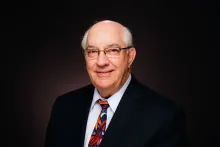
Mitchell Knapp is a graduate of Ambassador College with a BA in Theology. He has served congregations in California and several Midwestern states over the last 50 years and currently serves as the pastor of churches in Omaha, Nebraska, and Des Moines, Iowa. He and his wife, Linda, reside in Omaha, Nebraska.

