

Robin S Webber
This transcript was generated by AI and may contain errors. It is provided to assist those who may not be able to listen to the message.
Well, ten years ago, the United Church of God was established. And there is every reason to understand why it, along with so many congregations at that time, were established in the spring of the year, surrounding the festivals of God. Come with me, if you would, and let's go back and rehearse what those times were like and what was going on. It was a time of personal exodus from a flawed spiritual society. It's interesting, when you mention the word exodus, to define exodus, that literally means departure, a going, and or a way out. And the exodus, as we read in Scripture in the book of Exodus, and that which follows the book of Exodus, is actually revolving around the theme of redemption and or to make good on covenant promises that a sovereign God would give a covenant people. Well, then and now, God promises the covenant people, whether it be in the book of Exodus of old or whether it be in our journey with God in this day and age, God said that He would never leave us nor forsake us. He promised that. And we said to God, in turn, that we would allow Him to write His law in our hearts and in our minds. And that is a great reason why the United Church of God here in Redlands, as well as around the world, was established.
Because you and I do believe that God's precious laws are simply that. They are precious because they are eternal in scope, and they are not subject to the passing whim or theological fancy of human beings or theologians. Let's go back 10 years and let's consider what was happening at that time. And let's understand what was happening in our life. You and I anchored our decisions based upon God's God-breathed truth as found in Romans 7. Would you join me? Because, as always, in a Church of God service, we want to anchor what we are saying directly from the Bible itself.
Romans 7. Join me if you would. In Romans 7 and beginning in verse 12.
In Romans 7 and verse 12, let's notice what God says to the apostle Paul.
Therefore, the law is holy, and the commandment holy, and just, and good. Remember when we first learned that, whenever we first became acquainted about this way of life, that the law was not just simply bondage or some relic that was put back in the sands and the dust of Sinai, but it was real, it was alive, it was relevant, it could be dynamic in the life of an individual. The law is holy, and the commandment holy, and just, and good. And then we go down to verse 14. For we know that the law is spiritual.
The law is spiritual. It is not just simply an engraving on a stone. It was not just simply the writing of Silas on Papyrus of Old. There's a spiritual, eternal, ageless element to God, the same God that gave Moses that message long ago, the one that was known as the Word, who is the same yesterday, today, and forever. Remember ten years ago, and remember how we had to re-codify that in our mind to anchor the decisions that we were going to make.
That time of decision for many, ten years ago, came surrounding the understanding of a new covenant Christian's obligation and responsibility to embrace and to observe the Seventh-day Sabbath, and also the annual festivals of God. The same festivals that we find throughout Scripture, the festivals that Jesus observed, the festivals that the apostles observed, the weekly Sabbath that is mentioned in Isaiah, that is prophesied to be observed during the time of the millennium. It is with that understanding of the ageless wonder of the Sabbath and these holy days that you and I found purpose and energy to make a decision to step away from something that had been very, very precious to us, that we had been a part of for perhaps three years, 30 years, with all of our memories, with all of our friends, with our whole life scrapbook, in a sense, embedded in that organization.
And to step away, though, to something that was more precious. And I presume that's why you're here today, because there's something precious. There's something that you desire, and what is that? Your personal relationship with God. And you recognize that when it's all said and done, when the cows come home, the chickens come home to roost, and the dogs blind there by the hearth, there is nothing more important in life than your personal relationship with God Almighty and Jesus Christ. And because that was being tampered with by, as Mr. Daley said, Harris, see, call it for what it is. We knew we couldn't stay where we were. We didn't know what the future held, but we knew that we had to move forward. Let's go back again 10 years. Let's think of where we were. There were storms of doctrinal heresy. There were attacks on personality, myself included. There were family breakups swirling all around us.
Some of that is still painful. Some of that time heals. But we came to recognize with the doctrinal heresy, with the different attacks, with the family breakups, with everything that just seemed to be like in a whirl and a twirl and everything happening, that God was not in the earthquake. He was not in the fire and He was not in the wind. But He was in a still small voice within us that said we had to do something new, something that we thought that we would never have to do again.
And that was to be a part of an exodus, because that still small voice said two things to us. I'm not true with you and I'm not done doing my work. What were those two voices? What were those two messages of the still small voice? I'm not true with you and I'm not done doing the work. And so in 1995, God continued to make good on that promise, the promise from Hebrews that He says, I will never leave you, neither will I forsake you.
And He made good on that and we began a congregation here in Southern California. And from that humble beginning, the United Church of God has emerged. People of like mind, people of like heart, they wanted to assemble. They wanted to be a part of a congregation where there was, remember, doctrinal clarity.
Doctrinal clarity. That you really knew what the minister believed. You knew that the minister was reading from God's Word. And you knew that you could go home with your kids that afternoon and know that what the minister said and what the Bible says and what you believe in were all three in one. That was difficult for many, many years. As you remember, let's go back for a moment so that we can recall what a blessing it is today to meet together in a church where God's Word is before us.
We take God at His Word and we believe it. There is also beyond that the desire to have a new way of relating to one another, of being together, of loving one another. And God willing, we once again proclaim the coming Kingdom of God. In April of that year, as I recall, I believe it was April early May, an assembly of ministers had come together back in Indianapolis. Mr. Daley alluded to that.
There were three things that came out of that assembly of ministers at that time. Number one was to set up congregations for God's people wherever we could find them or wherever they called. Number two, that we would establish festival sites wherever there was a need. And number three, interesting, that we would establish youth camps.
Now, that's very interesting. The first two you understand. The third is kind of, oh, it's an established youth camp. Those were the three mandates that came out of the Indianapolis Conference because we very much wanted to project this way of life to the next generation. And we felt it was important for our young people, with all that they had been through the previous 10 years, that we really wanted to get them together in a safe harbor, a safe home.
To be with people of like mind, like heart. They have instructors that they could have confidence in. And you know what? Ten years down the line, we are still doing that. We are providing services around the world wherever we can, wherever we're able. We're continuing to establish face sites. And two weeks from now, we begin the camp season for our young people. Right here, right here in Redlands, we have seven campers going to camp this year, right out of Redlands. So that continues, and that persists. This Redlands congregation was established in June of 1995.
June 10th, I believe, as Mr. Daley said. We met at the SDA facility just about three miles from here over on Brookside. I always liked that street. That's a pretty section of town. Not that I don't like Worn's Clothes, but Redlands is a beautiful city. And we met there. Bob Carl gave the first message. The way that I remember it, the message that I remember giving, I was listening to Carl's title, and it always just shows two people, three perspectives.
I believe, in a sense, what I thought I was giving was being open to the will of God, being open to the will of God, because we really did, at that time, have to be open to the will of God, because it wasn't completely paramount at that time. And I used the example of, I believe, Peter and Cornelius, and what God was doing with them, and sending them in directions that they never thought they would go.
I'm still learning that lesson, by the way, about being open to God. I hope you are, too. Since that June of 1995, we have had people come, and we have had people go in our midst. That's just life. It's always easier to say hello than to say goodbye, and we'll have more hellos, and we'll have more goodbyes, but that's just life in the church, and that's life in general. We've had baptisms, we've had weddings, we've had births, we've had socials. We have prayed, and we have tended to the sick, and we have also, as a congregation, had to learn to accept God's will when He allows people to die in our midst that we love and have loved us.
We've had two pastors, two different personalities, but with a common goal to preach the truth and to love the brethren. What I want to share with you, before I go any further in this message, is simply this. Each of you, and some who have died, and some who are no longer with us, each of you has been indispensable in making Redlands what it is.
Mr. Daley made a comment about how Redlands is well known for its love for people. I remember years ago, when Susan and I would come, when there were so many challenges that were happening in our startup, and we'd be driving down the tin, and we'd always talk about, we need to go out and get some vitamin R.
That means vitamin Redlands. We needed a good dose of what you brethren had. We needed the love, we needed the camaraderie. We needed the encouragement, because so much was going on.
And Susan and I, for two, I was going to say for one, but we come to, is that we have always appreciated the deep level and wave of encouragement that have come from all of you. I know I can speak for Mr. Register, as well, that he did, as well. You have something special to give. Why is that? Because if you'll join me in 1 Corinthians 12 and verse 20, in 1 Corinthians 12 and verse 20, let's remember that a congregation may be, in that sense, pastor-led, but there's a whole lot more to the congregation than just simply a pastor. In 1 Corinthians 12 and in verse 20.
But now, indeed, there are many numbers, and yet, one body. Now, in a sense, this can define the overall body of Christ, but let's bring the analogy down to our congregation as a body, that in this body, there's more than just Robin Weber, or the elders, or the deacons, or the deaconesses. It takes the entire body. Never underestimate your individual touch on this congregation when you come Sabbath by Sabbath. Sometimes we can be like that famous gentleman out of the movie, It's a Wonderful Life, and I'm trying to remember his name. Who's Jimmy Stewart playing in It's Wonderful Life, Susie? Barkley? Pardon?
George Bailey. And remember, he just didn't even really recognize his contribution or his impact on life until, in that sense, he was taken back by Clarence, the angel who was trying to earn his wings, and he really saw what life would be like without him being there. And I'm just mentioning that to each and every one of you. I hope you're listening to me. You are a part of an overall mosaic in our congregation. You take that pile of your face, your personality, your love, your concern, your prayers, your phone calls, as much as how small you might think that is, maybe you have the reverse problem, you think it's bigger than everything, I'm not sure, but most of us kind of sometimes think that, you know, nobody just really knows. Never underestimate how much you are loved, how much you are contributing, and this congregation is no more or no less than every part of the whole that you make up. And I wanted to convey that to you.
Today, beyond Redlands, an organization has emerged. The United Church of God, International Association, 300 congregations. We publish the good news, world news and prophecy, vertical thoughts, Bible study courses, over 30 booklets, etc., etc. We have feasts around the world, youth camps around the world, ambassador Bible centers. A lot has happened over the last 10 years. The point that I make about this is to remember something very specific if you are new to the United Church of God, Redlands. The United Church of God, Redlands, is a part of something bigger than itself, and that is a very important thing that we need to recognize. We are a part of something that is bigger than ourselves. Now, when I say that, and I mention the United Church of God, in worldly terms, we're not very big. The United Church of God is not a big organization, but it's not the size of the organization, it's the size of the God, the size of the truth, the size of the vision that empowers us to move forward week by week, day by day, and year by year.
And that's something to understand. Now, as I go back 10 years, and we've kind of just done a thumbnail scratch along with Mr. Daley, what's the bottom line? What can I say after 10 years, and I think you could join me in saying this? God has been merciful. He's merciful.
When I think back 10 years ago, and thinking of the condition of myself, our people, the previous organization, our new organization, all that could have gone wrong, frankly, brethren. And to think of everything that has in so many ways gone right. I didn't say perfectly, but right. God has been very, very good to us. And you, as well, have striven to do his work to preach the gospel, to prepare a people. But now, allow me to take you beyond a sketch of 10 years, because the title of this message is 10 years and moving forward. 10 years and moving forward. Because, well, I want to talk about now is simply this, that what have we learned? What lessons have we learned over these past 10 years? Not 1995, but since. That we'll ensure that we will still be serving God 10 years from now. I'm not narrow as concerned about the last 10 years and the next 10 years.
Because I've lived the last 10 years. As we say, been there, done that. But in doing that, what have we learned that we can but truly approach the next 10 years? For as a person, as a people, as an organization, we must build on our successes and we must understand our failures, so that we can succeed in the future. So, with all of this data, allow me to share with you what I have come to learn over the last 10 years. This is not just my personal, spiritual diary, but I hope it can be a springboard in your mind and in your heart for you to really think. Maybe to take an assessment. You go home, maybe this evening, or I won't have much type. I'm a double Sabbath. We're pretty much on the run. But take a measure of yourself. Take a measure of where you've been. What lessons have I learned? So often we can look and we can talk about the previous organization or we can talk about other people and what they've done or not done. I think what God is really concerned about is what are we doing and what will we do and what have we learned.
So, my goal is not simply to look back. If we only look back, we will not be able to move forward. Allow me to share just some brief points. I don't know how many I'll give you. I'll look at that clock. Don't you look that'll make me feel bad. I'll keep on looking at the clock. We'll probably end about three o'clock here. So, allow me to share some of the thoughts that I can share with you. Point number one, simply this, friends. God's grace is greater than I once knew. God's grace is greater than I once knew. It's increasingly sunk into my mind and my heart that it's not what I knew or when I knew it or what I knew when I knew about the dynamics of false teaching versus godly teaching. Oftentimes, we can go back and we've had conversations with people and we'll start talking. We'll say, well, I knew it was then or I knew it was this or I knew it was this or I knew it was this or I knew it was this. I had a very unique position of being in the middle of passing at the time and an association with people that were making many of those changes. So, in that sense, I could say I know this or I knew this, but I've come 10 years down to recognize, frankly, brethren, it was not about me. And I can hope you can say it wasn't about you, but it was about God and what He was doing with you. Like I said over the years, I've heard so often people tell what I call their story, kind of what we call the war stories. Kind of, do you remember when? Were you there? This is what I did. I knew this, I knew this, I knew this, and I knew that. Basically, what they're saying, I was right, they were wrong.
But what I've really come to understand, brethren, a lesson that I'm learning is that it was God's story, a perfect intervention and timing in my life. And I hope that you can give God the same credit, that it was His intervention, and it was His rescue in your life and my life. Oh, yes, we had a part, we had to respond, but it really was about God. Why do I say that, friend? May I tell you, you want to know.
Far better people, and more able people than myself, have succumbed to heresy.
People that I went to high school with, people that I went to college with, my college professors, people that I worked with at headquarters, people that worked for me that, frankly, at times were brighter than I was. So, I have to come back and say to myself, Rob, when I say to myself, it's not about me. It's about what God is doing. It's not about me being a good person, the right person, or leaving at the right time, or that I'm in even the right organization today.
It's about a good God that loved me, that loved us, and had mercy, and uses us still in spite of ourselves. How can I say that? What scriptural reference can I give you? First Corinthians, join me, please. In First Corinthians 15 and verse 9, Paul's speaking about himself and how God worked with him. For I am the least of the apostles, who have not worthy to be called an apostle, because I persecuted the church. But by the grace of God, notice, but by the grace of God, I am what I am. Paul didn't say that it's because I was a Hebrew of the Hebrews, I was of the tribe of Benjamin, I was from Tarsus, I was a Roman citizen, I can speak Greek, I can talk a little Latin, I can do this and I can do that. He said, notice, by the grace of God, I am what I am. I believe, brethren, when I see this, ten years down the line, I am here because of what God has done, and it is by His grace toward me. And hopefully, as Paul says here, and I hope that you can say the same thing, it wasn't in vain. God didn't create an Exodus ten years ago in vain, but that we are learning, and as Mr. Daley said, growing in the grace and the knowledge that we need. What I come away with, as I think about the last ten years and looking into the next ten years, as your pastor, as in a sense the spiritual lead of this congregation, is that we want to stay, brethren, on a platform and a foundation of humility. We want to stay on a platform and a foundation of humility. Why do I say this? Humility is the ground floor of Christ living in us.
God cannot use pride, no matter how big, but He can use humility no matter how small. And that is why then we have to have a proper estimation of God's grace in our life. And that indeed it was greater than I even imagined as we were all about the work of God at that time, myself as a shepherd, as a minister, as a pastor, doing this and doing that. But there's only so much humanly that you can do either to thwart heresy or to start an organization. And it's not by our might. It's not by our power, but as it says by my spirit, says the Eternal.
I believe that God can use people that understand His grace. What is God's grace?
Because so often I like to mention it. I like to talk about it. God's grace, brethren, is God's unmerited pardon. But it's more than just simply God's unmerited, undeserved pardon in that sense.
Grace is also God's immeasurable favor towards us, for all of His reasons that we don't even always understand to begin with, but that we can mature and grow in understanding.
It's God's immeasurable favor. It's as if we are literally the apple of His eye. We are the target of His intentions. And it should be our beginning and it should be our end. Join me if you would in 2 Peter. In 2 Peter, the second chapter, and let's look at verse 1. 1. Simon Peter, a bondservant and apostle of Jesus Christ, to those who have obtained like precious faith with us by the righteousness of our God and our Savior, Jesus Christ. And then notice what is mentioned in right the very beginning.
Grace and peace be multiplied to you in the knowledge of God and of Jesus our Lord.
So, it is the very foundation, not only of this writing of Peter, but almost the entirety of all the epistles, that the ground floor is about God's grace, His immeasurable favor and focus towards our being into His purpose. Come with me to the end of 2 Peter.
3. Verse 17, You therefore, beloved, since you know this beforehand, beware lest you also shall fall from your steadfastness, being led with the error of the wicked. But now notice, as Mr. Daly mentioned, but grow in what? In the grace and the knowledge of our Lord and Savior, Jesus Christ, to Him be the glory both now and forever. Amen.
Grow in the grace. Notice how Peter, under the inspiration of the Spirit, writes this epistle. It begins with God's grace, and it ends with God's grace. It's about God's story.
And you and I, by His, again, immeasurable favor, are put into that story to do what?
To write a verse. To make a contribution. How important is it to understand that it was by God's grace that we were delivered 10 years ago? Harken to Exodus 20. I think we're talking about the book of Exodus today. Exodus 20. And let's look at the very first commandment. Because this is something that God gets a little jealous about, not only with the people of old that were under covenant, but even new covenant Christians. In Exodus 20 and verse 1, the very first commandment, and God spoke all these words, saying, I am the Lord your God. And then notice what He says, because this is the entirety of the first commandment, who brought you out of the land of Egypt and out of the house of bondage. It wasn't Moses. Oh yeah, he'd had training as Rameshoy Kinkari, battling the Ethiopians down there to the south. Oh yeah, he'd had lots of experience shepherding, and God could use all of that. That would be an instrument. That would be a tool. But God never let go. Notice right here of who the great rescuer is. Not about being right. It's not about being good, because all right, all good, basically goes when it's all said and done, one foot forward and six feet down. And it ends. Why do I mention to you this about that I have come to understand how great God's grace is? Mission as an organization can only be predicated on humility and understanding and acknowledging God's grace. That's what I've learned over the last 10 years. What have you learned? Point number two, God's timing is different than mine.
God's timing is different than mine. Ten years ago can seem like a long time ago, and sometimes it can seem just like yesterday. We've been through a lot. When I say 10 years ago, the United Church of God started. Yes, it did here in Redlands. But we've got to understand that 10 years before that, in 1995, there was a long-term doctrinal meltdown. So really, when you think about all of the energy that has been expended, our focus, our prayers, our fasting, our thoughts, our discussions, we've been through, if I can put it this way, through a pretty long ride for 20 years when you think about it. One was to thwart the efforts of one organization, and the other was to, with God's help, begin and start an organization that would be pleasing to Him.
There's been a lot of ups and downs. And at times, whether as a congregation, as a person, as an organization, we can seemingly bog it down. We can get caught in time. I know that a lot of us would just love to, in a sense, just see things multiply 10-fold, 20-fold, 40-fold.
I know that we would love to see the Good News magazine have a million circulation, or world news and prophecy being handed out on every corner, or every youth in America receiving vertical fraud, or that we would double the size of the congregation every week like they did in Jerusalem. And we want these things to happen. And we like them to have happened as of when? Yesterday. Because tomorrow's not good enough. And we can, in a sense, become a little bit like the old proverbial teapot. Don't sit and watch a teapot come to boil, because it will seem like forever. I think what happens is we forget, as we go through the moment, the events, and the year, years, that they're not an end to themselves. And we need to recognize that sometimes we have to look at how God deals with things. And His timing is not our timing. Let's remember again as to refresh ourselves. Come with me to Isaiah 57. Isaiah 57 and verse 15. To remember what kind of a God we worship and how He looks at time. In Isaiah 57 and 15. For thus does the high and the lofty one who inhabit eternity and whose name is holy. I do all in the high and the holy place. God inhabits eternity, so He's not caught in minutes, moments, months, years, a decade.
He's got a long-term plan, and that plan is bringing many sons to glory, but it's going to be in His time and His way and in His day. Sometimes you and I, we can stare at circumstances with our momentary eyes.
God focuses on solutions with His eternal eyes. We want to focus on results here and now, because in one—can I share something, especially with a group of Americans? Just by our general nature, we are result-oriented. We want everything right now. God does not focus necessarily on results now. His entire focus is on salvation, salvation into an ageless kingdom.
And so, in a sense, what I'm trying to share with you is that sometimes we can see things happening or not happening, and we can become discouraged, thinking that somehow God is on schiesta or gone off on vacation rather than recognizing He's doing exactly what He needs to do. He knows how to bring many sons to glory. He doesn't need our help, but He desires our help, and we need to understand what He thinks and what He's coming to. I know that there are people sometimes that give up. They get tired. They grow weary of well-doing. They sometimes think that, well, I'll just go and do my own thing. We need to be careful, brethren, that we don't focus just on our story.
Or the Church of God. It's kind of interesting, but I can put it this way. If you want to look up here for a moment, don't have my whiteboard out. I should have had it up. You know, we're looking at right now, we're talking about 10 years. 10 years is like this, the United Church of God, Redlands. That's encapsulated within 70 to 80 years of Church of God experience.
Then we come out to here. This is like 2,000 years of Church experience back to the Pentecost.
So, we kind of get all into this. We get into our world, and then the world of the Church of God, and then the world of the body of Christ from the time of the Pentecost. We're here, and God is operating eternity. Eternity is basically an arrow going this way and an arrow going that way, and these two arrows never meet. They just keep on going. But we get all caught up right here, wondering whether or not God knows what He's doing and when and how He's going to do it.
What I've come to understand is that God's time is different than my time. And there's a reason, because He says in James 1 and verse 3, let patience have its perfect work.
Putting patience with an American is probably the worst thing that you can do.
Because as Americans, we are not patient as people. And yet, that's what I've learned. Point number three. Point number three. I read God's Word differently today than yesterday. I read God's Word differently today than yesterday. I read God's Word a little deeper, much wider than I did ten years ago, and I hope you do too. I look for the beginning of the story rather than the beginning of my thoughts on a given Scripture. Context means the entire Bible. I remember as a young boy going to church with my folks, and I remember I was so excited learning from David John Hill or Mr. Coons at the time. They were teaching us about context.
And context was, they'd say, well, just don't look at the Scripture. Look at the Scripture in front and look at the Scripture behind. I thought, no, there's context. I was really excited. But I've really come to understand over the years that context begins in Genesis 1 and verse 1, the Revelation 22. That is the context of the Bible, and that's how to understand the Bible, not just the Scripture before and the Scripture after. Further than that, I read to hear what God has to say about Himself before I tune in to hear what man thinks God is telling me.
I take the Bible straight up like a good drink, straight up, take it straight on. I try to allow the Bible to read me rather than me read my thoughts into the Bible. I've come to understand over the last ten years while lying upon line, precept upon precepts. Here little and there little has a place in my search for truth. My basic approach has come to appreciate God's Word as one continuous revelation from cover to cover. One continuous revelation.
I approach it systematically from Genesis to Revelation. And I think when you read the material by the United Church of God, and I presume to a degree that is why you hear, that is what our authors do. That is what our writers strive to do more than ever.
It is not to equate the Bible to simply being a jigsaw puzzle of here little and there little. Yes, there is revelation, and there is the working of the Spirit to put Scriptures together that are hidden from the world. But more than ever, when you read our major books, it is basically a very systematic approach to any given subject from Genesis to Revelation. May I tell you something, brethren? That is good. And that is a good way of reading the Bible.
I look at the Bible as being an unfolding tapestry rather than a shattered mosaic that I have to piece together. As I look at the Bible systematically, as I understand that the Gospel is basically from Genesis 1.26 on, as I look at everything between both covers, I have found that it keeps me honest before God, keeps me honest with myself, and I think as the communicator of God's Gospel, it keeps me honest with my audience.
Come to understand that the Bible isn't simply a telescope or a mirror or a microscope on a synthic world, but most importantly, it is a mirror to my imperfect soul before a perfect God. But when I read the entire Bible, even some of those tough Scriptures where God digs deep like He says in Hebrews 4, where He says that the Word of God just goes very, very deep and is a discerner of the thoughts and brings everything to the fore. And sometimes those verses can just hit us and quicken us and make us think, hopefully to repent.
When you read that tapestry of God's Word, the one thing that more than ever that I have come to understand about the Bible, and I hope that's what you've come to understand, is that it's the greatest story, love story ever told. And that no matter what I have done, no matter what I've been a part of, that God's great love is basically pointed to when it's all said and done by every Scripture. Point number four. Now while I'm reading this, I know my list can be different than your list. I remember having been in the Church of God for 40 years that I have probably heard at least seven sermons on three reasons why David was a man after God's own heart. Have you ever heard those? I have. And you know, there just aren't three reasons. When you get it all done, it's like 21 reasons. It wasn't like one guy gave three reasons and the other person's reasons weren't good, but it's the way that we approach something and what we've taken and what we've learned.
So please, I understand that you might have learned something else. This is what I've learned. Maybe you've learned this. I'll look forward to talking to you during the break and hear what you've learned. Point number four. The body of Christ is very real and bigger than I ever imagined. The body of Christ is very, very real and bigger than I ever imagined.
Listen, remember, brethren, that the body of Christ is a spiritual organism, not a physical organization. Its head is Jesus Christ, not man. Its lifeblood is Jesus Christ's sacrifice, not financial donations. Its working energy is the Spirit of God, and not anyone's organizations just simply well thought out plans, as well as those plans might be thought out.
The membership of the body of Christ? Well, it's everywhere. And I've just come to believe that God knows who are His. I also realize that as a Christian, we have to be willing to meet them wherever they might be, for it's not our job to choose God's family, but it's our job to accept them. It's on 4 in verse 24. It's running me if you would there for a moment. I'm going to read this today and tomorrow. For those of you that are coming to Anaheim tomorrow in the afternoon, it will be a different sermon, but I'll probably use a couple verses that are the same. John 4 in verse 24. God is Spirit, and those who worship Him must worship Him in Spirit and in truth.
One of our greatest common touchstones for starting this organization, and I hope that you'll hear me on this, brethren, for starting this organization 10 years ago, is that there is simply not just one organization that God is working through. And that was very difficult for a lot of people to work through at that time, when we had basically to the degree, whether it was said by word or by inference, that there was only one organization and one church. And for that very reason, there are many, many people that remained in that organization. You know it and I know it because of that belief that basically went down into the quick stand of heresy. Stayed there too long because they didn't think they had a theological reason to leave.
I came to that understanding, you came to that understanding, but that understanding must not go away, brethren. The body of Christ is a spiritual organization.
Organism, and God can use many tools. I'm very glad to be a part of this tool. I'm very glad to be a part of the United Church of God. I'm one of the founding ministers of the United Church of God. I believe in it, but I also believe that God has a work, God has a spiritual organism that He calls the body of Christ. Let's remember very importantly, I know in those hours and days that I was having to make my decision, because it would not only be a personal decision for me 10 years ago, but the many that had either respected me or known me or read from me or been in my congregation.
As a pastor and as a minister, I don't live a life alone, but I'm responsible for myself.
But then I also think of the others, and I had to come to a point of saying, okay, I know this is wrong. I know this is not proper teaching. I know I can't remain here, but I know what I've heard for so long, what so many people were taught, what so many parents taught their children. Remember this? Don't ever leave the church. Anybody ever heard that or am I the only one? Okay, right audience. Okay, just making sure I'm not talking to a bunch of Baptists out here today. Okay, right audience. And so, we had to think about that, and I had to take it right back to when I was baptized. I see Henry Baxter smiling. He was just baptized here, and we talked about it. That our very baptismal creed that every member of the radio church of God and the worldwide church of God experience goes like this. I therefore baptize you, not into any church, sect, creed, and or denomination. John Bald knows this one very well. But I baptize you into the name of the Father and of the Son and of the Holy Spirit for what? For the remission of your sins. Right there was my answer. Once I thought that through about 3 a.m. in the morning—now, you know what I'm doing at 3 a.m. in the morning, right? Anyway, once I thought that through at 3 a.m. in the morning, that was it. That was my answer. There was no going back. There was only moving forward. I recognized that my first and prime married relationship was with God above.
He was my father. I was his child. His son had died for me, not for an organization.
My allegiance was to him. I remember what Paul said, follow me as I follow Christ. I'm sure all of us had those thoughts, but it's kind of interesting to go back and to be able to think it through. What I'm saying is this, brethren, we can't just leave that to 10 years ago.
As we think of a big God with a great body of believers, many of who are in the United Church of God, some that could be in the Living Church of God, others that could be in this church of God or that church of God—there are only so many churches of God I would need to roll a desk.
There are those that wear white robes in many, many places, in organizations that maybe I've never heard of. Brethren, that's God's business. God has made it our business to be here. He put us here to do a job. We have a role here. But let's never forget that the body of Christ and that thought and that reality cannot just simply be something that would tuck away in our pocket. It must be a major part of our belief system that you and I are a part of something bigger than even of what we see. Point number five. I've come to learn—I'll finish on this one. Sorry, 302, so I'm going to skip a couple points. But I'm going to conclude with this one because I think it's important. I think if I can put it this way, it is the Christlike difference, and I hope it's the United Difference. I've come to learn the need to respect God's Spirit in every person.
I've come to learn more than ever the need to respect God's Spirit in every person.
Ten years ago, the high pyramid of church government was flattened. We were all in the same boat. More than ever, the members needed dedicated ministers to teach them and guide them in the truth that had not been spoken about for ten years. And, brethren, never forget it, and I'll say it as one minister for all. We need it you. We need it you, your encouragement, your steadfastness. Sometimes the members were ahead of the ministry.
And there was a group bonding there between ministry and members that we had not had for so many, many years. There was this flattening. There was this humility. We needed one another. We needed the support. We needed the encouragement. We needed the friendship.
At Indianapolis, we said we needed to grow in respecting God's Holy Spirit in each and every person, because it hadn't always been there. But the events demanded it. Later on, our Council of Elders, after a lot of systematic study, came up with the conclusion, which most of the brethren probably could have come up with on their own. That is simply that, is that we have not always treated one another in a godly manner. Now, that means that all of us, whether we be ministers or members, perhaps have fallen short of that great commandment that Jesus had bespoken about that would identify his followers and believers. That's that. That by this shall men know that you truly are my disciples if you have love one for another. Well, brethren, we're still working on that.
It has been a great goal and role within the ministry of the United Church of God ministry to be true to that. It's been my goal as your pastor twice now to be true to that. I'm not always saying that I live up to it. I'm not always saying that I do it perfectly, but I recognize that we need to respect the Holy Spirit in you as much as it is in us. That doesn't mean that we have simply a priesthood of all believers and there's no role for ministry or pastors or this or that. Give me a favor, everybody. Don't go there. But what I am saying is this. We can respect one another. We need to hear one another out. I need to be a better listener to recognize that, as Paul says, when we have the rule over the brethren, that rule is not the rule of the Gentile. It is not the rule of a general in an army. The rule that was being spoken about there in the New Testament was the kind of rule that a shepherd has over the sheep.
To guide, to protect, to keep together as a flock. And that is what we need to be doing.
And that is our goal. 1 Timothy 5 and verse 1. Let's anchor ourselves with one Scripture. I think this is something that all of us as ministers in the United Church of God are striving to do, learning to do, wanting to do. When we look at the instruction of the pastoral epistles themselves, we are in 1 Timothy 5 and verse 1. If I can find it here. Pardon me.
Paul is speaking to Timothy, and Timothy was not just a teenager. Timothy was probably somewhere between 30 and 40. It's called a neophyte. Neophyte is a Greek term that meant that a man that could still go to war, and that could be up to age 40. So we don't really know, you know, he wasn't just a kid. But Paul, speaking to Timothy, says, says, Do not rebuke an older man, but exhort him as a father. He brings it down to family. And younger men as brothers. He again speaks of the minister acting and reacting to the needs of the brethren in a family way. Older women as mothers, younger women as sisters.
And all that we do in every way with every individual, they call purity.
I've come to learn to hopefully respect God's Holy Spirit in every Christian that I come into contact with. Now, I've got a question for all of you, friends. You can put up your Bibles a moment. I can just talk to you as your pastor. My question is, this is what I have learned.
But my question to you is, what have you learned? And what have you taken and absorbed and learned over the last 10 years? Are you the same person that you were back in 1995? Are you a different person? You might be a different person, but are you a better person? Beyond that, are you a bitter person? And are you a better person? There's a difference between being a bitter person and a better person. There are those that have gone through what you and I have gone through that, on this day, are bitter people. And bitter just does not run well in Christians, does it?
But I think when we recognize some of the lessons that I've shared with you today, I think that can help with some of the bitterness. That can put that over there and give that to God.
And we can grow forward. This is where we've been over the last 10 years, but now those years are gone by. My question is this. Where will you be 10 years from now? I think to the degree that I not only have preached these points to you, but lived these points in me that I've shared with you today, and the points that you've learned and the points that I've shared with you today that you can incorporate and consider in your own walk with God, I would dare say that we'll be seeing one another then in 10 years. We'll still be in the body of Christ. We'll still be growing in grace and knowledge. Brethren, it's been not an easy 10 years, but it's been a good 10 years. And for the conclusion of this sermon then, I simply say, thank God.
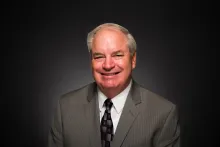
Robin Webber was born in Chicago, Illinois, in 1951, but has lived most of his life in California. He has been a part of the Church of God community since 1963. He attended Ambassador College in Pasadena from 1969-1973. He majored in theology and history.
Mr. Webber's interest remains in the study of history, socio-economics and literature. Over the years, he has offered his services to museums as a docent to share his enthusiasm and passions regarding these areas of expertise.
When time permits, he loves to go mountain biking on nearby ranch land and meet his wife as she hikes toward him.
