

Robin S Webber
This transcript was generated by AI and may contain errors. It is provided to assist those who may not be able to listen to the message.
It's been said that time is like a clock on a ledge in a thunderstorm. It just keeps ticking. So on this Sabbath, I'd like to make some time, and if in any possible way, stop time for a moment and allow all of us to pause and to consider as a congregation as we're about to turn a new chapter. We've had many memories in this building. You have, Susie and I have. I've had the rare privilege and the opportunity to actually pastor twice in this building. The first coming and the second coming. First time in 1998 through 2003, and then coming back four or five years ago at this time. All of us have a lot of memories. Let's go down memory lane for a moment to think of some of the things that have occurred here.
As our dear friend, Joan, mentioned that they were here for us in a time of challenge and in some way things and activities that we thought we would never have to go through and to start. To come into a new congregation, a new church, as it were. To come together and see who would be here.
Some of you were here. Some of you remember those moments. Some of us remember the very first time we became a Queen, it was the truth of God and the church was here. We came a year ago, ten years ago, fifteen years ago, and remember how refreshing it was to be able to hear the whole counsel of God. To be able to open the Bible, cover to cover, and be able to have the wonderful things of God explained to us.
It was quite a time.
We've had marriages that have come down this aisle. Our oldest daughter, Laura Beth, she and Brian were married here right in this building.
We've had prayer requests for healings from this pulpit, from this stage. There are times as church members when we perhaps thought that we had heard it all, that there was something that, boy, that blessing took.
And we heard that scripture, and we had never heard a scripture, we had never heard a principle, we had never heard the answer of God come to us in such a personal way through a message. And it happened right here. Not only what comes from the pulpit, but also perhaps the encouragement and the love, the wisdom that was shared in these aisles between these pews or out in the foyer or even in the din of noise of Wirtz Hall as you got into a serious conversation. And if it weren't serious, maybe you were so serious that you needed to be lightened up and you ran into John Garnett. And he made you smile. Or you ran into a woman, you ran into a teenager, and they made you happy.
There were baptisms that occurred over here behind me to recognize that that was your initiation into the body of Christ. And not only that, but so many supportive brethren came to see it with you and to relive that moment again. It was here in this facility that we were challenged, even when we thought matters were behind us that once again we had to understand whether or not we were going to follow God or follow a man. You know what, friends? This facility has seen a lot of our lives, hasn't it? And it's kind of hard to say goodbye.
But this is only a facility. And we never say goodbye to the one that guides us, leads us, and is the head of this church. Israel had to cross over a river. We don't have it near as bad, we're just crossing a freeway. You like that?
We're just crossing over the two, over to northeast Glendale. But there are still some things, no matter the distance, there are some things to consider. So the title of this message is simply this to our dear friends, Susie's and my family here in Los Angeles. My hometown church, long ago.
And that is the title of this message is the next step in our pilgrimage. The next step in our pilgrimage, because we are not yet there. We are pilgrims. We have been shown through the scriptures. We have been taught and trained over the years that we have not yet reached God's final outcome for us.
There is a destination. There's also a way of traveling. They both have an outcome that is the glory of God and the blessing of other people. And there's that that I would like to speak to this afternoon. Before we go any further, before I take you at the end of this message over to where we're going to be in a couple of weeks, I have a very important question to ask you.
And that is simply, why are we here?
You know, it's very interesting how often in the scriptures of God, God says, remember, go back and remember how I am your deliverer and how I rescued you.
Joan alluded to it. I'd like to dwell on it for a moment. 20 years has come and gone. Some of you that were sitting in front of my wife and I may have only been infants, maybe not even born. A lot was going on 20 or 25 years ago. And it's important to understand that, to understand why we are here today and to understand and appreciate the ongoing vigilance that God wants to have us have towards His holy gospel. I'm reminded in Genesis 12 and verse 1, one of the great scriptures where it says, and of Ram went, and he departed. He's the Father of the faithful and the call of God, the voice of God came to Him. And He left everything behind. He left the Manhattan of His day and journeyed forth into unknown country. Not with a compass, but with the guidance of God. An example for all of us. We're mindful of the example of the disciples. That when Jesus came into their midst, He said, follow Me. And it says that they dropped their nets and they began to follow Him. Oh, they didn't understand the entire story, but they began to understand it. They understood it further as they traveled with the rabbi. We're mindful that those stories are not lost on the Old Testament or even on the early New Testament. Those are things that happened in our lives, in our time, and in God's way on that appointed day when His Spirit began to be working with our minds and began to give us a revelation and began to give us an understanding about the fullness of the Gospel. I remember having grown up in another church. Many of you grew up in other churches when you were younger. And yes, I had a certain understanding about God. I knew that He loved me and I knew that He had given Christ for us. But I didn't understand the work of God. I didn't understand the fullness of the surrender that He demanded of me as an individual. And He began to work with my family's mind. He began to teach us, even as we share today, about this, the fourth commandment. And recognizing that that fourth commandment was a sign between me and Thee for all generations. That it was like a GPS pointing us to the kingdom of peace, pointing us to the time when God would complete not only His physical creation, but His spiritual creation.
And beyond that, if there wasn't a seventh day, He also began to reveal, because when my family first came, we didn't even understand the Holy Days. That was a whole other chapter of learning. With all of those names like un-leavened bread, I had never heard about the un-word until I began to come to church. The point I want to make about all of this for a moment is simply this. Many of our parents, many of our grandparents, many of you were offered that pearl of great price, given a wonderful understanding.
And again, not because of who we are, not because of our intellect, not because of some human gifts that we might have, but because of God's grace, His invitation, His initiative, His involvement. As it says in Romans 8, 14, as many as are led by the Spirit of God, the same are the sons of God.
That something began to happen. And when it began to happen, some of you remember when you opened up that first correspondence course, or you got that first booklet, or you saw something on the page that left out at you that the vicar never turned your light on, wherever you were going to church before. And you said, wow! Wow! And you began sharing it with your families and with your coworkers. Your life was changed. Same call. Same call as to Avram.
Same call as to the disciples. Come. Come and follow Me. I will be your God. You will be My people. I will be your King. And you will live by this Constitution. Not just the parts that are of interest to you, not just the parts that you like, but as we say in Southern California, the whole enchilada. You will be responsible for cover to cover because man shall not live by bread alone, but by every word that proceeds out of the mouth of God.
And so we went for that great Pearl of Price. John was talking today in the Bible class about Luke. I'll just paraphrase it for time, but we realized that there were those that came up against the Son of Man. Some they volunteered following Him, others they said, well, you follow Me. And what happened in that stead was that each of those points out a tremendous lesson to us.
And that is simply the one man. He dealt with the one man. He said, you really want to follow Me? I'm going to point you to the future. The Son of Man does not even have a pillow to lay His head on. He has nothing to put down. This is going to be your future if you follow Me.
The other man that Mr. Garner talked about was the man that had a current dilemma. He had an ailing father. The other individual wanted to go back and visit his friends. One more time to go back into the past to those good old times, to the good old boys. Can I not first go back and visit? And what Jesus Christ was actually saying is, friends, if you're going to follow Me, you're going to have to give up everything. You're going to have to give up your future.
You're going to have to give up what is currently weighing on your heart. And by the way, you can't go back if you're going to follow Me. For any man setting his hand to the plow and looking back is not fit for the kingdom of God. Friends, I think we need to give God glory and credit and honor for the spiritual DNA that He put into our grandparents and our parents and that He put into many of you to hold to the truth. This wonderful pearl of great price that so many of us had to change our culture. For some of you that are young today, it's a little bit easier to do it.
I'm okay, you're okay. Comcee, Comcee, whatever. Moral relativism all around us today. It wasn't that way 40 to 50 or 60 years ago. As some of you and some of your parents and grandparents stepped out from everything they had ever known, just as much as of Rome, and said, I'm going to go for that great pearl of great price. But we also recognize what happened some years ago. We recognize that there were people that no longer wanted to abide by the faith of Christ and keep the commandments.
And it wasn't even a matter of turning the sock of theology inside out. They threw that one away and they wanted to offer the people of God a new sock. A new way of thinking about Scripture. That's why we're here today.
Because all of us, while we may not fully understand the fullness of everything that's in God's Word, what He has revealed to us, we take seriously. We give our life away for it. We love our God. We obey His commandments. That's why we're here. I want to remind and tell some of our young people about that. Remind the recycled teenagers out there. That's why we are here today in the Seventh-day Adventist Church. And thank God Almighty that these folks welcomed us in an incredible time of our life. When we needed encouragement, when we needed comfort. When that was not even being provided by those that we had rubbed shoulders and rubbed hearts with for 20 to 30 to 40 to 50 years. Oh yes, God still brings forth angels in all sorts of forms to give His people comfort. And we need to thank God for that.
All of you that were here and started 20 years ago, I'd like to take you to a verse in 2 Corinthians. Actually, let's go to 2 John for a moment. In 2 John 1. And let's pick up the thought in verse 10. Let's nail this with a scripture. In 2 John 1 in verse 10.
Why are we here? We left our families once, then we had to leave in a sense a church family again. If anyone comes to you and does not bring this doctrine, do not receive Him into your house or greet Him.
God is not tolerant with the way that scripture is read or interpreted. There is the gospel, not a semi-gospel, not a half-gospel, but the whole council, the whole gospel that God wants us to understand, the gospel of Jesus Christ and the kingdom of God. And it is a credit to God's Spirit in all of you that 20 years ago you stood up, you stood tall, not for yourselves, but for you recognized that God had set you on a pilgrimage. And He hadn't changed the rules of the parcheesi game in between. And it is to God's glory and to God's credit that He led you in His will for His purpose. That is why we're here today. By God's grace, not by our intellect, but by God's grace and design, you and I are given the privilege to continue to journey. Why is that and what have you tried to do? Join me if you would in Matthew 16, 18. In Matthew 16, 18.
Fundamental verse. Conversation with the disciples.
God knows what the future is about. And He invites us to share it with Him. Jesus never said that it would be easy, but He did say that it would be worth it. One of the fundamental things that I want to share this very much with our young people that are out there, because it impacted me when I was 12 years old and came into the church.
We came out of a beautiful facility like this. And has this not been a lovely facility, friends? We came out of a beautiful church with carpets and stained glass and gigantic choirs and an organ, like the Sprechle's organ down in Balboa Park, and a pastor that had a voice like Orson Welles. I think that's why my mother wanted to go to that church. But the church, please hear me, because you will be confronted with this in your lifetime. The church is not a building. The church that Jesus is talking about is not even a corporation and or an organization. The church comes from the raw Greek word ecclesia, which means separate at once or call out once. What God is doing through Christ is He's using flesh and blood and hearts that are surrendered to Him to create an edifice. It's called the body of Christ. It's a spiritual organism. Will God use congregations? Yes. Can He use organizations? Absolutely. I understand that. I'm on the board of that organization. But it's only as He guides and directs us that we can be of a benefit to His service. The church is not a building. You are the church. A fundamental thing that is so important to recognize in the history of the church is actually that the church for many, many, many years did not have buildings. They met in houses. They had house churches. You talk about the house of Mary in Jerusalem. Mark's mother. They were smaller facilities. It was only when the historical church began to become tied more and more with Rome. As Rome went down, the church went up and and massed all that Rome had been. And when you think of Rome, what do you think of? You think of edifices. You think of monuments. You think of buildings. Always remember, dear friends, that the church is the people that God has called out. Together, then, they become the body of Christ. The story of Abram weighs heavily on my heart. After 1959, after my brother died, my mother got a hold of a book. And it was called One Man's Destiny. My mother had always been a very spiritual woman. In fact, she is my Sunday school teacher. How spiritual does that get?
That book, One Man's Destiny, about the individual, not the man, the man and or the woman and or the young person, that follows the call of God wherever it is. Not with the masses, not with the crowds, not with the city behind them, but having a fundraiser for their trip away from civilization. But the person that will walk towards God and follow Christ wherever they lead. Dear friends, here in Los Angeles, that's what God allowed to happen once again. As we said, you have given us a pearl of great price. And we will not cash it in for anything at all that you are first and you are foremost. It is with that vision, it is with that background, that we do not cross river, but we cross a freeway to a new location.
Because some things have not changed. The church, as it says in 1 Timothy 3 and verse 15, if you'd like to jot that down. The church, the body of people, the individuals that God is working with and has by His grace, by the opening of our minds and hearts to Him, is the pillar and the ground of truth.
And thus, it is so very important to assemble as the body of Christ on the Sabbath day. You know, there are things sometimes you come to a church and guess what? There's no perfect church, is there? You find one, tell me, I'll join. But, you know, when you think about the story of Christ, it's something that we kind of went through as we're going through this remarkable series on the book of Luke.
Do you ever notice that Christ, as His custom was, on the Sabbath, never missed, quote-unquote, synagogue and or church? And He did not always necessarily agree with every dotting of the I or the crossing of the T of that church community. But He recognized the response to worship and to be with people of shared history and shared doctrine and moving in some way towards like mind and like heart. He set us the example.
We have that example and we've had this wonderful facility that we've been in all these years. I want to share the vision statement of God because as we move facilities, we don't change God's. We don't change truth. We don't change Scripture. That great shepherd of the flock has opened up a wonderful home for all of us.
I want to talk about it for a few minutes in our meeting. I have always had the confidence in my life that God knows exactly what we need. I remember when Susan and I were looking for a home out in Riverside County that I would often say that God already knows where we're going to be. We just have to meet Him there. When this came up right before the feast, because we'd already lost two weeks of time, I knew exactly that God knew that He had a home for us.
And He was already there. We just had to find it and meet Him there. You see, Christians are optimistic, aren't they, friends? Have you ever thought about that? When you have a religion where the head of the church died and was put in the tomb and the stone was rolled away, how can we then not be optimistic as the people, knowing that God in His way and in His time, sometimes it's not three days and three nights, so He'll push us right to the Red Sea, but that He will make a way. Christians, by spiritual nature, are optimist. Optimist. And that's why I've appreciated the optimism of our congregation as we've gone through this transition.
The optimism of our team. I could name some names. I don't mean to embarrass them. I mean, people that just got out on their own. I didn't even ask them, and they started looking for a facility for us. It's been a wonderful transition. What do we go for then? What do we go for? I want to give you God's vision statement. I've got three vision statements I'm going to share with you. What is God's vision statement? Sometimes in the letters that I write to the church abroad, I talk about our vision statement and or our mission statement.
I'm going to read those in a moment. What I thought together this morning, what is God's vision statement? What is he about? I'd like to share it with you. It's not long. This is God's vision statement. Basically comes right out of Jeremiah and throughout. Simply this, I will put my law in their hearts and minds, and I will be their God, and they shall be my people. That's the vision that we move forward as we don't cross the sea or go over a river, but cross a freeway.
That's the vision that myself as your pastor and our elders and our speakers are going to continue to foster and to plant in our hearts and in our minds. That is what we are bound by, what God clearly states here. He also states, not only in Jeremiah 31, but in 1 Peter 1, 16, Be holy as I am holy. Be holy as I am holy. That's what our fellowship together in the spirit and the truth that is combined with that spirit is about. It's not just about being a fellowship combine. It's not about just simply being a social circus. It's not just simply activity for activity's sake to get everybody busy.
We are in the life-changing, dead, serious calling of being holy as God is holy. Why do I say dead serious? Because to allow God to live in us, to have Christ live in us, we must die. For Him to live in us, we must, in a sense, die.
That we might be holy as He is holy. That moves beyond simply understanding. That moves simply beyond teaching. That moves beyond simply being able to recite the Old Testament long form, like some of you grew up with. It's more than knowing the rolodex of history and how it's going to pan out and how it's going to roll out. It's something that is inside of us. A burning desire to allow God's activity in us to manifest itself by the life of Christ in us and to be holy as He is holy. Friends, I just kind of want to let you know where we're going because that's what I'm going to focus on.
If you want to hear that kind of a message, you come across the street in about three weeks because that's what I'm going to preach. That's what I'm going to teach. That's why I was given breath. That's why I was given life. Not to talk about myself, but to point up and to recognize that all the answers come from above. One of the reasons why we are what we are today is because the vision statement that I like to read from the United Church of God, which again is biblically based, were a church that is led by God's Holy Spirit, joined and knit together by what every member supplies, even when everybody's piling in a trash can looking for a key.
We do it together with all doing their share and growing in love, not only growing in knowledge. Knowledge goes to the grave. Gnosis alone is like bubble gum. It makes your face go up and down, but it doesn't fill your tummy. This is the goal, to grow in love and to fulfill God's great purpose for humanity, to bring many children to glory. Ephesians 4, 16, Hebrews 2, 10. Beyond that, one of the reasons why many of you showed up at this facility 20 years ago, and or where you were at that time, perhaps in the United States or around the world, we recognized, as we had heard so often across the Arroyo, that we have not simply been called for personal salvation.
Have we been called for personal salvation? Absolutely. I have been called, and so have you, individually wrapped, for personal salvation, but not alone. God calls us individually. Absolutely. The call comes to us individually. The acceptance of that call comes individually.
Many of you were baptized behind me individually. We have to repent individually, and in the end, we will come before God on that day of judgment individually.
There are things that we have to just simply do alone. That's God's plan. He doesn't have grandchildren. He has children, direct.
But then He plants us into community. He plants us into the body of Christ.
But we cannot effectively, in that sense, serve the body of Christ until we deal with ourselves and our issues.
Sometimes people move towards community as a safety valve or an island that they can get to rather than ever facing themselves and what they're about and what their issues are.
And if we do not deal with ourselves, with our God individually, we cannot really serve the community at large, effectively.
You may fall into that category. I believe, and we've talked about that at times, that during the 1960s, when many people were attracted to this way of life, unfortunately, too many of them were fleeing the wrath to come.
Trying to get on a safe island rather than facing themselves and their issues and coming to terms with their God.
So they fled to community. And community is wonderful. God has all, you know, God in His mind sets up the lessons of being alone in community at the same time, but He wants us to confront ourselves and face ourselves so that we can serve others.
So that we can serve the greater community here as a witness.
It's time that we consider the homework and the heart work that is yet unfinished that we're going to have to do over in Glendale.
But we had this thought of not only personal salvation, but to help.
And so therefore, what you are a part of here in the United Church of God Los Angeles, the mission of the Church of God is to preach the Gospel of Jesus Christ and the Kingdom of God.
The Kingdom of God is not just simply a destination, it's a way of traveling. And that is about the good news of Christ's life and death and resurrection.
And as Paul says, that He literally dwells inside of us today as a companion.
So that's where we're going. I want to share something with you. We're going to wrap up here in about five minutes. I always remember the movie Dead Poet Society. Robin Williams. How many of you have seen that? Good.
And remember it's the boarding school and everybody's in their little blazer outfit and whatever.
And then he comes in as only Robin Williams can do. And he's not a clown in this movie, but you know it's Robin Williams. And he wants those kids to break out of it. They've just been, you know, their fathers did it this way, their grandfathers did it this way, their great-grandfathers did it that way.
And so he says, I'll tell you what I want you to do. Y'all get up and I want you to stand on your chairs. I want you to stand on your chairs.
Well, Robin Williams does this. And here's this classroom of these little preppy-looking kids with their blazers on.
And they're all standing on the chair. He says, look and see! It's a brand new world. It's a different perspective. Look around. It doesn't look the same.
And of course, right at that time, the headmaster of the entire school walks in. And of course, Robin Williams is toast.
But the point is that God oftentimes moves his people, changes venues.
And I don't mean to make it to the same degree that we see in biblical examples, but we...
Frankly, people have said, a change is good. I know, dear Joan here, she was so sad that we are leaving.
And she said, I'm so sorry this has worked out for her. I said, I am ecstatic.
I am so happy. Please don't take my happiness away. Our congregation needs this change.
We need to be at a different altitude. That different altitude and that different venue may produce an even more godly attitude.
By moving us away from that which is comfortable, that old soft shoe, of always doing it the same way. Going down the same foyer, parking in the same spot. I know where most of you sit in this church.
I mean, I could close my eyes and I could point right over there and there's John Garnett with his arm around Becky.
I peeked before. I know.
When we're over there, we're going to shake it up. We're going to be moving.
Congregation that's moving, getting to know different people in the congregation. That's an old, for those of you that were in the past in the East PM, that was a rule.
Never sit in the same chair twice. Get to know your congregation.
You ever met somebody and say, hi, are you a prospective member? No, I've been here for 15 years.
Change can be good if we allow it to be. I'm just going to cut this short, put my notes away, just make a message here. Some things don't change about our congregation.
Frankly, don't change the way that I pastor and the way I like to lead a congregation.
I'm just one of you. I've just been given an opportunity to be up here.
But my privilege, wherever I have ever been as a pastor, is just simply a three-fold mantra.
And that is that we keep our doors open. We keep our doors open to all that will come in and learn the way of God and worship Him in peace, in harmony, and quiet.
Number two, we open our Bibles. We open our Bibles and continue to be astonished and be in a sense of wonderment of what God's Word tells us that we do not know yet.
We have that same feel of the Bereans who studied the sea of these things were so and talked with one another, knowing that we are not yet there.
Thinking of what Job said in Job 42, that there you've... God, you have so many wonderful councils that I have not even begun to understand.
And so that's why we have our interactive Bible chats. That's why we have our things I'm going to talk about in a few minutes with all of you to recognize that when we go over there as your pastor and with the assistance of our elders and our very fine members, teachers, communicators, and those that come, I want to have a spiritually rich environment.
We're a regional church, and so that when people come in, it will be like a Disneyland of the Bible. That's the other kingdom, John. I'm sorry. We're talking about the other kingdom. No, we're talking about God's kingdom.
That it is going to be where if you want to plumb and explore the Bible, you're going to have every opportunity as a man, as a woman in focused groups, as young adults in focused groups, our youth education in focused groups, and even after services to begin to explore the Bible.
To develop, at least when I am in town, I want to have the message chat with as many that will surround me and speak about the Word of God because they haven't gotten enough.
I really want to make this move the next step of everything that I think God would like to be brought to you as a people. We'll talk about that in a few minutes.
And that wherever we are, that then we have open doors, open Bibles, but the most important thing is open hearts. Open hearts. I think that's the greatest thing that God is yet teaching his people in the Church of God, to expand their horizons, to open their hearts, to allow him to judge, to allow him to see from his sovereign heights, to see things his way, and to allow people then, like what occurred here today, we did not toot our horn. I always remember in the Bachelor of College, he used to have an expression, if you toot your horn, you blow your reward. Always allow others to identify who you are. It's always so much richer. When I heard what our SDA friends said about all of you today, two things. I was like a proud father and I'm just a pastor.
And I think all of you felt, in a sense, a sense of not self-pride, but God-pride. That we have set such an example amongst other people. That they will know that something different was in this room for 20 years, which was the love of God, the Spirit of God, the responsibility of God, and accountability to God, to always create an environment that is harmonious, and that we always leave a facility better than when we found it. That's how I was taught. That's how you were taught. And that's what we're going to bring to the seventh day at Venice Academy.
So, brethren, I just wanted to share a few personal moments with you of where we've been to understand why we are here today.
And what we are today, not because of ourselves, but because of God, and because of Jesus Christ dwelling in us.
And now you and I are going to have an opportunity, yes, not to go across the sea, not to even go across the river. We're going to go across the two. And I'll talk to you about that a little bit. We're going to take, after the Amen, we're going to take about a... let's take a 10-minute break. The comments I have to you are going to go about 10 to 15 minutes, because how many of you actually been there? How many of you have been in the building? How many of you think you really know what's going on on January 2nd? I don't even know what's going on yet. No. So we'll talk for just a few minutes, and Alex, please come forward.
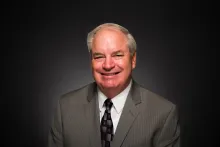
Robin Webber was born in Chicago, Illinois, in 1951, but has lived most of his life in California. He has been a part of the Church of God community since 1963. He attended Ambassador College in Pasadena from 1969-1973. He majored in theology and history.
Mr. Webber's interest remains in the study of history, socio-economics and literature. Over the years, he has offered his services to museums as a docent to share his enthusiasm and passions regarding these areas of expertise.
When time permits, he loves to go mountain biking on nearby ranch land and meet his wife as she hikes toward him.
