
John Elliott
This transcript was generated by AI and may contain errors. It is provided to assist those who may not be able to listen to the message.
A few years ago, the British Commonwealth and the United States of America were cruising along on common paths. They were quite familiar to us, and then Brexit took place. Great Britain decided to separate from Europe, and began to send shockwaves through the economy and began to divide up people and their opinions. Australia was shaken by China, and the trade relationship soured there, and the economy tumbled. We had rogue nations become more and more dominant in their assertion of power, their rights, their wars, and their struggles. Democratic alliances began to fracture as people pulled back, and others began to become less bold in protecting and defending and keeping rogue nations at bay. We saw companies, giant companies, failing. We have seen the United States become abruptly disunited in ways never seen before. Weather events are drier and hotter and stronger and more destructive. We find the economies worldwide are struggling. Some are tanking. Restrictions on freedoms seem to be growing and freedoms eroding in many places. What's with all this disuniting and the prospects of a world now that is looking at a dangerous future? Peace. When do we hear of peace? What exactly is peace? Where is peace these days? Why is peace not in our world today? And when will there be peace? Today, we know in God's Church that peace is found in the meaning of God's Holy Days. We are assembled today on one of God's Holy Days, and we look forward every year to the annual festivals of God. It's through those feasts that peace is defined and peace rolls out to mankind. Let's look today at the source of peace. We might be surprised where we find peace. In Revelation 6 and 4, we see the four horsemen. Each of these horsemen represents something that's taking place on earth. In Revelation 6 and 4, it says, Another horse, fiery red, went out, and it was granted to the one who sat on it to take peace from the earth. Now, this is a prophecy for the time that's ahead, the time that's looming, and it's not just a question of could something like that happen with the thousands of nuclear warheads that are out there, and the new engineering delivery systems, not only for those warheads, but from space and from underwater and from hypersonic missiles, even lasers and other things, swarms of drones, and all imaginable things that human can come up with, there is great danger of so-called peace remaining.
So, peace will be taken from earth by the one who sits on this horse, symbolically, that people should kill one another, and there was given to him, symbolically, a great sword.
What is peace, this peace that's to be taken? The Hebrew word from the Old Testament is shalom. Shalom. Brown driver Briggs Lexicon says, shalom means completeness, soundness, welfare, peace.
Sub-definitions include safety, health, prosperity, friendship. Peace is a wonderful thing. When you have what is intended, not just the absence of war, but the relationships, the wealth, the prosperity, the happiness, the security, that's what all humans want.
What is the cause of no peace? Let's go to Romans 1, verse 28. Romans 1, verse 28 gets to the heart of the matter, of why society does not have peace and why it will be losing peace. This is something for you and me to not only be aware of, but to fight against in our own lives, in our own minds.
Romans 1, verse 28 through verse 31. And even as they did not like to retain God in their knowledge, just pause right there. When was the last time you heard the word God in society? And did it accompany some foul language when you heard it?
People don't like to retain God in their knowledge. They want to think of themselves as God. I created everything. I am the one that evolved. And therefore, I am the top of the creation. That makes me the creator. That makes me the law-giver. And I can do what I want. I can determine what is good and evil. So they don't like to retain God in their knowledge.
So God instead gave them over to a debased mind. The human rationale that we're seeing on earth today is a debased mind. It is trying to come up with loving your neighbor and loving your fellow man without the laws of love. It's not that people have the wrong motives. No, they want to love nature and they want everybody to like everybody and everybody be prosperous. But they don't like to retain God in their knowledge. So they do those things which are not fitting. Being filled with all unrighteousness. Being filled with all things not right according to God, His Word, the law of love, true love, that sacrificial love. And it comes with sexual immorality. I mean, just look at any form of entertainment or human coexistence. All of the principles of sexual morality are out the window. Then there's wickedness, covetousness, maliciousness, envy, murder, strife, deceit, evil-mindedness, whispers, backbiters.
And the list goes on. And those things dissolve peace. A lack of peace, the opposite of peace, will actually increase before the return of the Messiah. In 1 Thessalonians 5, verses 1-10, we see a glimpse of what is coming.
1 Thessalonians 5, and we'll begin in verse 1. But concerning the times and the seasons, brethren, we're concerning times and seasons. Today is a time. It's the Sabbath. It's holy. The season of God's holy days are coming. But there are other times and seasons.
Verse 2, for you yourselves know perfectly that the day of the Lord comes as a thief in the night. For when they say, peace and safety, the two things humans want, peace and safety, then sudden destruction comes upon them. It's not like it just came like, oh, we were doing so well. No, it comes from all of those things we just read, all of those mindsets of self. And sudden destruction comes upon them as labor pains upon a pregnant woman, and they shall not escape. At some point in time, God also is going to let the cards fall and not artificially keep things going. But you, brethren, verse 4, are not in darkness, so that this day should overtake you as a thief. You are sons of light and sons of the day. We are not of the night nor of darkness. And so in this world that seems so bright and brilliant, it's actually darkness, and we are opposites. And we are to retain that distinction. Verse 6, therefore, let us not sleep as others do, but let us watch, be alert, and be sober. Verse 8, let us who are of the day be sober, put on the breastplate of faith and love.
Those are the things that lend and tend to peace. Faith in God, which also works, which is doing God's laws of love. Love God, heart, soul, and mind. Love your neighbor as yourself. And agape love. Actually doing it as a helmet of hope. As a helmet, the hope of salvation.
For God did not appoint us to wrath, but to obtain salvation through our Lord Jesus Christ. So, brethren, we really need to be focused on godliness and not letting that slip. When we look in verse 10, this Lord Jesus Christ died for us.
Here is a key to peace. We were warring, as it were, with God. We were enmity, hostile towards God. We were enemies of God. We didn't like God. Haters of God. It said there in the last chapter we just read, part of that mindset was haters of God. And so Jesus Christ died for us. That whether we wake or sleep, we should live together with Him.
Through Jesus' sacrifice, we are gathered here today. Do you realize that? Through His sacrifice, we are here. That we can be part of the body of Christ. That we can have God's Holy Spirit and be sons and daughters of God. Today is holy time, and we have been invited to join God and fellow brethren in the body of Christ. Through the blood and the suffering of Jesus Christ. We are children of God, holy people through the washing and the blood of Jesus Christ. And the sanctification of the Holy Spirit being in us. In Ephesians 2, 13-22, let's just notice how this works together. Ephesians 2, 13 But now in Christ Jesus, you who are once afar off have been brought near. How are we here? We who were walking in our own path, led down the course of this world like everyone else. We are here, as it says, we've been brought near by the blood of Christ. That is very precious blood. The most perfect, the most wonderful, the most loving individual. The one who actually did the creating of everything. And for you and me, the blood of Jesus Christ is what brings us here. Verse 14, For He Himself is our peace. So there is peace. He is peace. Jesus Christ is peace. And how is He peace? By sacrificing Himself, laying down Himself. Not coming to confront us and condemn us and fight with us and kill us. No, but coming to love us. And He is our peace. Who has made both those who were out there and those who were in, they are one. That's what peace does. It joins together its harmony in the Greek. He has broken down the middle wall of separation. This happens between cultures, between nations, between the sexes, between ages. All different groups here. He's speaking often here of the Gentiles and those who were Jews at the time. Coming together and being one in the body.
But this happens to everyone on all levels. In verse 18, for through Him we both have access by one Spirit to the Father. Now therefore you are no longer strangers and foreigners, but fellow citizens with the saints and members of the household of God, having been built on the foundation of the apostles and the prophets, Jesus Christ the chief cornerstone, in whom the whole building being fitted together. Remember how when God shows up, things come together. Things head for unity. Things become one. When Satan shows up, things divide. They fracture. They break apart. There's death. Jesus Christ and the Father are life. Anything else tends and trends towards death. But here in verse 21, in whom the whole building being fitted together grows into a holy temple in the Lord, in whom also you are being built together for a dwelling place of God in the Spirit. So we have this wonderful opportunity to have God dwelling in us. We don't have to go find Him somewhere, create a sanctuary somewhere, hope that someday He'll come somewhere. No. God and Jesus Christ are in a person who is repented, been baptized, given the Holy Spirit and are led by that Spirit. And that is what provides the peace, the unity, the harmony, as long as we're devoted to that. Now, when we think of Passover, we then need to affirm and reaffirm that the sacrifice that was made for us is precious.
And it is so precious and so valuable that we then will constantly repent and constantly strive to grow and become more godly.
And that we celebrate with deep respect that Passover that Jesus Christ made.
You know, one thing that humans often do, they'll give a prayer at the very end, they'll go, in His name, Amen. Just like that. You know, the only reason we can even come to God is because Jesus Christ, that precious Savior, laid down His life and it is through His name and the recognition of that blood cleansing us that enables us, like the high priest used to be able to do, through the shedding of blood to go into the Holy of Holies once a year.
So we should not take that name lightly when we use it. And we should pause as we conclude and think, yes, this is coming in the name of Jesus Christ with this wonderful Passover sacrifice that He made for us.
Annually, the gifts of God come to us, and these many gifts, whether they be God's Spirit and the relationship and the blessings and the Holy Days and our calling and the salvation, these all came with a horrendous price.
The price was the life and death and suffering of God, the Word of God, the One who is Jesus Christ, the Creator, the life-giver, the sustainer, Himself. It's a horrible, huge, huge price and one that we stop to respect annually each Passover.
Let's look in Isaiah 53 and verse 5. I know this will be read quite a bit, so I'll just read this one verse. But in Isaiah 53 and in verse 5, we see sort of the hardcore of the matter here.
But he was wounded for our transgressions. If you think for a moment about what that means, wounded, none of us likes to be wounded. But he was wounded, and his visage was marred more than any man. Probably couldn't even recognize who he was, and most people would have died when they just got through with him at the Praetorium before he was taken out for...
crucifixion. And then he was bruised for our iniquities, beaten and bruised. The chastisement for our peace was upon him. For us to have peace, this unity, this reconciliation with God, this oneness with each other, with safety, with prosperity, in the true sense of the Word. This is what he went through, and by his stripes we are healed. The word healed there, it means to be sewn together. The Hebrew means to be stitched together. We didn't used to be stitched together with God. As it says in the New Testament, it quotes this and then says, for we like sheep, as it says here in verse 6, have gone astray.
We have turned aside everyone to his own way. But as it says in the New Testament, but through this, we were healed, we were stitched back together. You have returned to the overseer of your lives. This is a great sacrifice, and the peace that we have comes to us through Jesus Christ. The title of the sermon today is Passover and Peace. The two are inexorably entwined. When we think of the peace, the harmony that we have with the wonderful blessings that come with that, it's because it all begins with Jesus Christ laying down his life for us.
And just as peace comes from one taking the hit, as it were, taking the loss, giving up oneself or part of oneself for another, you and I are told to do the same thing now. In 1 John 3, verse 16, by this we know love, that godly love, love of others more than self. We know love by this. He laid down his life for us. And we also ought to lay down our lives for the brethren.
See, this peace isn't just God waving a magic wand and saying, Oh, you're baptized now. Bing! Peace. Peace on earth, good will to men. No, it's peace to those who are of godliness, good will. And this peace comes to us through love. If we exercise the love that comes from God's Holy Spirit, the love that his commandments are based upon.
So it began with Jesus Christ, but it doesn't end there. He transfers that responsibility to us with him in the body of Christ. So Passover institutes the process of peace among humans that God calls. However, peace does not part of our human nature. We still are not people of peace, of and by ourselves. And so, consequently, it's something that we need to work on. Once again, it is not part of your human nature or my human nature.
In John chapter 14 and verse 26, we find this help is given to us as one of those gifts from the Father of Lights. John 14 and verse 26 and 27. But the helper, before baptism, we should all come to the place where we strive to be perfect, right, and obey, have the godly attitude, the right mindset, but we struggle and we say, I can't do it.
I need help. And so he gives us this helper. The helper, the Holy Spirit, which the Father will send in my name, it will teach you all things. So that Spirit comes in and begins to remind us of what we read. It begins to write the laws of God in our hearts and in our minds.
Makes us want to love them in time. Becomes part of our nature as we develop the habits of doing that. It will bring to remembrance all things that I said to you.
Peace, I leave with you. This Iranian, the Greek, the peace, this harmony, he says, I leave with you. Not as the world gives do I give to you. So he gives us a peace. It is not a worldly peace. It is actually the peace that comes from sacrifice, from loving God with your heart, soul and mind, loving your neighbor as yourself, giving up your mind, your time, your energy, to think of others and include them and help them and love them, just as Jesus Christ laid down his life for us.
Verse 27, peace I leave with you, my peace I give to you. It's God's peace. The Holy Spirit has ingredients, we might say. Love, joy, and there it is.
Peace. It comes from God because God is peace. Jesus Christ is peace. God is the source because his way is love and concern for others. So a good personal question to ask at this time of year is, do I have peace? We might ask the question, am I peace? Do I have inner peace? Do I create bondings and relationships with others? When I show up, do people come together or do they tend to fracture and blow apart? Is God's peace in my relationships, in the workplace, in school, in my family, in other places? Are those relationships there growing? Or is there constant turmoil? And is there fracturing like we see in society?
When there's a lack of peace, we know the problem, don't we? We can see it. And as the Bible says, so much as depends on you be at peace with all men. You can't control others. But as much as depends on us be at peace with all men. Jesus Christ was peace. He brought peace. What did men do to him? They killed him.
We can't control, but we do know the source of peace, and we need to be part of that solution. Once we have God's peace growing in us, we find that it has security, and it also has prosperity. Let's look in Romans 8, verse 37. Jesus didn't just come to bring us a type of peace through his sacrifice for now. He wants us to have security and prosperity forever.
In verse 37 of Romans chapter 8, it says, "...for I am persuaded that neither life nor death nor angels nor principalities nor powers nor things present nor things to come, nor height nor depth nor any other created thing shall be able to separate us from the love of God." So if you're looking for security, there it is. The security in this unity with God, in this harmony with God is sure. Nothing, no powers, no height, no depth, no created thing, nor danger, shall be able to separate out of us or out of Christ. That love that binds us, which is in Christ Jesus our Lord.
We have security. Now, it might not be the physical security that we would want or perhaps another covenant offered, but it is absolute security that we are in the family of God and will remain in the family of God. Now, what about prosperity? Let's go to verse 16 of Romans chapter 8.
The Spirit itself bears witness with our spirit that we are children of God. And if children, then heirs, heirs of God and joint heirs with Christ. So we have the security. We also have incredible prosperity. What did Jesus Christ inherit? Everything. He inherited everything. And we are joint heirs with Him as His bride, if we indeed suffer with Him. So, just like He was not respected and honored by the world, even though He was peace and He brought peace, that may well be the case with us, but at the same time, if we continue to represent the family of God and take whatever persecution comes, then we also may be glorified together. Glorified in spirit beings, spirit bodies with godly power. So, peace and the Passover is a wonderful thing, but it is also something that is followed by the days of Unleavened Bread and the other festivals, including the Festival of Harvest, that shows our necessity to step up and participate and fulfill our part of this covenant. We are to be peace, and we are to join Jesus Christ in bringing ultimately peace to this whole world and then dwelling in harmony and peace forever in the kingdom of God. So, in conclusion, the Passover begins God's annual festivals, and they show how perfect peace grows from God to and through His children so that the whole family of God is united in peace, and that family will continue to grow.
Let's conclude by looking at Colossians 3, verse 12.
As the elect of God, holy and beloved, put on tender mercies, this is how peace is developed, tender mercies, kindness, humility, meekness, long suffering, bearing with one another and forgiving one another. If anyone has a complaint against one another, don't get into fighting, but rather bear with one another and forgive one another. Be agents of peace, even as Christ forgave you. So you also must do. You see how this isn't just a one-sided, oh, Jesus died for me, la la la.
Jesus died to forgive my sins. Now I need to be sacrificial, and I need to be forgiving others.
I need to be forgiving them and making peace by taking loss. Verse 14, but above all these things put on love, which is the bond of perfection, and let the peace of God rule in your hearts, to which also you are called in one body, and be thankful.
As I conclude my pastorship here in Burlington, I would like to finish by reading the blessing that comes to God's people in Scripture. It is in Numbers 6, verse 24-26.
The Lord bless and keep you. The Lord make his face shine upon you and be gracious to you.
The Lord lift up his countenance upon you and give you peace.
The Lord bless and keep you.
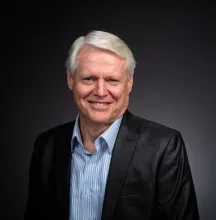
John Elliott serves in the role of President of the United Church of God, an International Association.
