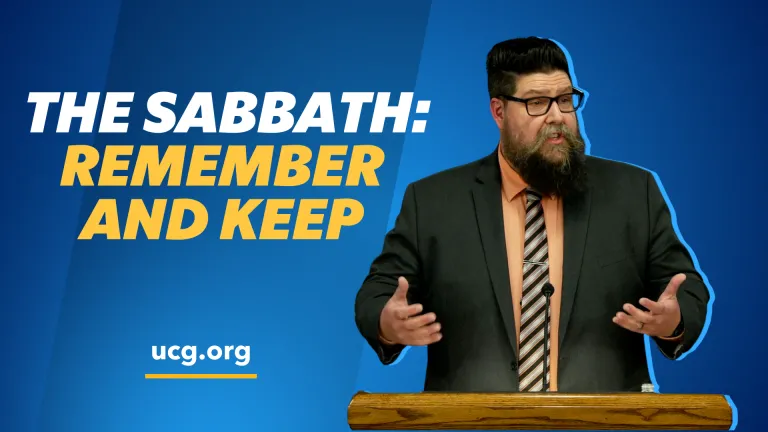

Ben Light
This transcript was generated by AI and may contain errors. It is provided to assist those who may not be able to listen to the message.
Thank you, ladies, for the beautiful special music. Something about stringed instruments. I don't know what it is, but they just have such a cool and deep and rich tone to them.
Just such a neat, neat instrument. We have our kids, Desmond and Aidan, are both working on learning stringed instruments. They're, uh, Desmond's taking up the double bass like his Uncle Trevor. Thing's twice as big as he is at the moment, but he'll grow into it.
And Aidan's working on the cello piece, so we get a chance to hear occasionally the process of learning those strings. All right. Well, we're going to get started here today. Look at my clock here. Buckle up. We're going to move relatively quick. But there are certain events in history which are indelibly marked on our brains. There are just certain things that have happened in life and certain things that have happened in society that we remember and we remember well.
Sometimes not just the event itself is etched into our psyche. Sometimes even the place we were standing, where we were sitting, whom we were talking to is attached to these memories. Sometimes senses are employed. You might be able to remember music being played in the background or a certain smell or a taste that rounds out the experience. For many of you, President Kennedy's assassination may be one of those times. Simply mentioning the event, it will transport you back to where you were, what you were doing, who you were talking to, what was happening. You might remember the sounds and the sights and the smells. You might remember the broadcast. You might remember the timbre of Walter Cronkite's voice as he told the nation what had happened. You might remember the news showing the Zapruder film. You might remember any one of these things or all of these things. Depending on how strong that particular memory is for you. For me, aside from 9-11 as kind of an obvious choice, the event that resonates like that for me is the Challenger disaster.
January 28, 1986, just a couple weeks after Mr. Armstrong's death, the shuttle explodes, 73 seconds in to lift off, killing the entire crew. Teach her on there, McAuliffe, going through and going up there for—I love that she's got a great quote. She says, you know, if somebody ever asks you if you want to take a ride on a rocket ship, you don't ask which seat, you just say yes.
That was her kind of attitude towards going out into space. I just think that's so neat. I remember sitting on the classroom carpet at Greenacres Elementary School. School had just started. I was very young. I was either kindergarten or first grade. I can't exactly recall.
But our teacher kind of let us sit and watched a launch. I just remember the explosion. I remember my teacher gasping, quickly turning off the television and kind of ushering us kids to the next thing, kind of taking our minds off of what it was. I didn't really learn what had happened until later that evening. I wasn't very old, but 32 years later I still remember the event.
I still remember the event. As I've talked with people over the years and as I've visited with people, there are certain societal milestones that come up, events that people talk about. JFK's death is one of them. The Challenger explosion is another. The moon landing. Remember where you were when we landed on the moon, right? The Berlin Wall coming down. And of course, for my generation, 9-11. And you know, you consider that list and you might think at first, well, we're only capable of remembering horrendous historical events because they just etched themselves into our memories. But we know that's also not true because there are certain aspects and wonderful aspects of memory that are indelibly marked on your lives as well. Maybe the birth of your children. You know, birth of your grandchildren. Your wedding. I don't remember much from mine if I'm being perfectly honest. I remember the I do part. I was doing this the whole entire time.
But we may remember those things, right? We may remember any other thing that we've happened to deem personally important. But somewhat ironically, sometimes the things that we remember best aren't important at all. Sometimes the things that we remember best aren't important at all.
For example, it always blows me away how I can manage to remember every lyric from Call Me Maybe, but I can't recall what I learned in biochemistry.
Which one of these is more important? Obviously biochemistry, but apparently Carly Rae Jepsen is what's stuck in my head. I can remember the Challenger explode, but I can't remember people's names sometimes. Can't remember who and where I know them from. I know I know their face, but I can't remember who and where I know them from. You know, I can't remember that I have an appointment coming up, but I can remember the code that gave me 30 lives in Contra from when I was a kid on the Nintendo. You know, sometimes the things that aren't all that important are what we remember best. The human memory is actually a fascinating study. If you look at how people encode memory and how they store memory and how they, you know, recall memory, it's really fascinating. When a person's brain pays attention to something or a memorable event of some variety occurs, the human brain starts firing neurons like popcorn. All these neurons firing all over the place, and that is what begins the encoding process. Those stimulated neurons start the encoding process, and it can happen in a few ways. Encoding can be done either acoustically or—autistically, I'm sorry—acoustically. It can be done acoustically, something that you hear, okay? It can be done visually, something you see. It can be done tactically, something that you feel. Or it can be done semantically, which is when you process not the event itself, but the meaning of the event, and that's what encodes. You remember what it meant.
You may not remember the event perfectly, but you remember what it meant.
More often than not, if something's going to our long-term memory, it tends to be something that's semantic in nature. Memory's also associative. It's also something that'll be remembered more effectively if you can hang that memory on something that already exists, something that you already remember. So if you can attach it to previous knowledge, you'll remember it better than if you're just starting fresh and you're starting new from something. Long-term memory can be either episodic or semantic—and now these are a lot of big words—episodic or semantic. Episodic are the feelings, the smells, the sounds, the sights, where semantic again is the song lyrics, the non-essential facts, and other things that come up that we really don't need to remember, but for some strange reason our brain, we have managed to convince it that it's important.
Sadly, when it comes time to remember something, typically we tend to access semantic memory first because that had more meaning to us at the time. We tricked our brain into remembering that. For example, when Call Me Maybe was played over and over and over again on the radio, my brain processed it and said, that's being repeated. It must be important.
And so it filed it away. As many of you can think of other songs that have been jammed into your ears as earworms over the years as well.
God understood the limitation of the human mind. He understood the system of memory that man utilizes. After all, God designed it. God designed our system of memory, how we encode, how we store, and how we recall memory. And God knew how quickly we would forget things that are important in these limited physical bodies. And so He designed a system of weekly and of annual reminders that would help us keep Him in the forefront of our mind. Let's go over to Leviticus 23. Leviticus 23. The book of Leviticus, God is through Moses basically outlining kind of a how-to for the priesthood of Israel. God's providing for them a sort of step-by-step set of instruction, so to speak, for how to interact with Him, how to interact with one another, how to leave the people of God spiritually. Leviticus 23 is the passage that we point to very regularly because it explicitly explains the feasts of God. It explicitly explains these weekly and these annual reminders of God as our Creator. And it ultimately reminds us of His plan for mankind. Let's go to Leviticus 23 and we'll pick it up in verse 1. Leviticus 23 in verse 1 says, And the Lord spoke to Moses, saying, Speak to the children of Israel, and say to them, The feast of the Lord, which you shall proclaim to be holy convocations, these are my feasts.
These are my feasts. These days are described by God as His. He owns them. Israel doesn't own them.
We don't own them. God owns them. They're His. They're also described by Him as holy convocations.
And what's interesting about that is the word convocation is the Hebrew word makrah, makrah, which translates as assembly, it translates as convocation, but it can also translate as a summons. It can translate as a summons. And actually, there's some evidence, if you look into the root of the word, that the third of those definitions, summons, almost fits as well as the other two, because makrah comes from the root charah, which means to call, or like to beckon, or to summon, you might say. These days are called assemblies. These days outlined in Leviticus 23 are called assemblies. They are a called or a summoned assembly of God's people.
And not only that, they are a sacred summons. You know, we do sometimes use the word invitation. We sometimes say, you know, invitation we've been invited to keep these days, but an invitation gives the sense that there is an option of declining. Now, there is always an option of declining. We always have the choice. We have freedom of choice. But a summons gives it a little bit of a different look. You can decline an invitation, but if you decline the king's summons, that has negative consequences, doesn't it? When you decline the king's summons, that has negative consequences. God summons his people on these days to assemble before him in worship. He sends out that weekly and that annual summons to those whom he's called.
First of these feasts, mentioned in Leviticus 23, if we continue on, is the weekly Sabbath. So, picking it up in verse 3, it says, Six days shall work be done, but the seventh day is the Sabbath of solemn rest, a holy convocation, or a sacred summons, a holy summons, assembly. You shall do no work on it. It is the Sabbath of the Lord in all of your dwellings. The Sabbath was designed to be a weekly reminder of God. It was designed to be a weekly summons of God's people to come together and to worship Him on the seventh day. It was a day of solemn rest. It was a holy convocation.
Leviticus 23 goes on to describe the rest of God's holy days from the Passover, clear through to the eighth day. And we won't go into all those today for sake of time. I mean, we've been through them numerous times throughout the feasts, throughout the annual holy days. But all of these days are holy convocations. They all have their specifics. They all have their own focus. But at their core, the fundamental principle is that they are a sacred summons, a sacred assembly of God's people together. It's a time when God calls His family together. Turn over to the book of Exodus. We'll pick up God instructing Moses on the Sabbath and on its significance. We'll go to Exodus 31.
Exodus 31, we'll go ahead and pick it up in verse 12. Exodus 31, verse 12, says, And the Lord spoke to Moses, saying, Speak also to the children of Israel, saying, Surely, my Sabbaths, you shall keep.
For it is a sign between me and you throughout your generations, that you may know that I am the Lord who sanctifies you. Note the plurality of the word Sabbaths. The Hebrew words to bot in that location is a feminine plural. It's a feminine plural. And I think that's because there is a sign that the sign of God's people, this sign that He spoke of between Him and God, would be those who kept His Sabbaths. Not just the weekly Sabbaths, but the annual Sabbaths that are outlined in Leviticus 23. But that sign goes both ways.
Not only does that sign identify the people of God, it identifies the true God.
God calls His people together on His Sabbaths, and His people worship Him on those Sabbaths.
He continues in verse 14. It goes on in verse 14. Exodus 31 verse 14. It says, You shall keep the Sabbath, therefore, for it is holy to you. Everyone who profanes it shall surely be put to death. For whoever does any work on it, that person shall be cut off from among his people. Verse 15, Work shall be done for six days, but the seventh is the Sabbath of rest. Holy to the Lord, whoever does any work on the Sabbath day, he shall surely be put to death. We see God takes the Sabbath seriously. He takes it seriously. It is something that is a weekly test of His people.
God, every Sabbath, is asking us, Will you or won't you? Will you or won't you? Will you assemble or won't you? Will you put away your pleasure? Will you put away your work or won't you?
Will you avoid doing that customary work? Will you maintain the holiness of that time?
Verse 16 goes on. Exodus 31 and verse 16. Therefore, the children of Israel shall keep the Sabbath, to observe the Sabbath throughout their generations as a perpetual covenant. It is a sign between me and the children of Israel forever, for in six days the Lord made the heavens and the earth, and on the seventh day He rested and was refreshed. When God worked with the nation of Israel, they were expected to keep His Sabbaths. As He has gone on down through history, working with others, He has expected the same from all of them. He expected His people to remember and to keep His Sabbath. That's the title of the message today. The second split sermon is Remember and Keep. Remember and Keep. And with the time that we have left today, I'd like to examine the commands that God gives His people specifically regarding the weekly Sabbath with the understanding that much of what we look at in this endeavor and as we go through this applies in principle to the annual Sabbath as well, and to kind of examine the implications on us as the people of God. When we consider the Sabbath, ultimately from a Church of God doctrinal standpoint, typically, typically, it is the first thing that someone comes to understand. You think back to those of you that were not born in the Church, those of you who came in from outside of the Church of God body, typically the Sabbath is the first thing that you come across. And you start to maybe read through your Bible and suddenly you see it with a different pair of eyes. As God begins to call you, as God begins to open your eyes to this truth of the Sabbath, you start to look at it and you notice, hey, wait a minute, this is all over the place in Scripture. How could I have looked past this? Or how could I have not seen this before? Maybe you notice that as you read through, God rested on the seventh day, did the kind of quick math, you know? Yeah, I was thinking. Did the quick math and realized, hey, wait a minute, something's not right here. Something's simply not right here.
And maybe you asked someone, I had a good friend of mine, not with regards to the Sabbath, but with regards to something else, who asked a number of people in his Church about, well, why don't we do this? And no one would answer him. No one just blew it off, kind of blew it off, avoided the question, you know, didn't really provide a great answer. And he found out that our Church believed what we believed and that I believed what we believed and he wanted to know, why do you do it this way?
So we had a wonderful conversation, but he revealed to me that, you know, when he asked that question at his Church, he was just rebuffed, just completely rebuffed, avoided the question entirely, wouldn't answer it, etc. Usually that's a sign. Usually it's a sign. But you might have asked someone, well, hey, what's the deal? Why don't we keep the Sabbath? And maybe their response was, oh, that's Jewish. Or that's part of the old covenant that was nailed to the cross.
Or maybe something like, well, we worship on the Lord's day. Even a cursory internet search will show you the truth of how the Sabbath was changed by the Roman Catholic Church over the first few centuries after Christ's death. And I don't say this to bash on the Catholic Church. That's not my intent. Facts are facts. I'd like to read to you just briefly a short excerpt from one of our articles on the United Church of God website. It's from a Q&A, Beyond Today Q&A, where the question that is asked is, was the Sabbath changed to Sunday?
So was the Sabbath changed to Sunday? And it's got a variety of really interesting quotes from a standpoint of where some of this stuff came from. Here's the article. It says, Jesus Christ and his apostles worshipped and taught on the Sabbath day throughout the New Testament account in numerous places, and there are records that this practice continued beyond Christ's death and resurrection into the anti-Nicene period of the church.
During this time period, however, heresies and various pagan practices began to creep into the church. Beginning about 100 years after the death of Jesus Christ, the writings of Pseudo-Barnabas and Justin contained references to worship on the first day of the week, and it began to become the norm during the rule of Emperor Hadrian between 117 and 135 AD. Hadrian greatly persecuted the Jewish people and specifically prohibited many aspects of what he perceived as Judaism, including worship on the 7th day Sabbath. The small group of Christians that remained faithful to Christ in his teachings were forced to worship God on the Sabbath in secrecy.
Constantine the Great, a worshipper of the pagan Roman sun god Sol Invictus, famously converted to Christianity at the Battle of Milvian Bridge in AD 312. He claimed he saw a vision of fiery cross in the sky before the battle, which led him to become a Christian and to conquer his enemy, the Roman emperor, Maxentius. Several years later, he dictated the following edict, which established a national day of rest on Sunday. Now, this was a civil national day of rest, but Sunday happened to be the holy day of Sol Invictus. It says, on the venerable day of the sun, let the magistrates and people residing in cities rest.
Let all workshops be closed. In the country, however, persons engaged in agriculture may freely and lawfully consider their pursuits, because it often happens that another day is not so suitable for grain sowing or for vine planting, lest by neglecting the proper moment for such operations the bounty of heaven should be lost. This is recorded in the Codex Justinius, and it says, it's given the seventh day of March, Crispus and Constantine being consuls, each of them for the second time, in AD 321.
With this edict, Constantine effectively combined pagan worship practices from the Roman sun god that he worshiped with aspects of his newfound Christianity. And this pattern is now replicated throughout the early Roman Catholic Church. John's D. Parker records in his book, The Sabbath Transferred, the following words from Constantine's court recorder Eusebius, On this day, which is the first of light and of the true sun, Sunday, we assemble after an interval of six days, and we celebrate holy and spiritual Sabbaths, even all nations redeemed by him throughout the world, and do those things according to the spiritual law which were decreed for the priests to do on the Sabbath.
And all things whatsoever that it was the duty to do on the Sabbath, these we have transferred to the Lord's day as more honorable than the Jewish Sabbath. And that's John's Parker in The Sabbath Transferred from 1902. So the article says, so was the Sabbath changed from Saturday to Sunday? Yes. Hadrian, Constantine, Eusebius, and others of the Antoninian church leadership slowly changed the day of worship from Saturday to Sunday.
But the bigger and the far more important question is, did they have the biblical authority to do so? And does God himself approve? The answer to that is absolutely not. The Roman Catholic Church has long claimed the right to make doctrinal changes as they see fit, feeling that the Pope is in place of God on earth.
Pope Leo XIII in an 1894 letter said, An 1895 Catholic newspaper, the Catholic National, said, That was written in the Catholic National in 1895. Additionally, to St. Catherine Catholic Church Sentinel, the Catholic Church Sentinel was written in 1895. That was written in the Catholic National in 1895.
Additionally, to St. Catherine Catholic Church Sentinel from May 21, 1995, had the following to say. It says, Perhaps the boldest thing, the most revolutionary change that the church ever did, happened in the first century. The holy day, the Sabbath, was changed from Saturday to Sunday. The day of the Lord, D.A.'s dominee, was chosen, not from any direction noted in the scriptures, but from the church's sense of its own power. People who think the scripture should be the sole authority should logically, as the article concludes, keep Saturday holy.
Cardinal James Gibbon, the Archbishop of Baltimore, was also very open about the change from the seventh-day Sabbath to Sunday, said, You may read the Bible from Genesis to Revelation, and you will not find a single line authorizing the sanctification of Sunday. The scriptures enforce the religious observance of Saturday, a day which we never sanctify. The Catholic Church correctly teaches that our Lord and His apostles inculcated certain important duties of religion which are not recorded by the inspired writers. We must therefore conclude that scripture alone cannot be a sufficient guide and or rule of faith. And that's Cardinal James Gibbon.
So when we take a look at the Sabbath itself, not only did God need to contend with mankind needing weekly and annual reminders, He also had to contend with Satan the devil. Satan is a counterfeiter. He takes what God creates and warps it, shifts it, changes it. God needed to ensure that mankind would remember the Sabbath and keep it. So we see Him include it in the most fundamental of places within the Ten Commandments itself. There are two places where this commandment is provided to the people of God, Exodus 20 and Deuteronomy 5. We're going to turn to both of those locations. Exodus 20 and Deuteronomy 5. And what we're going to do is we're going to examine these instructions because while they say the same thing, they also say it differently.
They say the same thing, but they say it differently. And it's in that difference that the nuance itself is made. Let's start in Exodus 20, just because we're closer to that location at this point. Exodus 20. We'll go ahead and pick up the account in verse 8.
Exodus 20 in verse 8.
Pardon me.
Exodus 20 in verse 8 records the following. It says, Remember the Sabbath day, to keep it holy. Six days you shall labor and do all your work, but the seventh day is the Sabbath of the Lord your God. In it you shall do no work, you nor your son nor your daughter nor your male servant nor your female servant nor your cattle nor your stranger who is within your gates. For in six days the Lord made the heavens and the earth, the sea and all that is in them, and rested the seventh day. Therefore the Lord blessed the Sabbath day and hallowed it. So we see in the beginning of this particular instruction, God says, Remember the Sabbath day. Remember the Sabbath day. That Hebrew word for Remember is the words, the car. It's the Hebrew words, the car, and it's translated to Remember. It's used throughout the Old Testament in that manner. It's used as Remember, it's used as Recall, to call to mind. Again, as we talked about in the beginning, to kind of bring to some forefront of your brain a memory of old, perhaps. The Hebrew writers use this word to describe how God remembered Noah. It says at one point in time, Noah was in the ark and God remembered Noah, right? Called Noah to mind. Recalled Noah. It's used throughout the Old Testament in that he remembered his covenant. So throughout the Old Testament we see God remembered his covenant. Often at times when he was most frustrated with Israel, he remembered his covenant. And we see in the situation with the Israelites in the wilderness that they remembered the leaks and the cucumbers and the onions and all these things. They brought to mind, they called to mind those things. God told Israel, Remember the Sabbath. Remember the Sabbath. Call it to mind. Each week God says, Recall that I created the world. Annually remember that I created this world for a reason. That I created you in it for a purpose. And so when we look at the context overall in Exodus 20, when you read Exodus 20 verse 8 through 11, the primary context there is creation. Moses was telling the people that the Sabbath day was to be remembered. It was to be made known. It was to be made mention of. To be named and to be professed.
It was to be identified as the day in which God rested from his labors because God made the heavens and the earth and the sea that all that is in them and rested on the seventh day, hallowing it and blessing it. And we are inheritors of that blessing. We're inheritors of that wonderful rest that is God's Sabbath. It's been given to us by God as time for us to put away our labor, to turn to Him, to focus on Him, to recognize Him as our Creator, and to worship Him as we are called and summoned together in an assembly. But when you look at Exodus 20, again the context in Exodus 20, the primary focus is on God as a Creator. Exodus 20, we rest because God made the earth. That's what it basically states when you read through that section. We put away our work because He did too. The other location where that's written is Deuteronomy 5. Let's go ahead and turn over there. Deuteronomy 5, and we'll pick it up in verse 12.
Deuteronomy 5 and verse 12 says, Observe this Sabbath day to keep it holy, as the Lord your God commanded you. Six days you shall labor and do all your work, but the seventh day is the Sabbath of the Lord your God. In it you shall do no work, you nor your son nor your daughter nor your male servant, female servant, nor your ox nor your donkey nor your cattle, your stranger, who is within your gates, that your male servant and your female servant may rest as well as you. So it wasn't good enough to go, well, I'm not working, but I'm going to make them work. That's God's... nuh-uh. No. This whole place is shut down. And remember that you were a slave in the land of Egypt. Verse 15, and remember that you were a slave in the land of Egypt, and the Lord your God brought you out from there by a mighty hand and by an outstretched arm. Therefore the Lord your God commanded you to keep the Sabbath day. The word that's used here for observe, it's not the same word as the car. It's not remember.
It's different. Moses records the people of Israel who were receiving these words were to Shemar the Sabbath day. The word Shemar means to keep, to guard, to observe, to watch. The word itself has a primitive root that actually can mean to hedge about with thorns. It's kind of like in those days, if you had a garden, for example, and you wanted to keep pests out of it, you wrap it with, you know, thorn bushes. Try to keep them out. Same thing we do in central Oregon with a six-foot deer fence, right? You live in central Oregon, you want a garden, you better put up a deer fence, because you're going to not have much of a garden if those deer get in there.
So hedging it about with thorns, protecting it, keeping it, guarding it, and we know, you know, we look at Scripture and we can see the Pharisees ultimately took this command too far. Well intentioned, but they took it too far. They built this fence around the Torah such that modern appliances have a Sabbath mode. Some of our modern appliances have a Sabbath mode, our ovens, our refrigerators, because there is the degree of work that occurs when an appliance is turned on that is too much for certain groups of Orthodox Jews. And so, for example, one of the things I was reading was talking about, you know, if enough electricity flows through the appliance to turn the appliance bulb on in the refrigerator, for example, that's too much work. So you have a Sabbath mode on the thing where you can turn the lights off for that time frame, or some people just pull the light bulb out, and then it doesn't go off, and so therefore, you know, you're good.
So, I mean, we can go definitely too far, right? And we can definitely take things too far, but the word Shemar is used in Scripture in a couple of different ways. It was to describe the role that Adam was to take in the Garden of Eden. He was to dress and keep, or dress and Shemar the garden. He was to guard it. He was to protect it. He was to work it. He was to help it to grow.
The angel of the Lord, after they were put out of the garden, He Shemarred the path back to the garden. He prevented them from getting back in. It was guarded. It was kept.
Cain, after he slew Abel, asked God whether he was Abel's keeper, his Shemar.
Am I his guardian? Am I his protector? Or, we might say in today's vernacular, am I his babysitter?
Israel was given instruction by God to keep, to guard, to observe, to watch over Sabbath time.
The time that was given to them by God to protect it, to hedge it about with thorns, to prevent damage from being done to it, to prevent it from being deluded or forgotten. And why? Well, because, according to Deuteronomy 5, because they were slaves in the land of Egypt. God wanted them to recall and to remember the Sabbath, to protect it, to prevent them from working on it, to make mention and profess that God had delivered them from their bondage, that by his mighty hand and his outstretched arm they were saved. Therefore, as a result of those things, God commanded them to rest and to protect that rest. So, when we look at the instructions in Deuteronomy 5 contextually regarding the Sabbath, the primary focus is on God as a Redeemer. Primary focus is on God as a Redeemer. In both situations, the principle of arrest from one labors is present, but the focus is different. On one hand, God is saying, I created all of this and after that I rested. Now rest.
On the other hand, he's saying, you weren't able to rest for the last 430 years as a result of your enslavement. I delivered you. Now rest. Reestablish that appointed time. And not only rest, but the word that was used was to Shemar, to protect it, to prevent encroachment on that rest, to not let it get chipped away at. You know, we have a tendency as humans to become complacent if we're not on guard. It's human. That's just what it is. We have a way of being complacent if we're not on guard. Sometimes we look at a situation and jumping from A to D is just a bridge too far. We would never go from A to D. Ever, ever, ever, never would we go from A to D. But A to B isn't very far. B to C isn't very far. And frankly, C to D isn't very far. And then pretty soon we're at D and we're going, what happened? I would never come here if I'd have looked from A to D. It's just too far.
But that little slip, that little slide, that little compromise from A to B to C to D, and pretty soon here we are where we said we would never go. We cannot afford to get complacent with our Sabbath time. What's interesting too is additionally both of these passages have a very strong component of maintaining the holiness and the sanctity of the day. We've talked about this before, but I think it's worth stating it again. The only thing that is capable of making something holy is God. I don't have the ability to declare something as holy. I can't wave my hand and say this is holy. The only thing that's capable of making something holy is God and His presence in it. For example, in Exodus 3, Moses was told to take off his shoes because he was on holy ground.
That bush wasn't holy before God's presence was among it. It was holy because God's presence was among it. It was His presence that made it holy. The holy of holies in the tabernacle was the holiest of holies because God was there. His presence was there.
Start to look at other things in passages that we see. We see our assemblies are to be holy and they're to be holy because God's presence is to be with us. We are to be holy because God's presence is with us. The Sabbath is holy because God's presence is to be in it. At least, it's supposed to be. It's supposed to be. The admonition that we've been given is to maintain that holiness.
Keep God's presence in it. There's a number of things that we can do that may remove or diminish God's presence in our lives on the Sabbath. There's also a number of things that we can do that will strengthen the presence of God in our lives on the Sabbath. But the onus of keeping the Sabbath is placed on us individually. We can look at Scripture and we can see the principles behind of Sabbath observance. We can look at the examples that we see in Scripture. We can draw our own conclusions about what's appropriate or what's not appropriate on the Sabbath, again with the full understanding that we'll answer for those decisions. That we will answer for those decisions.
Let's go over to Isaiah 58. Isaiah 58.
If I don't look at the clock, can I pretend I don't know what time it is?
Looked up, made myself nervous.
I may need to beg a few minutes of your time. I apologize. We'll see. I might just speed up the tongue here and finish up. Isaiah 58. In this particular passage, we see the Sabbath command receive a little bit of additional fleshing out. We see an underlying principle of Sabbath observance that's exposed here in Isaiah 58. We'll pick it up in verse 13. This passage, as you go from top to bottom in Isaiah 58, really talks about the kind of fasting that God desires.
In it, it describes the kind of love that mankind should have for their fellow man.
In God talks about loosing the bonds of wickedness. He talks about undoing heavy burdens. When we come to Sabbath services, often we come in burdened. We're hoping to have that burden relieved as we come in after a week out in the world so that we can go back out and stack more stuff on our shoulders as the week goes on. It talks about freeing the oppressed. It talks about breaking every yoke. And then it goes on to discuss treatment of the poor. It discusses restoration, discusses individual restoration, as well as collective restoration, and then makes the following statement in Isaiah 58, verse 13. It says, If you turn away your foot from the Sabbath, from doing your pleasure on my holy day, then call the Sabbath a delight, the holy day of the Lord honorable, and shall honor him, not doing your own ways, not finding your own pleasure, nor speaking your own words, then you shall delight yourself in the Lord. I will cause you to ride on the high hills of the earth and feed you with the heritage of Jacob, your father, the mouth of the Lord has spoken.
You know, God desires us to delight in the Sabbath. He desires that the Sabbath be enjoyable, but He also desires that the Sabbath honor Him, that during this time, during this holy sacred time that God has given us, and this summons that He provides us each week, that we seek Him, that we not do our pleasure on it, that we not treat it like just any other day, because it's a day that's special. It's a day that's holy. It's a day in which God calls His family together. It's a day that we're expected to remember and to keep. The Sabbath is one of the most ancient observances that God has instituted for us. It is present from the beginning. Israel remembered and kept it, most of the time, not perfectly. Christ and His disciples remembered and kept it. We can see from Scripture that it will be remembered and kept in the kingdom of God.
So what about us? What about you personally? Will you remember it? Will we remember it?
Will we weakly recall and bring to mind the goodness of God, His mercies, His blessings, His redemption, His creation? Will we keep it? Will we properly protect it, guard it, tend it?
Dress it and keep it. Will we answer the weekly summons and the annual summons?
Because that cycle, that weekly and annual cycle, was created to remind us of our Creator, every week to be reminded of His benefits, His blessing, and to worship Him, yearly to recall and to walk through His plan for mankind. If God commands us to assemble, it's our choice to follow that command or not. God desires we turn away from our own pleasures. Will we? Will we maintain God's presence in the day? God desires the Sabbath to be a delight. Is it? Will it be?
Or do we treat the Sabbath as a burden? You know, in the full interest of disclosure, there was a time in my life where I viewed the Sabbath as a burden. When I was younger, the Sabbath got in the way of the things that I felt like I wanted to do. I looked at the Sabbath in many ways, and said, I can't do this, I can't do that, I can't do this, I can't do that. And it's a completely wrong way to look at things. Because when you look at it on the other hand, and you're looking in the other direction, you look at, I get to do this, I get to do this, I get to do this. Changing the mindset, change the outlook.
I talked about this a couple messages ago. One of the tendencies of mankind is to go into kind of an autopilot to conserve mental energy. You know, kind of just get into this rut, and get into this habitual kind of routine in order to reduce processing power, prevent change, things like that. Brethren, have we done that with God's Sabbath? Have we allowed the Sabbath to become routine? To become something that we just do? We come and we do our two hours, and we go home. Have we allowed ourselves to become complacent at times?
Are we remembering, and are we keeping? Every car needs the occasional tune-up.
After a certain number of miles, there are simply things that need to be adjusted.
You know, is the Sabbath one of those things in our life?
God's Sabbath is a delight. It's not a burden. You know, we must endeavor to maintain His presence in it through prayer, through study, through the assembling of ourselves together, and especially as the end draws nearer. Let's go to our final scripture as we close today, Hebrews 10.
Hebrews 10, verses 24 to 25.
Hebrews 10, beginning in verse 24, says, And let us consider one another in order to stir up love and good works. Verse 25, Not forsaking the assembling of ourselves together, as is the manner of some, but, on the other hand, exhorting one another, coming together, encouraging one another, and so much the more as you see the day approaching, so much the more as you see the day approaching. We must assemble together, encouraging one another as the end draws near. The Sabbath and our convocation together will be even more important as the world around us gets more and more difficult. We must remember and keep. Is the Sabbath a sign between you and your Creator personally? Is it a sign between you and your Creator? We must remember and keep.
Brethren, have a wonderful Sabbath. Make the most of it.

Ben is an elder serving as Pastor for the Salem, Eugene, Roseburg, Oregon congregations of the United Church of God. He is an avid outdoorsman, and loves hunting, fishing and being in God's creation.
