
Joe Dobson
This transcript was generated by AI and may contain errors. It is provided to assist those who may not be able to listen to the message.
Good morning, everyone, and thank you very much, Mrs. Creech, for your presentation. We certainly appreciate all the hard work it goes into practicing and preparing for and executing special music. Thank you for that. It's always nice to have special music at a church service, and it's great to see all of you this morning. I don't get to come to the A.M. very often. Usually about this time, I'm sitting and having a coffee and studying and just relaxing and getting ready for the afternoon. So it's really nice to be here with you. It forces us to alter our schedule a little bit to come here and be with you, but it's always a joy to see so many of you here at the A.M.
Church. So welcome to the new Ministerial Trainees. Both of them, we know the one, and we'll get to know the Brits a little more. I don't think I knew you from college, or you didn't go to ABC or Ambassador. I know you didn't go to ABC, but Ambassador. There are some of them I go over and see. Look at old pictorials and try to picture people. In fact, I did one this morning, and I looked over some of the people, and I counted only about 50 out of all four years at Big Sandy when I was down there.
Actually, when we were down there the first year, only about 50 of them that have stuck with any Church of God. So really sad to me to look at that and see all these people, the potential that they had, and to know that they're not sticking with it. It was nice to be here with you. Summer is a time for planting. Planting crops, planting vegetables, planting flowers, or whatever else.
And later, expecting to reap the crops, the produce of our efforts. I have only two little tomato plants. I got started late, and we were traveling right during the peak growing season. I didn't want to put them in and have them die because of heat exhaustion. So I only put two little tomato plants in. One of them is doing pretty well now. The other one seems like it's been overwhelmed. So it's produced about two little cherry tomatoes, and it's kind of half, half like cut off part of it because it was already dead.
And it's kind of trying to nurse it back to health. But when you plant something, you hope to reap what you've planted. Jesus Christ knew the agricultural system in Israel. A lot of them were agriculturalists. A lot of them were farmers. He knew that, the common people. He taught many times in parables about issues that they could understand. And one famous parable was the parable of the sower. The teachings of Jesus Christ can impact us today as much as it impacted the people back in the days of the early Christians or when he was calling people to Christianity.
His lessons for us about preaching the gospel, it has lessons for us about our personal responses to God's Word. And in fact, we will see in His parable of the sower only one out of four categories actually make it through. Sometimes we can be discouraged from Mr. McNeely, Mr. Myers, Mr. Petty, get in there and do the telecast and do various things. He says, well, how many people were coming? Well, how many people came when Jesus Christ preached? Well, were there 120 after three and a half years of preaching?
And here's the Son of God who punctuated His preaching with miracles. And so He gives this parable of the sower. And we're going to see only one out of four categories makes it of the seeds that were planted, same seeds. But the reception of those seeds, what happens to those seeds makes all the difference in the world. And it behooves us to understand how precious we are to so far still be standing.
How precious. And it's God's doing, not ours. God's the one who gives the increase. Remember, there are many scriptures about sowing, and I'm not going to go into all those. But I am going to go through the parable of the sower as thoroughly as I can with the knowledge and inspiration that God gives me to help us all understand how important this teaching of Jesus Christ is for us today, as it was for those back in Christ's time, in New Testament time.
So let's read together and understand what Jesus was teaching in this parable about who will make it into the kingdom. It's about the kingdom. Most of Christ's parables begin within the kingdom of God just like this, and we'll see that when they rejected the word that was brought to them, symbolized by the seed when it didn't develop, he calls it the word of the kingdom. And so what will you do and what are you doing with the word that has come to you and me? So let's look at Matthew 13, verses 1-9. I'll use this as a springboard, this particular chapter, and I'll also explain to you some information as we compare the three accounts, because all three accounts in Matthew, Mark, chapter 4, and Luke, chapter 8, all give an account of the parable, the sower.
They differ somewhat, and I'll try to point out the differences as we go through this first part. And my goal is to first read it through with very little explanation, then come back and read it through as Christ explained it later on to his disciples, because many times his disciples were almost as clueless as all the other people.
And he'd have to come here to explain, tell you what I meant. Now many in the world think that Christ spoke in parables so people could better understand. And we know that's not true according to Matthew 13, 13. He said, I speak to them in parables so that they can take it any direction they want and not understand, because if they had clear understanding, then I would have to judge them more sternly. So he isn't going to do that with them and didn't do that with them. Matthew 13, let's read Matthew 13, verses 1 through 9. Matthew 13, verse 1, On the same day Jesus went out of the house and sat by the sea, often like to teach by the seaside, and great malditudes were gathered together to him.
I think it's interesting how many people wanted to hear. Now most occasions it used to be in California, at least around Pershing Square in Los Angeles, that every Sunday soap-bought preachers would truly gather, and they would have different people come to listen to this like a smorgasbord of preachers. See what this guy has to say. Everybody has a doctrine. Everybody has a thought. Everybody has a view. And they would get lots of people coming. When I was a kid growing up, my Arabic grandparents and grand-uncles would often sit around in the home.
They didn't watch TV or listen to the radio or tune in a ball game. They sat there discussing things, and they would discuss oftentimes the Bible. And the whole afternoon, until we were eating or something, having dinner or lunch or whatever we were there for, was spent talking. And people used to be fascinated by someone who could talk well and speak well. Now, you've got to do cartwheels. You've got to have rockets going off. You've got to wear something weird to make the weirder you can look. The more people... Oh, look, they're great! I think it's weird. They think it's great. This is so great. Look at that goofy hat he has on. Look at that hairstyle he has or doesn't have.
Again, I look like that when I get up in the morning. I can't believe you go to a hairdresser to have them do that for you. But it looks awful. But see, people today, it's different. They don't want to sit down and listen to somebody. So the opportunity to listen, these people sat and listened. Look how many gathered. So that he got into a boat. There were so many gathering around him. He got onto a boat. And to magnify what he was saying, by the water he went out onto the boat. And the whole multitude stood on the shore. Then he spoke many things to them in parables. Many things. But here's one specific one. This is the teaching of Jesus Christ, which I love. Behold, the sower went out to... What does a sower do? He sows. Not cloth. Sows seed. And the word for sow is the word... Remember, he used to have a vice president called Spiro Agnew? The Greek word is Spiro. It means to spread. It means to spread abroad. It means to broadcast. It means to throw out. And when they sowed it, after they plowed the ground, and by the way, there was a lot of rocky ground in Palestine, from what I read in the commentaries. There was a lot of rocky ground. So when you sowed it, you threw it up, the seed, and let it go into the ground. Then you basically covered it. If you chose to cover it, sometimes you just let the rain or natural forces come and cause it to be in the ground sufficiently to grow. So as he sowed... So here's the sower he went out to sow. And as he sowed, some seed fell by the wayside. Now I looked it up, and you know what a wayside could be like? A path. And apparently they had paths into the garden, and they also had paths around the garden. So right... abutting the garden, right beside it. So when they're sowing the seed, some of it falls on the path. Some of it falls on the on the path in the garden and around the garden.
So some of it fell by the wayside, and the birds came and devoured them.
So in this particular section, by the wayside, Mark has the same thing.
Birds devoured the seed. Luke says birds not only devoured them, but people trampled them down.
So they didn't give the seed really a chance to be able to germinate and then grow. So this...
the wayside was not a good place, nor did they plan to sow it on the wayside, but some seed does fall in that category. Verse 5, some fell on stony places where they did not have much earth. And again, one of the commentaries I was reading said that this this happens, that much of Palestine has that particular... or a lot of the sowing areas for seed had rocky underbelly of it. And they immediately sprang up because they had no depth of earth. So throw it out, but much earth, it goes in, it grows, and it doesn't have much of a base. No depth. We'll see what the other ones say in a moment. But when the sun was up, and they were scorched because they had no root, they withered away. So Matthew says, stony ground, not much earth, no depth. Sun scorched the root. Sun scorched them, it had no root, and it withered. Mark was basically the same. Stony ground, not much earth, sprang up, no depth, no root. And he says it withered away.
Luke says it was sown on a rock. He looks right, cuts right to the quick. Sown on a rock, and it sprang up and withered away because there was no moisture, no water. Again, why the water would run off, the earth wasn't enough to hold the water, so the plant would be drying up in addition to not having a very stable base. And notice what happens. Of course, the sun came and it withered away. So again, stony ground does not give it much base, does not give it much depth, and is not able to withstand when troubles and trials come. Now, verse 7, and by the way, I'm calling these three different grain names. The first one is barley. Second one I'm calling rye. They didn't grow rye over there, but I'm giving it rye. A third one is oats. They really didn't grow oats over there, either, but they did grow wheat, which is number four. So four categories, barley, rye. Now let's look at oats. Verse 7. Some fell among thorns, and the thorns sprang up and choked them. That's all Matthew says. Mark says, thorns grew up and choked the seeds, and therefore no crop. Luke says, thorns sprang up with the seeds and choked them. I can give you a live example of this living example. When I was in Big Sandy, Texas, we lived on Faculty Row, and there was a section there that you could use for farming. So I had, they came, and they plowed up the field, plowed up that area as much as they could. And then we took one of these, what do you call them, rototiller, and you were able to go, we were digging deep. So we finally got it relatively good. So Gary Richards and I were going to have a garden together. So we planted, he was on Faculty Row, too, so we planted the various plants. Again, from seed, they came originally. We put them in as plants, not as seed, starting. But we put them in plants, and I went on vacation shortly thereafter, and he watched over it for a while, and then he went on vacation, and none of us was there.
And when I finally came back, I went over to my garden. I used to love to go out to the garden when I was in Canada, and go out and see, how's it growing today? How many tomatoes? What does this happen? How many buds are on there? You know, I used to love to do that. I went out there, where's my garden? Where is the garden? And literally, the weeds almost take on the same look as the actual plant. I couldn't even tell where the plants were, and I had to really look carefully. And there was almost no way to pull out the weeds without uprooting the plants. So it was a disaster.
I think we may have gotten a few cucumbers from it. The tomatoes were, they were all choked out, and that's what God says. If it happens among thorns, they'll grow up and they'll choke out the plant. And then verse 8, he says, but others fell on good ground, yielded a crop, some a hundredfold, some sixty, and some thirty. Now what is interesting, most calculations that I've read said they grew about ten percent. They were tenfold, not thirty, sixty, or a hundred.
Thirty, sixty, or a hundredfold would indeed be a huge increase. Huge increase.
So that's what Christ is talking about. The increase he can give is huge. But he starts off, interesting in Matthew's account, he's very optimistic. He says a hundredfold, sixtyfold, thirtyfold. Here's what I call this one, wheat. Matthew says yielded a crop, hundred, sixty, and thirty, some. Mark says they yielded a crop that sprung up, increased, and produced. He goes thirty, sixty, and a hundred. He's a little more conservative, thirty, sixty, a hundred, instead of starting off with a hundred. Luke says on good ground they sprung up and yielded a hundredfold. He doesn't, he cuts to the chase, doesn't go to thirty or sixty.
A hundredfold would be a real, real stupendous crop. Now what they also point out is because even if it did ten percent over, it would make up for what was sown in the wayside among the thorns and did not grow up well. So this is how they went ahead and explained it. Okay, so verse nine is interesting. All three accounts say this. He who has ears to hear, let him hear. Do you have ears?
Is your hearing still able enough to pick up information? Then this is for you and it's for me. This lesson, this parable, is for all people who have ears. He said, listen to this. Now let's go on and show what he explained to his disciples because oftentimes he would call them aside. And for the second part of this sermon, I'm going to go through each one of these very carefully and note Christ's teaching as magnified by other scriptures in the Bible. So I'll change accounts here because I have what the second part says as well from the three different accounts. So Matthew 13 and verse 18. Matthew 13 verse 18 and I'm going to try to punctuate each one of these. Verses 18 and 19. Here's the wayside or the path. Verse 18, therefore, here are the parables of the sower. So now I'm going to explain to you. Here's my explanation Jesus Christ is teaching. When anyone hears the word of the kingdom, the word of the kingdom, this is the word that will enable you to pursue a path toward the kingdom, to grow up, to be a part of the kingdom. Anyone who hears the word of the kingdom and does not understand it, then the wicked one comes and snatches away what was sown in his heart. So while he didn't quite understand everything, it was touching him. It was reaching him. It was reaching him on an emotional level in his heart.
It was whatever he did grasp. He didn't grasp it all because he didn't understand.
Whatever he did grasp, the evil one came and snatched it away from him. It said, okay, so that's the first one. This is he who receives seed by the wayside. So the seed is pictured as the word.
So here's the word people pick it up. They don't quite understand it.
And when they begin to be affected by it, the evil one comes and takes it away.
Let me share with you. This is Barley, by the way. Mark says Satan immediately comes.
Satan comes immediately. So he adds immediately to it. Luke calls it the devil.
So Matthew identifies it as the evil one, which we would say is the devil.
Mark says it's Satan. Luke says it's the devil. Comes and takes the word out of their hearts.
This is what Luke says. Lest they believe and be saved. How many people has Satan the devil taken the word of God away from them, caused other distractions to come, and removed from them the opportunity to have a part of God's kingdom, to go toward the kingdom of God, to move toward the kingdom of God, to grow toward the kingdom? First Peter 5 and verse 8, we must be aware of the way Satan the devil operates. First Peter 3, he's looking around to pick off anybody he can to cause distractions, to cause them to lose their their edge.
In verse Peter 5 and verse 8, be sober, be vigilant, because your adversary the devil walks about like a roaring lion, seeking whom he may devour. Satan the devil's looking to cause distractions, looking to draw you away, looking to cause you not to grow with the word of God as you could be growing, because he comes and snatches. Also, 2 Corinthians 4 verses 3 and 4, he hates the gospel. What is the gospel? Good news of a kingdom. What happens to Satan when the kingdom comes? Think of the song that the chorale sings, when the kingdom comes. When the kingdom comes, Satan's finished. He's incarcerated, no longer to deceive people, except for a short time after the thousand years are finished, and after that time he's going to be put into the lake of fire where he'll never burn, but he'll be incarcerated forever. But God's teachings don't exactly fit into the mold and pattern that Satan the devil would say is encouraging to him.
The teachings are not encouraging to him, because he finds them talking about his doom. So 2 Corinthians chapter 4 verses 3 and 4, notice what we read. He said, but even if our gospel is veiled, it is veiled to those who are perishing, those who are dying, those who are dead spiritually, whose minds the God of this age has blinded, takes their attention away, causes them not to see that, black out when it comes to the truth.
Who do not believe, lest the light of the gospel of the glory of Christ, who is the image of God, should shine on them. As soon as he can, he tries to take them away, cause other interests to come up, cause other circumstances to come up, cause them to be deterred. I don't know what deterred you, what deterred me, and when I first started, first began to be called, I had a full tuition scholarship. I had a girlfriend down the street.
Full tuition scholarship. I had a car that my dad bought with money I had given to him, so it was still in his name, but it was a car I could use all the time. So I had a car, full tuition scholarship to a accredited college, and a girlfriend down the street.
Pretty good distractions. God will do anything he can. But then, or not Satan the devil, the God of this world will. The God will do anything he can too. So God brought a lot of those to an end for me, because I became convicted of the Sabbath, and that I wouldn't let go.
And so I had to give them up. But God will bring distractions into your life to cause you to turn away from the word of the kingdom. And that's the point that he's bringing out here. Satan the devil has ministers of this world. 2 Corinthians 11, I'm not going to read it. He has ministers, people who go out and minister to you, whoever they may be. Acts 14 verses 1 and 2, they'll try to take you away. They'll try to turn you away with words, with accusations. Acts 14 verses 1 and 2, just as an example. Now it happened in Iconium that they went together into the synagogue of the Jews, and so spoke that a great multitude of both the Jews and the Greeks believed.
So here's the word being spread, but what happens? Here comes the devil, or his helpers. But the unbelieving Jews stirred up the Gentiles and poisoned their minds against the brethren.
They brought them poison, and that turned them away. People can turn you away.
And so don't let people turn you away. And of course, draw near to God is how you do it. Drawing near to God, James says, draw near to God, resist Satan the devil, and he will flee.
But you have to draw near to God, and you have to humble yourself enough to say, God is right, and the others are wrong. God is right, the others are wrong.
So that's barley. That's barley. Let's take a look at the next one, Matthew 13.
Matthew 13 and verses 20 and 21. But he who received the seed on stony places, this is he who hears the word and immediately receives it with joy.
What do we call them? Spiritual flash in the pans.
They spring. Oh, everything is wonderful. Everything is great. Everything is wonderful. Everything is great. And after a while, nothing is great. Nothing is wonderful.
But everything is great. Everything is wonderful. They respond too quickly.
They respond so quickly and so perhaps emotionally that they don't establish the knowledge in their hearts and minds and life.
So he says, they immediately receive it with joy. Yet he has no root in himself, but endures only for a while. For when tribulation or persecution arises, because of the word, because of the word, because you're trying to live up to God's way, immediately he stumbles. As soon as troubles come, he stumbles. Why? No root.
So let's take a look at Ry, which I call the number the second one.
Matthew says he hears and immediately receives with joy, but has no root and endures for a while. But trials and persecution come and he stumbles quickly. Mark says he immediately receives the word with gladness. No root endures only for a short time. Trials, persecution come for the word's sake, Mark says, and he immediately stumbles. Luke puts it this way. He received the word with joy, but he has no root. Believes for a while, but in temptation, he uses, he falls away.
So temptation, persecution, what could come to cause us, to cause you, to cause me? Trials, you give up. Well, I didn't expect this. What did you expect when you entered a straight, narrow gate?
You know, God says, I beg your pardon. I never promised you a rose garden.
Never promised you a rose garden. Rose gardens are nice to have, nice to look at, but even roses have thorns. God says, you know what? The way I lead you is not the way that's broad and wide and easy. All who live godly in Christ Jesus will suffer persecution.
You know that, and I know that. Jesus said, if they persecuted me, they'll persecute you.
If they hated me, they'll hate you.
Too many of us, when we're baptized, we think now everything's going to go great.
Now I'm God's servant. Everything's going to go great. And for me, for a while, everything did go great, for a very short while. But life is about challenges. But life is about overcoming challenges. You know, the song from the music, Climb Every Mountain, Search Every Byway, Ford Every Stream, Till You Follow Your Dream. Your dream, my dream, should be the kingdom.
And you don't let anything stop you. You keep going, and I know wonderful people who've watched their former wife, their divorced wife, fly away.
And that man still remains solid and stable. We were with him as she flew out to California to become, actually, she became Mr. Armstrong's secretary, Mrs. Stiles, out of St. Louis, her husband. And she had divorce case situation, and they had lived together as a brother and sister since being baptized. And finally, they split up. She flew to California, be a single woman. He stayed in St. Louis, and they loved each other. They cared about each other, and we were there to watch the tears, and we watched as he stood there to wave goodbye.
But you see, he saw the kingdom beyond his wife or his former wife.
God can strengthen you and help you if you have your priorities straight, if I have my priorities straight. So what does it say about Ry? No grounding, trouble comes, and they leave.
Matthew 24, 12. Jesus Christ amplifies this in his teaching about the last days.
Matthew 24 and verse 12. What does he expect of us? Matthew 24, 12. And because lawlessness is 13, sorry, because lawlessness will abound, the love of many will grow cold. Verse 13 is the one I want. Matthew 24, 13. But he who endures to the end shall be saved. Endurance, holding on, not letting go, not giving up under any circumstances, because you see the value of why you're holding on.
Why are you holding on anyway? Because there's a better world coming for all peoples, not just for you, but for you too. A better world. Hold on. Don't give up. Don't let go. You know, in Hebrews 11, I'm not going to go there, but Hebrews 11, 33 to 39, he talks about the trouble that all the godly faced. How some of them saw their fellow brethren and family members saw on asunder. How others went through all kinds of privation, all kinds of trials. And he says, but these held on. These made it. Can you? Can I? Will we? Will you? Will I? Hold on. Acts 14, 22, Paul said, it's through much tribulation that will enter into the kingdom of God. It's not through easy times.
There's many trials that come, and they may be health trials. They may be occupation trials.
They may be personality trials. Trials will come. They may be school trials for young people.
They will come. What will you do? Will you endure or will you bail out? Will you fall over?
Will you not be able to stand? In Colossians 2, verses 6 and 7, we're encouraged to be rooted and built up in Jesus Christ. Colossians 2, verses 6 and 7. I have to ask myself, am I rooted and built up in Jesus Christ? Where are your roots? Are they in Christ? Do you know God's way?
Right to the very bottom. Do you know it? Down to the soles of your feet.
Colossians 2, verse 6. As you have therefore received Christ Jesus the Lord, so walk in him. Walk with him. Walk in him. Walk after him. Rooted and built up in him. See, if those roots go down deep, you're not going to fall over. The plant's not going to get knocked over no matter what happens. And it's going to get plenty of moisture down below. It's going to be able to survive.
Rooted and built up in him. Established in the faith. As you have been taught, a bounding in it with thanksgiving. Never forgetting to be grateful for what you have.
Never forgetting to be grateful for the blessings that God sends to you and me.
And sometimes we can overlook those blessings because they come regularly, and we don't offer God our thanks and appreciation. So, rooted in Christ. How do you root in Christ? Well, God's Holy Spirit being in you gives you the mind of Christ. God's Holy Spirit in you means God is in you, gives you strength to live a right life. Rooted in Christ means you're studying and learning what he's taught. The Bible, which he's inspired. You're learning from it, and you're growing with it. Notice 1 Thessalonians 5, 21. And in Colossians 3, 16, by the way, I'm not going to read it. Let the Word of God dwell in you richly. Studying God's Word. Is it dwelling in you richly? Do you throw the Bible aside? Do you give it a lick and a promise? Do you study it? Do you let it sink in deeply? Is this the way I am? Is this what I do? Do I understand this? 1 Thessalonians 5, 21.
Test all things. Hold fast what is good. God says, hold fast. Don't wither. Hold fast to what you know. Hold fast to the truth. Hold fast to the teachings. Don't get turned off by people who want to come and bring you a new song, a new doctrine. I'll tell you, I've heard so many of these things. Doctrines have come up. I've heard those for years. My first year at Ambassador College, I remember Mr. Armstrong talking about people's sacred names. People think God cares about how you pronounce phonetically a name. Why do we go down those paths? Because people were always thinking they're finding something new. When new doctrines were old doctrines, old doctrines of Protestantism were introduced into the church several years ago, back in 95, and people thought, this is new. It wasn't new at all. Many of the people that I visited in Toronto left their church because of those teachings. And they came to us because they saw we were teaching something that had substance that could be founded and grounded in the scriptures with clarity. They wanted something that meant something to you. Hold fast.
Don't give it up. Don't let anybody take your crown. Don't let anybody dissuade you from God's way of life. That doesn't mean you don't listen to things. But there's always an avenue. If you think you have some new truth, new doctrine, take it to your minister. He'll tell you to write it up. He'll look it over, try to answer you, can't answer you, take it to the regional pastor. He'll look over it. He'll say, oh, here's a, let me see, you know, this is not a good idea. That doesn't make any sense. Look, here's why. And the guy, well, I want to send it off. Okay, well, they'll send it to the, if the regional pastor says, well, I don't think this should go anywhere, it won't. But otherwise, I've sent it to the doctrine committee. Let the doctrine committee look at it. The doctrine committee's had hundreds of things sent to them over the years. Very few have generated any change whatsoever in doctrine because they wasn't provable.
But each person wants to have his own opinion. And you know, when there's a squabble in my family, Mom, Dad. Now, Dad's in heaven. He can hear you, but he doesn't normally just directly speak to you through his word, yes. But Mom is still here. And Mom is there not for inventing new truth.
Mom is there to guide you in the truth. And that's the church. The church doesn't try to run your life in any way. The church doesn't try to make new doctrines, new laws, cancel laws.
That doesn't mean that we can't grow. But there's a system for doing it. They're not being out there trying to do something different. And there are people who come at you trying to get you to bend their way. I had one man who believed Pentecost was on Sunday when we kept it on Monday. He had this paper. It brought in the Greek. And I wasn't good at Greek at that time. And I'm not good at Greek now, but I know more about it than I did then. And so he brought this article. He brought this. Yes, Pentecost is on Sunday. He had all these things. And I said, you know what? I can't refute you. But all I ask you to do is be patient. I'll send it to headquarters and let them look it over and see what they think and get an answer for you.
But until that time, I ask you not to go around and spreading your ideas because it's because of division. Well, sure enough, he couldn't hold back. And he was telling people about it. And I found out about it. I don't have a spy system. People came to me because they were troubled. And I said, because you've done this, you stay home. I'm not putting you out of the church. I'm just telling you to stay home until we get an answer. Well, sure enough, we did get an answer. We changed. So I was trying to be a dutiful pastor. I called him on the phone. So I just wanted to let you know what you brought up was right, and the whole church has changed.
I just thought I'd let you know that you come back. You know what he said? Well, I've got some questions about the Sabbath, too. I said, stay away.
You're just looking for fault. You're not looking to see if it's so. You're looking to see if it isn't so. Remember the Bereans? They searched the Scriptures daily whether these things were so. They didn't search the Scriptures daily to find out they weren't so. A whole positive approach.
So again, the rye. Hold fast to what you have. That's built on rock. It won't last.
Let's look at the next one, verse 22, back in Matthew 13. Matthew 13 and verse 22.
Now, he who received the seed among thorns is he who hears the word and cares of this world, and the deceitfulness of riches choke the word, and he becomes unfruitful.
So that which falls among thorns involves worldliness, involves seeking to have the world in your life. Now, that doesn't mean you should be afraid of people who are in the world. It's not that down everybody in the world. There's some very nice people in the world, but don't let them influence you away from the truth, from the seed, from the word. So in this one which I call oats, here's the oats one. Here's what Matthew says. Cares of this world, deceitfulness of riches, choke the word, and you become unfruitful. Mark says, desires for other things, in addition to what Matthew said. And he says they will immediately stumble.
Matthew says they become unfruitful. Mark says they desire for other things enter in and choke the word and becomes unfruitful. Luke said they heard, but they were choked with cares, riches, which we heard in the sermonette. Pleasures of life bring no fruit to maturity.
Pleasures of life. What did Paul say? Lovers of pleasure in 2 Timothy 3. Lovers of pleasure, more than lovers of God. We have to be so careful that we don't let God's word be choked out of our lives by the world. God wants you to do well. Certainly you know you have to work eight hours a day. That's not your God. But you know most people labor. They work eight hours a day. You say, well that must be my God. I spend more time working than I do praying and studying combined.
But hopefully you're a Christian all the time, even at work. You're a Christian. You're a godly person all the time. You're with God, in God. You worship God. You praise God all the time. You may not do it openly to try to impress people, but you do it in your own heart and mind. So what does he say about this? What does he mean about this? One on the odes where it's among thorns. 1 John 2, verses 15 to 17. What is Jesus Christ? How does he magnify this through Scripture?
1 John, through inspiration of Scripture. 1 John 2, verses 15 to 17. He's talking about worldliness. And if you take a look, this completes the three major enemies. What are these? What are the hindrances? Three major enemies. The world, the self, and Satan. No root. No root. You get blown over. Wayside. Devil comes and takes it away. No. 3, worldliness. The three major enemies that we all have. That's what causes us not to grow, not to produce beautiful fruit that God wants us to have. We'll see that in a moment. 1 John 2, verse 15. We read, do not love the world or the things in the world. Do not love it. Don't let other things take you away. Now that doesn't mean you can't enjoy what this world has as long as it's decent and right. That doesn't mean that.
But it does mean don't love the world system. It's way. Don't learn to fly with the system of this world. Love the people. They're made in God's image, too. If anyone loves the world, the love of the Father is not in him. Now should you love the world? Yes, the people. God so loved the world that he gave his only begotten Son. Who's he talking about? The people. Not the system, not the way of dog, not the way of get ahead of people by stepping on them, not the manner and way of the world. You don't want to fly that way. You want to fly decently. You want to do what's decent. You want to shine as a light in the world. So he says, for all that is in the world, the lust of the flesh, the lust of the eyes, the pride of life, is not of the Father, but is of the world. And the world is passing away, and the lust of it, but he who does the will of God abides forever. You watch ads on TV. They're always appealing to your lust. You need to have this. You know, we have this sunset or awning. This sunset or awning that we could have. We got it for $600, but you can get it for $400. Well, you're dummies. Why didn't you wait and get it for $400 yourself? Why are you giving me advice?
We got this sunset or awning. And so you could have... They always want to appeal to you. You'll feel better. You could look better. You won't have a sudden... You won't get sudden stroke or whatever. Always want to appeal to our vanity, to us. You can look better. Buy this cream. Keeps you from aging.
Put this cream on. Pretty soon, your faces don't move. Only their lips. Barely their lips move because their faces can't move anymore because they're plastered. No expression. Facial expression is very important, by the way, in speaking. Okay. So Romans 12, verses 1 and 2. Romans 12, verses 1 and 2. What do we have to do as individuals to resist this last one, the world? What do we have to do? We have to be transformed. And how are you transformed? By God's Spirit being in you and by letting God guide you and lead you through study and prayer. Romans 12, verse 1. I beseech you therefore, brethren, by the mercies of God, you present your bodies a living sacrifice, wholly acceptable to God, which is your reasonable service. And do not be conformed to this world.
Don't conform to it. Its standards, its way. Now, it doesn't mean you don't keep the laws of the land, as long as they don't conflict with God's laws. You keep those laws. You're law-biting. You obey the powers that be. Do not be conformed to this world, but be transformed by the renewing of your mind, the mind of Christ, that you may prove what is good and acceptable, perfect will of God.
Follow that. That's God's way. Don't follow the way of the world. James talks about worldliness in James 1, 27, and he says, keep yourself unspotted from the world. Don't be dirtied by, don't be soiled by the world. So that's the third one. The fourth one is wheat.
Verse 23 of Matthew 13. Verse 23. He who received seed on the good ground, so here's good ground, and what is good, God is good. He who hears the word is he who hears the word and understands it, who indeed bears fruit and produces some 100-fold, some 60, and some 30.
So how do we magnify this? Let me give you what different ones say. Mark says they hear, accept, and bear fruit. Luke says they heard the word with a noble and good heart. They keep it, and they bear fruit with patience. You know, and I know, you can't make those plants. Maybe you could. Maybe you throw some growers on and around. You can't make them speed up when they're going to be coming. You can a little bit, but now you can't make them grow faster. You can help their growth, but they're going to grow according to their time. You have to have patience in waiting for that fruit. You also have to have patience in your life for waiting for that fruit. Don't get discouraged with yourself. Hang in there. So for this wheat, we find it grows, it bears fruit, it endures. You know, Scripture talks about many are called, but few are chosen. He says, little flock. This is only one out of four. The other three don't make it. The other three don't make it. Here's number four. It makes it. This category makes it. 75% fall away. Probably more than that. One quarter make it according to this parable. Look at John 15. How do you stay? How do you bear fruit? And it's staying in touch with God, staying in touch with Christ, and staying connected with the vine. John 15 verses four and five. Abide in me, and I in you, as the branch cannot bear fruit of itself unless it abides in the vine. Neither can you unless you abide in me. How do you bear fruit? You have to abide in Christ. You have to be close to God and Jesus Christ in prayer, study, meditation, fasting from time to time, thinking about Him. I am the vine. You're the branch as He who abides in me, and I in Him bears much fruit, for without me you can do nothing.
And in verse eight, by this my Father is glorified that you bear much fruit, so will you be my disciples. Bear much fruit. How? Be in Christ. Follow Him. Galatians 5 22 tells you what fruit it is. It's the fruit of the Spirit. Beautiful fruit. Awesome fruit. Love, joy, peace, long suffering, gentleness, meekness, kindness, faithfulness, long suffering. I forget what one probably did.
You can read it. Galatians 5 22 and 23. Beautiful fruit. 2 Peter 1 verses 10 and 11.
2 Peter 1 verses 10 and 11. This one, we need to make sure we hang in there, stay in there, we keep growing. We don't let ourselves not bear, but rather we keep on growing and bearing the right fruit. 2 Peter 1 verses 10 and 11. Here's what the Apostle Peter exhorted us and encouraged us. 2 Peter 1 verse 10.
Therefore, brethren, be even the more diligent to make your calling, and remember many are called, few chosen, make your calling and election sure. He had just talked to them about what they needed to add into their lives. He talked about giving diligence, add faith to virtue, and virtue to knowledge, and knowledge to knowledge, self-content, and to self-control, self-control to perseverance. Perseverance at godliness, to godliness, brotherly character, brotherly kindness, and to brotherly kindness, add love. He then talked about, these things be in you, and abound, you'll make it. So verse 10, he says, for if you do these things, you'll never stumble. Remember, what do they do? They stumble. They stumble. If you do these things, you'll never stumble.
Verse 11, for so an entrance will be supplied to you abundantly into the everlasting kingdom of our Lord and Savior, Jesus Christ. Remember verse 9 of Matthew 13, He that has in ear to hear, let him hear what is said, and let him follow it.
So don't allow those three enemies, the world, Satan, and self, get in our way. But through belief in and strengthening by Jesus Christ, we will bear fruit, we will endure, and we will become members of the family of God in the kingdom of God. And thus ends the parable of the sower taught by Jesus Christ.
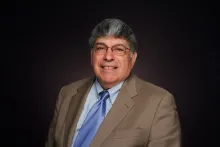
Gary Antion is a long-time minister, having served as a pastor in both the United States and Canada. He is also a certified counselor. Before his retirement in 2015, he was an instructor at Ambassador Bible College, where he had most recently also served as Coordinator.
