
Robin S Webber
This transcript was generated by AI and may contain errors. It is provided to assist those who may not be able to listen to the message.
I'd like to give you the title of my message today so that we're all on the same page. The title of my message today is a Spiritual Pilgrim's Legacy. A Spiritual Pilgrim's Legacy. Tense and an Altar. A.J. Poser, Christian thinker and writer in the early 20th century, once said that worship is the missing jewel of the church. And when I talk about the church, I'm not talking about a building. Neither am I talking about an organization. I think we that read the book understand that the church comes from the Greek word achlesia. Achlesia speaks of a people. It speaks of human beings, flesh and blood, made after the image of God that God is called and elected to come before Him and worship Him with praises. Not only by what we sing, but by what we do. And not only by what we do, but why we do what we do. When we look at this aspect of worship being that missing jewel in the church, I think it's very important for us first and foremost to understand what worship is. Worship comes from the old Anglo-Saxon word worthship, to give something its worth or worthship. In the Bible, from the original language, when you go to the New Testament, the word worship comes from the Greek word proskoon. Pro is meaning affection. So it means to be for affection. That's what worship is. For affection. Now, the next point is, then, what are we to be for affection towards? And that's where we want to always go back to the beginning of the book. The book of beginnings, the book of Genesis, and the most important words in all of the Bible. Then everything proceeds from those words. In the beginning, God. That's where it begins. And all of the rest of the Bible proceeds from those four great words that start the book of beginnings. In the beginning, God. And thus, that's where we want to begin. And understand why God made this special creation called man, called woman. That he made something different than everything else. And he put the spirit in man in it. And then he desired to have a relationship with that original man, that original woman named Adam and Eve, and would have almost given them everything in the garden. Other than one tree, save one tree, the tree of good and evil. Why did he do that? Why did he create that environment? It was an environment geared towards worship, towards intimacy, that God wanted to have a relationship to be able to walk and to talk with man and with woman. And to have nothing come between he and them. It's very interesting that in a book entitled Cries of the Heart by Ravi Zacharias, Christian writer, lecturer, apologist, he wrote something very interesting about a painting that all of us are very familiar with.
It kind of spells out what happened in the Garden of Eden. And Mr. Zacharias brings a picture to mind of one that we will all know, and that is the picture that's on the Sistine Chapel, the picture of the creation. The picture of the creation where there's just two figures in that. There is the arm of God that is reaching out. And all of the energy and all of the motion is moving from the portrait of God. And his arms are rippling, as it were, with energy and with muscle and with meaning and with purpose, pointing to that special creation. Whereas when you look at the special creation, when you look at Adam, it's almost a limp wrist, as it were.
Not quite knowing what he would do. And it's all in that picture of where we understand God's grace and God's desire that God made this special creation and loved it. And his energy and his being and his purpose was designed for a relationship that was intimate, that was complete, that was full.
And that when God made that man and made that woman, that the first thing that they would see would be him. And he would be their God and they would be, in that sense, his people. But that picture of Michelangelo shows everything. There was a resistance. There was a doubt. And you see it in that picture, which I think is very, very interesting.
God wanted not only to touch the hand of man, he wanted man to grab that hand, as it were, and to hold onto it. The words of Dr. Zacharias in his book, Cries the Heart. Finally, down through the ages, and it took a while, there was finally a man that took the initiative and took the challenge, not only to be touched by God, but wanted to hold onto God and to do something different. And that man was, was the man Abraham.
And we're going to center much of this discussion on Abraham, because Abraham was known for two very specific things. If you want to define what Abraham was about, you might just put down these two words. And it was in the title of my message.
Abraham was about tense, and he was about an altar. That defines his spiritual legacy. That defines why he is indeed the father of the faithful. I'd like to quote from, again, another book. It's the Jeremiah Study Bible by Dr. David Jeremiah. And it's under a section called Picture This. And it's called, it's called, Abram's Pense and Altar. And it's right there in the section of Genesis 12 and verse 1. Please just listen to this for a moment. It's been said that for Abram, who would later on be named Abraham, the symbol of his life was a tent.
But the secret of his life was an altar. Allow me, again, to say that. The symbol of his life was a tent. After all, he was a Hebrew. And Hebrew literally means a wanderer, as it were. They were a nomadic people by nature. But it says, even though that was a symbol, the secret of his life was an altar. The tent spoke of his pilgrimage, the fact that he never owned land.
There were times in Abram's life that he moved from place to place. There were also long periods where he lived in tents in the regions of Hebron or Beersheba. But only rarely do we read of Abraham living for a time in a city. It then goes on to speak further on this. The altar speaks of his fellowship with God. For it was the focal point of his worship. As God confirmed his commands, Abram confirmed his faith by worshiping and building an altar. In addition to Abram's worship was his witness, refusing to worship on pagan altars. Abram built his own, which was a clear testimony of his commitment to the one true God.
Dr. Jmerry Jeremiah goes on to say this. This is remarkable because he had been an idolater. You might want to jot down this verse. Joshua 24 verse 2. He came from a long line of idolaters, as was most of mankind. And when he called on the name of the Lord, it was more than prayer. He proclaimed those promises in the Lord's name, testifying of his faith in the living God to the people who observed his worship.
One more brief paragraph to set the stage. A tent, likewise, pictures the Christian's life. God's word states, we're pilgrims and strangers here. That is the tent. Stay with me today in this message. It's going to be very simple. There is one living God, and we that worship him in spirit and truth maintain that same spiritual legacy as a brahm. The legacy is a tent. The legacy is an altar. And God willing and humbling ourselves, the altar is within the tent. God's word states, we are pilgrims and strangers here. That is the tent. But we also are to be in fellowship with the Lord by the way of worship, of the altar.
And we, like a brahm and siri eye, are to be witnesses of the reality in our lives. Join me, if you would, in 1 Peter 2. In 1 Peter 2. To bring home this point of being a spiritual pilgrim. 1 Peter 2 and verse 11. Beloved, I beg you, as sojourners and pilgrims, abstain from fleshly lust, which war against the soul, having your conduct honorable among the Gentiles.
And you can see as much as a brahm did amongst the people of the Fertile Crescent. That when they speak against you as evildoers, they may be by your good works, which they observe glorify God in the day of visitation. Let's move up the column just for a moment in verse 9. You are a chosen generation, a royal priesthood, a holy nation, his own people that you may proclaim the praises of him, who called you out of darkness into his marvelous light.
How do we do that, then? We recognize we are pilgrims. We're spiritual pilgrims. We're not pilgrims with buckles on our belts and funny-looking shoes or an old-fashioned hat.
Or because we ate wild turkey at the Plymouth Plantation in 1621. We are spiritual pilgrims. We do not have a musket, or we do not have buckles on our shoes. But what we do have is a tent. A tent that God gives each and every one of us.
To recognize that in this life it is temporary. And that all that we see does pass away. And that is pilgrims. We are moving towards a destination. A very basic definition of a pilgrim is what is called a devotee. Somebody who is devoted. Are you with me? A devotee. A person that is devoted to move towards a specific destination or shrine.
As long as they are moving in that destination towards that specific shrine or spot, they are a pilgrim.
When they stop, they are no longer a pilgrim. They are a settler.
I think you are going to see how this is going to come to play as we talk about the spiritual legacy of this man, a pilgrim. A legacy that bequeathed to all of us today that are in the family of God, that are in the family of Christ. And look at Abram as the father of the faithful.
Genesis 12 and verse 1.
One of the great, great passages of Scripture. In Genesis 12 and verse 1, Now the Lord said to Abram, And God never does anything in the now. He plans. He knows. He knows what He is going to do. He is going to see what we are going to do now.
Now, the Lord said to Abram, Get out of your country. Get out of your country. Pull stake. You are going to move. And from your family, and from your father's house, And to a land that I will show you. And I will make you a great nation. And I will bless you, and I will make your name great. And you shall be a blessing, and I will bless those who bless you, and I will curse those who curse you. And in you all the families of the earth shall be blessed. Speaking ultimately of Messiah coming from His loins, coming from that Son of Promise, Isaac, that would follow Him. And thus we see one of the great messages of the Bible to one of the original pilgrims. Get up. Get out. Get going. This is summarized incredibly by Thomas Cahill in his book, The Gift of the Jews, which was published in 1998, page 3. And it captures everything that was going on as everybody was coming into the Fertile Crescent to live in villages along the rivers. Here was the man that was going the opposite way on the freeway. Traffic jam coming in and one car going out of town. It was an Abraham-O-Bill. He was moving out while the crush was coming in. This is what Cahill says about him. It says this, So Avram went, two of the boldest words in all of literature. They signal a complete departure from everything that had gone on before in the long evolution in culture and sensibility of mankind. Out of Samur, civilized repository for the predictable.
Hold on to that word. You might want to write it down. For the predictable, because we're going to talk about that being a pilgrim. For the predictable comes a man who does not know where he is going but goes forth into that unknown wilderness under the prompting of his God. Out of Mesopotamia, home of canny, self-serving merchants, who use their gods to ensure prosperity and favor, comes a wealthy caravan with no material good.
Out of ancient humanity, which from the dim beginnings of its consciousness, has read its eternal verities into the stars, comes a party traveling by no known compass. Out of the human race which knows in its bones that all of its strivings must end in death, comes a leader, who says he has been given an impossible promise. Out of mortal imagination comes a dream of something new, something better, something yet to happen, something yet to occur in the future. Back to another book, because I do want to give credit. Dr. Zacharias' book, Christ of the Heart, says this about Abram.
Abram's focal point was to worship God. To worship God. Not just to know God. Are you with me? Not just to know God. Not just to have the facts. Not just to speak the accent. But to be able to convey the language and the intimacy and the relationship that God wants us to have with them. Both are essential when you think about it. Both a tent and an altar. But the altar is essential. The tent is but the wheels of being a pilgrim.
They're the wheels that move you. But it is the altar that needs to be the engine of our life. We dare not, friends. Hear me, please. Can't confuse them. Don't confuse them. One is a tent.
The other is an altar. Both are essential. But the altar is the engine. The tent is the covering of the one that understands the altar in God's will. Let's look how this works. Let's go down to Genesis 12. Let's pick up the thought and verse 8 for a moment. Let's create some scriptural substance to what I'm saying here in Genesis 12. Verse 8, speaking about Abram, He moved from there to the mountain east of Bethel. Notice, he pitched his tent. By the way, I don't want you all to go out tonight and get pup tents.
That's not the purpose of this message. This is figurative. So don't go out and think you have to camp the rest of your life. But we're learning a lesson here. And he moved there to the mountain east of Bethel. He pitched his tent with Bethel on the west and Ai on the east. And that's what we think of so often about Abram. He's always pitching a tent. Sarah, here we go again.
Just got the word. Heard it last night. Just what the wife wanted to hear today. We're moving again. How often did Sarah hear that from Abram? Honey? However he said that in whatever accent back then. Guess what? I got the word again last night. We're pulling steak. We're picking up. And we're leaving. So we think of that, especially Abram being a Hebrew of the line of Iber, the Wanderers. But what I'm trying to signal to you today, family, here in San Diego, is this.
To simply leave it at the tent and leave out the altar changes the whole equation. Because notice what it says here. In there he built an altar to the Lord and called on the name of the Lord. So, Abram's journey going on still toward the south. Let's pick up the thought as we drop down to chapter 13, verse 4. He goes to Egypt. He goes to the world. He's in Egypt. Everything that is in that empire that represented the tree of good and evil. Where there were so many idols, there were more idols in Egypt than there were animals in the San Diego Zoo.
There was an idol for every reason, for every season, because you never got rid of one God. You just moved him down to the next part of the shelf. But that's not how Abram operated. He worshipped the one true God. And it says in verse 4, when he came back, in verse 4, when he came back, actually in verse 3, to the place where his tent had been at the beginning. There's the tent between Bethel and I, to the place of the altar which he had made there at first. And there Abram called on the name of the Lord.
But now let's take it a step further. Let's go to chapter 13, verse 18, just the same chapter. He said, what's the same altar? So, Mr. Weber, what are you talking about here? Notice verse 18. Then Abram moved his tent and went, the word came again, and dwelt by the Tabernan tree of Mamre, which are in Hebron. So there he is. He's got the tent. He's got the outer covering. Looks good!
But notice the rest of the verse. And built an altar there to the Lord. Here's my question to all of you as we begin to hopefully create an impact to you, the audience. To the audience. Where are we in developing our spiritual legacy in alignment with the Father or the faithful? Some of us may be good dealing with the tent. But God says you've got to go further than the tent. It's about the altar. And we're going to come to find how important that is as this message proceeds. Now, join me if you would in Genesis 22, verse 9, because now it gets, do we dare say as it does with faith and human beings, complicated. Because we come to Genesis 22, and that's the chapter where God says, you are going to go up and you're going to sacrifice that Son of Promise that I brought to you. You know, laughter himself. Isaac. That's what Isaac means. But you're going to have to sacrifice him. What was God doing? What was God saying? Because this isn't how it was supposed to go. Now pilgrimage is going to become complicated. God, everywhere I've gone, I've wandered on your behalf. I've gone everywhere that you went. I've done this, and I've done this, and I've done this, and I've done this, and I've done this. I can't tell you how many altars I've built. I can't tell you how many tents my servants have put up. Look what I have done! But now it becomes, it's humanly complicated, but God wants to see where the relationship and the worship truly is. Notice verse 9. Then came to the place in which God had told him, in the hills of Moriah. And Abraham, notice again, built an altar there and placed the wood in order, and he bound Isaac his son and laid him on the altar upon the wood. Oh yes, you could always, at the end of the day, know that Abraham knew how to put up a tent, and he knew how to build an altar. And this time it was going to be complicated because he didn't quite know where it was going to go. He did what God said to do. And the most important thing that I can share with you today is simply this, and he left the rest to God. He obeyed God, not understanding in full, but in part, and left the rest to God. Hebrews 11 verse 17. Join me if you would there for a moment. Hebrews 11 verse 17. Because the author of Hebrews fills in the rest of the picture. By faith, Abraham, when he was tested to put up a tent... No, it wasn't about the tent.
That was kind of like lower education. This was high education now. This was going for the spiritual doctor degree, as it were. By faith, Abraham, when he was tested, offered up Isaac. And he who had received the promises offered up his only begotten son, of whom it was set in Isaac, your seat shall be called, concluding that God was able to raise him up, even from the dead, from which he also received him in a figurative sense.
In other words, Abraham could see the top of the mountain, but he didn't quite know all of the path up the way to it. Which ties us into another thought, in leaving some things to God. You know, the older I get, the more I find that I have to leave things to God. All of my own human machinations, all of my human thoughts, fall as a folly before the wisdom and the direction of God Almighty.
But he does expect me to obey and to do that, which he would ask me to do. And with that, leaving something to God and talking about this, I'd like to share a thought about another patriarch of old. I want you to think about it for a moment.
He, too, was a pilgrim, as he traveled from one age to the next. When you think of the patriarch Noah, who preceded Abraham, have you ever done a really succinct look at the instructions of building the ark? God laid them out. You're going to do this, and you're going to do that. You can go to Genesis and read that. I'd always noticed that until Susan was talking to me the other day, which is actually the inspiration for this message, which preceded everything else we've been reading and studying, is that the one thing I found out that I thought, you know what?
The two things that were left off that ark were a sail and a rudder. Now, I have a question for you. How many boats do you know of in San Diego Harbor or Mission Bay or Little Oceanside Harbor that don't have a sail or a rudder? Now, some of them are not sailboats. Some of them aren't sailboats. Okay, thank you. Okay, I got it.
But beyond that, all of them have a rudder. Have you ever thought about the ark? All the instructions that God gave and the two things that are missing are what? A sail and a rudder. It was just a big crate. It was a box. And not only that, but Noah did not even close the door of the ark himself. It says that God sealed the ark as this pilgrim that would move from one age to another had to put his entire life, his entire life, and the life of his loved ones, in the hands of God.
It's interesting when you read about the instructions, and it says, and you shall pitch that ark on the outside and on the inside. It's interesting with that word, isn't it, Hebrew? Kippur. It was to be covered inside and out from the judgment of God, pointing ultimately to the redemption that comes through Jesus Christ as being that ultimate cover from the judgments of God.
That ark, in a sense, was one big wooden tent, if I can put it that way. And the altar was on the inside. The altar was in the heart of Noah, and what he performed and what he did. It's very different than our generation today. Have you noticed that everybody today has these things that I don't know how to operate? That's why I need to talk to Mr. Halibow Calculus. But so many people have a GPS. Now, it's all right to be in a church and have a GPS.
Don't destroy your GPS tonight. But you know what a GPS does? It does all the thinking for you. Take a left here, take a right here, take a left there. If this doesn't work, you take a left here, take a right, take a left, take a right. You plot it in, and you do this, and you do this. And it does all the work for you. Of course, it doesn't tell you about every bump along the way. Maybe some of them have gotten that advanced.
But we want everybody to do our thinking for us. Being a spiritual pilgrim means that you hand over that GPS to God, to guide and to direct you, as much as Noah did, who did not equip that boat with a rudder or with a sail. Why is that? Remember what it says in Genesis, But for Noah. And Noah found grace. Noah found favor. And that's why everything... He had to do his part, which only got him so far. And that's only why there was no sail, there was no rudder. And God sealed him in because it was not going to be by the works of Noah.
It was not going to be by the works of Noah. But it was going to be God that was going to be Savior. It was going to be God's salvation. There was nothing of and by himself in Noah. He hadn't built a boat for 480 years of the first part of his life. Maybe that's why he didn't have a sail or a rudder. No. It was all God-designed. But I want to show you something. Do you remember if you would in Genesis? The first thing that Noah did when you see the Scripture here, which is quite incredible, is found here in Genesis 8.20.
After he came off this spiritual pilgrim that was in that sense in this wooden-framed tent, what is the first thing that he did? As God gave him, as in a sense, the second Adam, the second Adam, dominion over the earth.
And notice then what he did. Verse 20, chapter 8, Then Noah built an altar to the Lord, and took of every clean animal. And it goes on to talk about it. And he offered up this sacrifice, the temporary dwelling and the altar. You have to have both. Let's pick up the thought then. What does this mean further as we look at this? Join me if you would in Hebrews 11. It's a basis on Scripture. Let's see Noah, let's see Abram as neighbors in this chapter 11 of Hebrews. And God encouraging us through the writer and the author of Hebrews, where we need to be today in 2014. In Hebrews 11, and we pick up the thought if we could, in verse 6.
But without faith, it is impossible to please him. For he who comes to God must believe that he is. It doesn't mean that we're going to see everything at once. Here in San Diego, there in Riverside County, over in Arizona, at age 30, at age 50, at age 70, male or female, young or old, we're not going to see everything at once. But that he is a rewarder of those who diligently seek him. By faith Noah, being divinely warned of things not yet seen, moved with godly fear, and prepared an ark for the saving of his household, by which he condemned the world and became the heir of righteousness, which is according to faith.
Verse 8, by faith Abraham obeyed when he was called to go out into the place which he would receive an inheritance. And he went out, knowing where he was going. By faith he dwelt in the land of promise, as is a foreign country, notice, please, dwelling in tents, with Isaac and Jacob, the heirs with him of the same promise. But why, why, why? It's not only the what, but the why. For he waited for the city which has foundations, whose builder and maker is God. He waited. The relationship, the intimacy, the immediacy of that relationship with God was worth more than anything else the ancient world could offer.
Notice James 2 and verse 23, just a few pages over. Again, speaking of this faithful figure in Scripture. In James 2 and verse 23, And the Scripture was fulfilled which says, Abraham believed God, believed God, and to him it was accounted for righteousness. And notice, he was called the friend of God. He was called the friend of God. This man that pitched tents, this man that set altars. We see in Hebrews 11 that even Noah did something that Adam ever did. You ever notice that? Noah, who is in a sense a second Adam, I know Paul refers to Jesus, I'm just saying, in this sense Noah was a second Adam. He was given dominion over the earth. The line of humanity started with him, and he did something that Adam never did. Never recorded, at least. What is that? I'm going to ask you. I'm not going to start up the sermon until he answers. Oh, no! What did Noah do after he was given dominion over the earth that Adam, the original one given to him in the earth, never did.
Yes. He's given you two words today to center on. One is a tent and one is an altar. And what did I tell you? It was the first thing that he did when he got off the boat. He built an altar. Oh, he built an altar. No, he built an altar. He wanted that relationship with God over his own human hide. Brethren, this is profound. This is deep. What are we going to do tonight when we go home? In our own hearts, in our own minds, build an altar for what God has done and desires us to be. Build an altar on Sunday and Monday and Tuesday and Wednesday. Take the altar with you, because that's a whole part of what happened to ancient Israel. Ancient Israel, when it came amongst the nations, all of us said, Oh, we want to be like the nations. And it's very interesting. What occurred here, if I can put on my glasses, it will occur better, is to recognize that a question came up to King David. Join me, if you would, in 2 Samuel 7.
Sometimes I have to put the toothpick in there to see what's cooking out there. See if you're getting to what I'm talking about. 2 Samuel 7. Verse 5.
This is where David was considering building a temple for God. Go and tell my servant David, Thus says the eternal, Would you build a house for me to dwell in? For I have not dwelled in a house since the time that I was brought up from the children of Israel. I brought the children of Israel up from Egypt, even to this day, but have moved about in a tent. A tent! I've moved about in a tabernacle. Wherever I have moved about with all the children of Israel, have I ever spoken a word to anyone from the tribes of Israel, whom I commanded to the shepherd my people Israel, saying, Why have you not built me a house of cedar?
Now, let's understand. David was humanly wanting to do something that he considered worship. But let's go back again to the tabernacle experience. Let's go back to the early days in the wilderness with ancient Israel. When you go back to the book of Exodus, and you read about all the different elements of the tabernacle, none of them were stone, none of them were marble, none of them were hardwood. It was basically fabric. It was basically curtains, heavy curtains at that, and veils. But it was designed to be transportable. That where God went, the people went with them, where the people went, God was with them. And even in the design of the camp, God was always at the center. He was always in the midst of the people and available to them. God wanted that relationship that is described in Genesis, that he built this beautiful garden, and he wanted to walk and talk and be intimate. He wanted ultimately the altar of sacrifice to him to be inside of each and every one of us. To be that temple that Paul speaks about, to be that temple that the term in 1 Corinthians 3, 16, 17 is naios, which literally means the Holy of Holies, that in which he will reside. Dr. Zacharias, going back to his book for a moment, I want to quote it directly. The cries of the heart makes a very interesting comment about David's scenario here. He speaks to the challenge of temple worship. Hear me. The challenge of temple worship was from being owned by God, that his people would now own him and put him in a box. From journeying with him, they now had to journey to him as God became immovably housed. He spiritually became localized, and life became disconnected from worship.
There came a tragic result of the glorification of the temple that ultimately lost the ends. We see that ultimately with one of the charges that came up against Jesus Christ, the destruction of the temple, when literally God in the flesh was on earth.
Now, let's talk about the temple for a moment, whether it be Solomon's or the Herodian temple. Was it spectacular? Absolutely! But as Dr. Zacharias brings out in his book, it was here that worship became distorted in a temple, in a box, of putting God and making him small. It is there that the book of the law was lost. It was there that the sacrificial system became corrupted, even to the days of Jesus, when he had to overturn the tables of the money changers. The priests became politicized, again, especially during the time of Jesus, with the satchecies controlling the priesthood. It is here that the glory of God departed. And because they looked at the temple, and they looked at the means, and rather than the end, they became lost. Now, in all of this, it's not that the temple didn't serve a purpose. But there's an inherent spiritual danger in permanence, apart from God and His Word. There is a danger, and it's an invasion to Him who transcends us and moves apart from our best thoughts, and only to His perfection. When you go back to Eden, stay with me now, bookend effect of the Bible. Are you with me? Genesis to Revelation. Two simple words that God desires, and why you and I have been created to worship Him, and to, as the word worship, pascune literally means, to kiss affectionately. To have that intimacy, to have that immediacy to God, to not only be touched by a finger as the picture of Adam, but to hold hands with God, to embrace God, and to have Him be our God. And for we to be His people is to recognize this fact that God wants every individual to have that individual worship experience with Him. That that temple of God is now in our hearts. Jesus spoke to this in John 4. Join me if you would for a moment. In John 4, speaking of this, And worship did not begin in Sinai. Worship was to begin at Eden. And you never, you think about this for a moment, you never see Adam and Eve. Do you see, do you have any record, even in Josephus, of Adam and Eve building an altar? Giving thanks as you gave thanks today in the first message today. You don't find that, right? You don't find that. If you do, come back and tell me. But what we do find here is what Jesus says in verse 23. Actually, verse 21.
Notice in verse 24.
In worshiping God in spirit and truth means that at times we're not going to know all the reasons why God tells us to do things. We're going to have to accept His sovereignty and His good intentions towards us. Period. But that's not how I started out learning the Bible. I thought I started learning about the Bible by being able to understand everything that God was going to do from A to Z, and get this letter, and get this article, and hear Mr. Weber say this, or hear Mr. Gartenhauer, especially Mr. Gartenhauer, say this, that it was all going to be wrapped up in a very neat little package. Can I ask you a question? May I? When has being a spiritual pilgrim ever been wrapped up in a neat little package?
Only of our own making. And if we do that, and if we build our own temple rather than the temple of God being in us, we cast off the tent, we stop creating that altar by God's grace in our heart, we lose our way. We lose our path. We become disappointed. The disappointment does not come from God. The disappointment only comes from earth, because we don't understand that God is going to ask us to do some things that we don't fully understand.
As we begin to close this, just think about this for a moment.
How many tents and how many altars did Abram build and still not know all about God?
But he kept on packing that tent, kept on putting it up.
What about our friend Noah?
God, you've got to be kidding. You might have even said it that way. God, you've got to be kidding. You're wanting me to...it sounds like rather than a boat, you're asking me to build a matchbox.
You've got to be kidding me. No sail, no rudder. I'll tell you what, God, let's go down the middle. Let me at least have a rudder.
How's that? You ever done that with God?
Negotiate? A little bit like Abram?
Fifty, forty, thirty, ten, nine.
I've negotiated with...you're looking at me like I'm the only one that's ever done that. You always look at me like I am the one that's doing all of it. No, you're doing it too. We all negotiate with God. God says no. Just like Noah being sealed into the ark, it will be by my hand. I will be the deliverer. You keep in your life, whether you're in El Cajon or La Mesa or National City or Temecula or Oceanside or Cardiff by the Sea, wherever you live, your job is to do this.
You are to live the life of a spiritual pilgrim. You are to continue to render and to set up the tent in this world.
To move through this world, but not be a part of it. You are to continue to create that altar of intimacy and worship of affection towards God that He not only touches you by His finger, but that you grab His hand.
You understand what it means that He is your Lord and that you are His person. I want to share a thought with you as we conclude here.
Join me in Revelation 21, verse 22.
In Revelation 21, verse 22.
There's something that's lacking here.
And it's found right here in Revelation 21, 22.
There is going to be no temple in eternity.
There is no temple. It says it quite clearly here. I saw no temple in it, for the Lord God Almighty and the Lamb are its temple.
Which draws you back to Revelation 21, verse 3. And I heard a loud voice coming from heaven, saying, Behold, the tabernacle, the dwelling. In the Greek, the word is skinew. The tent of God, the dwelling, is with men. And He will tent with them, He will dwell with them, He will skinew with them. And they shall be His people, and God Himself will be with them, and they will be their God. And He will be their God. How profound!
It is the end of what another great spiritual pilgrim did. The Son of God, the man Jesus. That He too was the pilgrim. And as it says in John 1, verse 14, that He came amongst us and He dwelt, He skinewed. He tinted. He tinted. And He offered up that perfect life as a sacrifice on the altar of His thirty-three-year-old life. A sacrifice for redemption. And He tinted on this earth for thirty-three years, that God Almighty might tint with us for all eternity.
The tent and the altar are an incredible, wonderful way of seeing the simple map that God gives each and every one of us. Notice what it says in Revelation 21 and verse 8. An interesting thought as we look at this. But the cowards, the unbelieving, the abominable, the murderers, sexually immoral, sorcerers. Yeah, they're going to get it. Idolaters, get them, God. And all liars, shall have part in the lake which burns with fire and brimstone, which is the second death. Oh yeah. But let's go back a second. It knows what it says here. Verse 8. The second word here, not just the cowardly, it says the unbelieving. The unbelieving. If you go to the Greek, brought down to its common denominator, it means the faithless. It's not talking about unbelievers, it's talking about believers that have lost their faith, lost their rudder. Been like Adam and Eve, as it were, in the Garden of Eden. Said, no, I will not pull up stake. No, I want everything now. I am not going to look for that greater reward, that greater city, that city on a hill. I want to settle for everything now. No, God, I've done enough. I've built the boat. I want to let you know something. I'm texting you right now, God. Text, sail and rudder included. That's faithless. That's not how God works, and not at all. Brethren, I think I've delivered some powerful concepts to you today. How is your tent? Where is your altar? Where have you set the goal post? Do you realize how incredible God is that He wants each and every one of us to uniquely worship Him? As David said in the Psalms, speaking of the songs of praise in the house of His pilgrimage. You know, when Jesus Christ comes back to this earth, I've got some news for you. Speaking about temples. Jesus Christ comes back to this earth. He's not looking for a house. He's looking for a home. He's not looking for a house. He's looking for a home. He's looking for people that understand those first four great words in the Bible, that set the marker for everything that they do in their life. Let's set that marker as we pitch our tent, as we set that altar. In the beginning, God. You have that in your mind. You have that in your heart. The journey begins. As you might say to Noah, happy sailing.
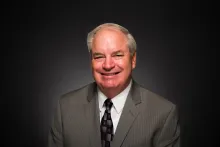
Robin Webber was born in Chicago, Illinois, in 1951, but has lived most of his life in California. He has been a part of the Church of God community since 1963. He attended Ambassador College in Pasadena from 1969-1973. He majored in theology and history.
Mr. Webber's interest remains in the study of history, socio-economics and literature. Over the years, he has offered his services to museums as a docent to share his enthusiasm and passions regarding these areas of expertise.
When time permits, he loves to go mountain biking on nearby ranch land and meet his wife as she hikes toward him.
