
Robin S Webber
This transcript was generated by AI and may contain errors. It is provided to assist those who may not be able to listen to the message.
Well, once again, we'd like to welcome everybody here and all those that are watching on the web page, the streaming, and those that may be listening to this message in the future. I hope that it will be a blessing and well received by each and every one of you today and those that are watching in the future. I'd like to talk about something that's very relevant to each and every one of us with some of the tidings that we have been reading about or hearing about over the last week, week and a half. I'd like to talk a little bit about what's been occurring over in Hawaii and with the crisis over there with the firestorm that encroached upon and took out the city of Lahaina on the west coast of Maui. I think all of us, I can say this, have been shocked and saddened by the death of our fellow citizens on Maui, whether it be in Lahaina or, I think, a little bit further up on the Kahana Poly Coast. Many of us are familiar with it. We have been there. We've had feast sites there. We come. We go. But what happened to the residents there in this year, and just a week ago, is almost mind-boggling to recognize that even now that they have found that 114 people have died, so far that they have found, and to recognize that over a thousand people are still missing. When you read about some of those stories about what happened in Lahaina, it almost sounds like the days of Vesuvius going off and the volcanic action that occurred to Pompeii and Herculaneum, especially in Pompeii, where the Roman citizens would be rushing towards the ocean to save themselves. This occurred in Lahaina as people were trying to douse the buildings, trying to save them, trying to save their businesses. And then they recognized, abandoned the building, they had to save their lives, even as they were moving towards the water, moving towards boats, where the metal on the boats was actually melting, that they had to get in the ocean to save themselves and be there with a whole bunch of other people in that ocean. And even then, I was listening this morning as I was coming down in the news that even some of those that were in the ocean were affixiated because of the amount of smoke that came upon them. It's an incredible story, a sad story, and here we find massive devastation in what we thought was paradise. Hawaii. The point that I'd like to bring to each and every one of us on this Sabbath afternoon is simply the people that did die, even the people that are living and now having to go back again and again and think about, little did they know that their lives were going to be changed forever.
Ever. Those that are living, living, much less those that died, they don't even know it now. To recognize in a day when they woke up, they were looking forward to the day, they were looking forward to being with their spouse, perhaps their children, perhaps going down to the job that they'd love to fulfill down in the town, as it were, of Lahaina with the Banyan tree, which is kind of the landmark which many of us have seen over the years, and to recognize that all at once, all at once, everything had changed. My question to all of you is simply this. How would you handle the news that you only had a short time, a very short time, before you would die? Who? Me? Yeah, that you would die. How then, if you had that news come to you, how would you handle your remaining hours, remaining days? There's a saying that goes like this, watch those who are dying, for they will teach you how to live. So with all of this that's been going on, and this is, you know, again, we're focused on Lahaina, Sweet Spot, Paradise, it's in the news, and yet, situations like this are happening every day, somewhere on one of the six inhabited continents of the world, of situations that come upon people. Let me take you a step further. I'm asking you, what might we learn? What would we do? Let me ask you this question. Now, I've got to give you a little alert. This is going to make your mind work. You have to stay with that, but I'm going to ask you to come to the point, okay? And that is simply this. What would you do differently today?
If tomorrow you knew that you were told that today would be your last day. But wait a minute, if today is your last day, there is no tomorrow for you to ponder about today. Did you follow that? First time? I don't have to repeat it. Somebody want that repeated? Thank you. Which brings us, then, to consider the godly admonition that we're going to be touching upon today. Teach us to number our days. That further leads me to discussing a choice, because each and every one of us make a choice how we live in the moment and how those moments connected one upon another, linked together, create the day, not only for us, but before God, before those that Mr.
Miller mentioned in his message that we love, that we care for, that we come and do. That to recognize that simply this leads me to the title of my message, then, and it is simply this. Walking with God or dancing with the devil. Walking with God or dancing with the devil. Again, it's a reality for Christians. Life is times is what's happening that we have not necessarily planned for and or perhaps ever imagined. Now, hear me, please, and those that are watching this on the stream or later on on a webcast is simply this and is to recognize simply this.
Christians are not necessarily immune to disaster. Christians are not immune to bad things happening to them. We need to understand that. Understand that fully. And life can come and life can go. Just this past week, I was notified that somebody that we knew had moved into our circuit, known the individual for 40 years, and they had just been placed on hospice. And they were in our area. So Susan and I went out to visit the person, had a very engaging, animated, nice conversation of catching up. The individual had only been on hospice for a couple of days.
Very good, very alert, very astute, very good flow back and forth. We laughed, we talked, we shared about people that we know in common. The person actually called me the next morning, very cogent, and her glasses had come undone. The screw had come out, the famous screw that holds your glasses together. And she wanted me to take care of that for her.
And I said, I'll get back to her as I can. I said, I actually have the same problem going down to get the screw in my glass today. I said, put some Scotch tape on there and hold on. Well, we'll have to have that conversation another time because by Thursday evening I got a notification that the person had died. And here we just had the conversation. No thought that it was going to, you know, be immediate. And the person died just like that. And that can happen to us. And we need to understand something that we're not immune.
I'd like to share a story with you. I actually used some of this material back in, I think, 2001 from a news headline that had come out, and I researched it deeper. And it was in the World News and Prophecy magazine when I used to write that column called This is the Way. And the title was Dancing with Death. And I'd like to share this with you.
Stay with me for a moment. I like to tell stories, and this is going to kind of go into story form for a moment to allow you to know what happened. It's a story of a couple that had just got married. Their names were Asi and Karen Strar. And they were over in Jerusalem. They were Israelis, and they were celebrating their wedding. And again, this was back in 2001.
And they actually had 700 people joining them on the third floor of the Versailles, not in France, but in Israel, the Versailles Hall in the southern part of Jerusalem. But little could they imagine on this day of joy what was going to happen as the wedding party was being held on the third floor of this Versailles Hall.
And it was a happy time, and everybody was joyous. You know, if you've ever seen either the Jewish community or the Arab community over in the Middle East, they're very emotional. They're very animated. They're very excited. And again, there's nothing like a wedding festival, right? And again, even Jesus alludes to that, what the wedding supper is going to be like. So the guests were enjoying it. There were 700 people up on the third floor of this building, and a number of them were dancing out on the dance floor to a popular bouncy mitzvah.
That's a Middle Eastern Jewish kind of a tune. Now, listen to me. This is very interesting. They were heard singing in unison, the tunes refrain, I have no money, and I have no future. And at that very moment, at that very moment, the floor began to collapse, and 150 people dropped down three stories through that hole that had been created. In a moment of joy came disaster. It kind of reminds you sometimes that life can be short, and things happen to people that you don't necessarily plan for, expect, or even imagine.
It was at a moment when the mother of the groom was hoisted up in a chair. You can see a jus- think of Fiddler on the Roof, that the mother of the groom, which was traditional, was hoisted up in a chair and was moving through the dance floor. It was a joyous moment.
She also went down. She did survive, but she talked about the travel downstairs. There were about 150 people that were dancing on that dance floor as it sank. Suddenly, seeming in unison, they plunged, disappearing into a dark pit of death that filled with dust and with screams. There was simply no warning, no time for the vanishing faces to grasp that they were being swallowed up in what you might call a sinkhole. It's amazing how the rest of the incident is described as the third floor collapsed on each floor. As the third floor collapsed, as it went down, each floor collapsed. So it's almost like pancakes, just like this, on top of one another, going down, going down, going down.
One of the television commentators described it was in tears, because the loss of life knew no favorites. There was a little three-year-old that died. There was a 76-year-old that died. And actually, at the bottom floor, they found a couple still embracing, locked together in death.
Unfortunately, there were 700 people on the scene to witness all of this. 24 people actually did die. Interesting, and more wound up in the hospital. Why do I relate this story to you? Would you please join me in Matthew 24? In Matthew 24? And picking up the thought in verse 34. We are familiar with this. It's what we call the all of that prophecy.
And it mentions what the time of the end would be like and what was going on. In verse 34, it says, Assuredly I say to you, this generation will by no means pass away, till all things take place. Now notice this. Heaven and earth will pass away, but my words will by no means pass away. Now many of us that are students of the Word and have studied prophecy are familiar with this scripture. But of the day and the hour, no one knows, not even the angels of heaven, but my Father only. But as in the days of Noah were, so also will be the coming of the Son of Man. For as in the days before the flood, they were eating and drinking and marrying and giving in marriage until the day that Noah entered the ark, and did not know until the flood came and took them all away. So also will be the coming of the Son of Man be. And then it goes on to say in verse 40, then two will be in the field and one will be taken and the other left. It almost sounds like the third floor of Versailles Hall. Two women will be grinding at the mill and one will be taken and the other left. Watch therefore, for you do not know what hour your Lord is coming. But know this, that if the master of the house had known the hour that the thief would come, he would have watched and not allowed his house to be broken into. Therefore you also be ready, for the Son of Man is coming at an hour in which you do not expect. Now why am I sharing this verse with you? This verse alludes to the fragility of life. Life can be, life can end. When it says that people were giving and taking in marriage, in the days of Noah, does not necessarily mean that they were doing something wrong, and so we have to go deeper in that. It was like they were just kind of living their life like it always was going to be. And of course, a witness had gone out by Noah, who's a preacher of righteousness, but they were just carrying on like life is always going to go on. There's not going to be any interruption. There's not going to be any disruption. Now you and I know, as Christians and readers of the book, that God guides us by His Spirit, that there is going to ultimately be a climactic time at the end of the age where this is going to occur, of which Jesus Christ is literally coming back to this earth. And then after that, the kingdom of God will commence. But at the same time, we live that kingdom life now. We know that Christ is in charge, and we also recognize that in this kingdom life that God grants you and me to be partakers of, we need to recognize that we need to own every moment and make time count.
Because sometimes things will just seem ordinary, not extraordinary.
They will seem routine, not disastrous. But here's what I want to share with you. All we have is today. I've mentioned this to you before, that it was about two or three years ago, and I always try to get this story right so soon as you'll like the way I tell the story. But I came into the kitchen, and I wanted to share something with Susan that I thought was profound. I found something that was profound. I was thinking about it. And I said, honey, you know, all we have is today. And Susan looked at me, and she said, let's take it further. All we have is the moment.
Moment upon moment upon moment makes a day. A day plus a day plus a day plus a day makes a week. What I want to really share with all of you is to look at the now. Because again, you and I, we may not have tomorrow. Now don't go out today and say Weber has put a death wish on all of us. That's what I'm saying. I hope many of you will have many, many rich and long years of life yet. But what are we doing today? This is the point that we have to be alert to the calling that God has given us. What is interesting in all of this is to recognize—and again, I'm going to share something with you—that humanly, we will take away sometimes that, you know what, bad things happen to good people. And seemingly, bad things can even happen to Christians that pray every day, that study every day, that have given their life to Jesus Christ through baptism, that pray to the Heavenly Father, and yet something will happen. Join me if you would in Ecclesiastes 9. In Ecclesiastes 9—and let's pick a book of wisdom, and let's pick up the thought of the preacher Solomon and what he says in Ecclesiastes 9 and in verse 10.
He was doing some using here. Whatever your hand finds to do, do it with your might, for there is no work or device or knowledge or wisdom in the grave where you are going, where you are headed. Death and taxes does not really happen to everybody else. It happens to us. Even we that sometimes, perhaps, think we're immortal. We have this mindset of when we're 14 or 16, and that doesn't change, but you know, things are happening on the outside, and you know what, they are changing. We're no longer 14, 15, 16, and we live in a society where things can happen.
There is no knowledge, and that's what I said. What if you were told tomorrow that today, this day, is the last day? There's no knowledge. That's what God says until the resurrection. Then Solomon says, I returned and saw under the sun that the race is not to the swift, nor the battle to the strong, nor bread to the wise, nor riches to men of understanding, nor favor to men of skill, but notice, but time and chance happen to them all. And humanly, it can seem as if just time and chance can't happen to all. And even it happened to people of the Spirit, people of the Book, people that are under the New Covenant. The only difference is simply that to recognize that God has purposes beyond the moment. He doesn't miss a blink. He doesn't miss an inch. And we remain in His hands for His purposes to understand and to hold to that, which is important.
Bad things happen to good people. If you don't think so, there's 42 chapters about a gentleman named Job. And everything that could happen did happen to this man. And yet, he would not curse God. He would have questions about his supposed friends and their advice.
But at the end of Job, it says simply this, I have heard of you by the hearing of the Word, but now my eye sees you. Job is about the spiritual journey of God's person on this earth. And our understanding about what God is doing does not happen overnight. Does not happen in a year at times, just like Job. When God has His hands on you and me, I want to share something with you. When God has His hands on you and me, spiritually, He does not let go. And we do remember in Revelation 1 where it says that Jesus, the risen Christ, exalted, holds the keys of life and death. So even death is not laid in God's eyes. Things do happen. Things happen to good people, Christians, just as much as people of faith over in Maui that look to a higher being. They died! Is God a respecter of persons? No, I believe that God has a purpose for every person, whether in this lifetime or in the future. Join me if you would, please, and let's go to Luke 13. What then is our responsibility?
In Luke 13, Jesus tells the crowd something very important, which is a foundation of what I'm trying to share with you. Luke 13, verse 4. Actually, I want to go up in verse 1. Pardon me. There were present at that season some who told him about the Galileans whose blood Pilate had mingled with their sacrifices. And Jesus answered and said to them, Do you suppose that these Galileans were sinners worse than all other Galileans because they suffered such things?
I tell you, no, but unless you repent, you will also likewise perish. Or those eighteen on whom the tower in Siloam fell and killed them. Do you think that they were worse sinners than all other men who dwell in Jerusalem? I tell you, not unless you repent, you also will perish.
What Jesus was doing is exactly what I said in the beginning about that, saying that we'd learn how to live by understanding those that have died and what comes after. And Jesus used that as a wonderful example. Christ asked us today, dear friends here in San Diego and those listening, to learn from tragedy, to learn from Maui, Lahaina, Kahana Polycoast, to learn from what happened in Jerusalem 22 years ago on the third floor of a wedding supper.
Let's understand simply this. Jesus is letting us know He who lives forever, how temporary our life is. We have this thing inside of us. It's a false tick that always thinks manana, always thinks tomorrow, always thinks next year, always thinks everybody else but me.
And God wants to know what we're doing today. He wants to know what we're doing today. You know, Jesus uses his terminology about understanding the whole situation. He's using this tragedy that was visited upon two different parties in his lifetime so that when we are hit with tragedy, we are rocked to our core to recognize how temporary our lives are and to do something about it. He mentions the term repentance. What's that mean? Repentance means to literally turn our lives around, to change directions, signifying a real change in our life's pattern.
All of us, in one sense, are dancing with death. All of us, in a sense, are dancing to death. It's appointed unto all men once to die. And, oh, by the way, and women too. And so we dance the dance of life, thinking that the floor will always be underneath our feet and we'll keep on walking. And God speaks to us today. He speaks to me today. What are we doing today to change? You know, when you think of the term repentance, I was just thinking about that and so often talking to people in baptismal count, what is repentance? Repentance is like this. And turning around and going the opposite direction and walking away from the life that we lived before or walking through the circumstance that we find ourselves now, even as New Covenant Christians, that needs to be ejected and discarded from our lives. But sometimes what happens is, you know, this, this is my last dance up here on the stage, okay, what we do is, you know, we start and we tell you, yeah, I heard Weber and he said that we're to turn around and go the different direction 180 degrees and watch this. But you know what happens sometimes? As time goes by, sounds like a song, doesn't it? As time goes by and look what happens.
We go full circle and go back to where God first called us. Yes.
Are we ready today to meet our Maker? Are we existing in this moment doing everything that we can to praise and to honor Him? That's what we need to ask ourselves.
Let's turn to Psalms 90 verse 10. In Psalms 90 and verse 10, and I alluded to this in the very beginning of the message, let's notice what it says, the days of our lives are 70 years, or three score in 10. And if by reason of strength they are 80 years, yet they their boast is only labor and sorrow, for it is soon cut off and we fly away. Who knows the power of your anger? For as the fear of you, so is your wrath. So notice this, and this is the psalmist, beseeching God earnestly. So teach us to number our days that we might gain a heart of wisdom.
And that's why we're thinking about Maui today.
That's why I brought up the situation in Jerusalem 22 years ago. We learn how to live today by those that have died before us, and to recognize that life will have its interruptions. But the most important thing it is recognized is not the physical interruption, but the spiritual interruption that occurred before that when God called you to be a part of his family, and allowed Jesus Christ, the great reconciler, to unite us with his father and now our father. And God knows always what is going on in our lives.
I want to share a thought with you on this, that always when you have an accident, just like what's happening over in Maui now to find out what happened, I want to go back to the story in Jerusalem. After that horrible accident at the Versailles Hall, the final report cited the building owners on multiple building violations. You see, the facility was initially built as a factory, and the current owners were woefully guilty of using cheaper structural material, and that such a facility was never, especially on the third floor, to hold 700 people, much less a joyous crowd on a wooden floor bouncing up and down to what we might think of as habanagila, with the joy of a Jew in a wedding feast. Which leads us to this question, with what God is developing and building in us. Who or what are we shortchanging right now, thinking that you never have to pay the piper? See, God is building something, forming something in us, now, to His glory and to His honor. But here's the bottom line, just like that Versailles facility, we cannot go with shortcuts. We have to have the sure foundation to stand on. That's the importance of recognizing things. Because right now, we are either seeding seeds of growth and or destruction for future events that may affect our lives. And stay with me, if not your life, somebody else's life. Somebody else's life. Most people are always connected with somebody else. Here's one of the big questions that I want you to grapple with. We're just talking up here because we're in this all together. How are we short-cutting God to thrive and exist in us in this moment? Today. Not manana. Not tomorrow. But today. That's the big question. Big, big question that we need to answer. I'd like you to turn to James 4.13.
In the book of James.
And let's take a look at James 4.13. I love the way James is inviting. You know, it's always good when you're communicating, whether it's in the written word, invite people to come along with you. Come along with me. He says, come now. Wake up! Listen to what I'm saying. Come now. You who say today or tomorrow, we will go to such and such a city. Spend a year there. Buy and sell and make a profit.
Whereas you do not know what will happen tomorrow. For what is your life? Is it even a vapor that appears for a little time and then vanishes away? Instead, you ought to say, if the Lord wills, we shall live and do this or that. But now you boast in your arrogance. All such boasting is evil. Therefore to him who knows to do good and does not do it, to him it is sin. Now let's understand the balance of this verse, please.
Understanding that James is basically writing to the Hebraic community within the body of Christ at that time. And we recognize that at that time the Jewish diaspora was spread throughout the Roman world. And so there was a lot of coming and going in mercantile work, etc., etc., of visiting back and forth. And so he's cautioning them. Now the point is this. Is it wrong to plan for the future? No. It's absolutely important to plan for the future. Our physical futures as well. We have to plan our business. We have to plan our own home life. We have to plan our own personal life. And you can put that down in pencil. Absolutely. You might have an eraser because God might have plans that you don't even know right now. But with this, to recognize as you lean towards the future, you better be planted in the present here and now and to recognize that God may have business with you today. I'm not even talking about business of death, but business for us to learn by and to grow by. The best laid plans of mice and men. The best laid plans of mice and men. You have a red Steinbeck on mice and men. So what do we do with this and where we go? Join me, if you would, in Ephesians 5, verse 14. And this is my encouragement. Mr. Miller gave you some courage to think about. I'd like to follow suit. In Ephesians 5, 14.
Paul has something to say that is very important.
In Ephesians 5 and picking up the thought in verse 14.
Therefore, he says, Awake you who sleep, that are not dealing with reality, especially spiritually. Arise from the dead, and Christ will give you light. See then that you walk circumspectly, not as fools, but as wise. And now notice, and redeeming the time, because the days are evil. Therefore, do not be unwise, but understand what the will of the Lord is, and don't be drunk. Don't be in a stupor. Don't be without your senses with wine. And this is a spiritual metaphor in which is dispensation, but be filled with the Spirit. Be filled with the aspect that the glorified God has reached down into our lives, and is working with us by existing in us by His Spirit, that the rule, and the reign, and the peace of Jesus Christ can be in our heart. But to recognize the foundation, to recognize all we have is the moment, to recognize that now is the time. I remember that very famous sermon by a gentleman named Phillips Brooke, a Protestant preacher back in Boston about 1880, and he got up on a Sunday. Didn't know about the Sabbath, but he got up on a Sunday, and he looked over this well-heeled crowd, you know, the Boston elite of that time and that age, and they were all in their pews. And when you're back there in Boston, sometimes the pews actually are reserved and have the name on for the rich families. Susan and I did that once. We were in the Old North Church, you know, we're no one by day, one by land, whatever that was, two by sea. Henry, we sit down and appear, and guess what? It said Paul Revere. We sat in the Paul Revere. That's how Boston was. And Philip Brooks gets up that day, and he looks over his audience, and they always show up, and he says, to you that come weekly, to you that are suited up, to you that come into this church hall and sit, but to you that ignore your brother, to you that walk by people, a little bit like Skip was saying, that are in need. He just looked at them, and he said, and this is the title of his message, the time is short. What are you doing today? The time is short.
He's probably a much more effective preacher than I am. Most people are.
But after that service that day, it was like no other day. As people approached people that they knew that they needed approached and had not approached and got down to life business. There was a joy. There was a buzz. They had come to recognize the time is short. What are you and what are, what are, what are you and what am I doing? That the people over in Maui that are now deceased, and some that are still walking over and through the ruins over there. What are you and I doing as the storms of life come our way? And will we be prepared? Join me if you would in Matthew 7 21. Jesus gives us a word. I'm just going to go about, we start at late, so I'm just going to go a few minutes for those of you that like to watch the clock. Because I can see the clock better than you. We won't go long. Matthew 5 and Matthew 7, join me if you would there for a moment.
I'm picking up the thought in verse 21. Not everyone who says to me, Lord, Lord, shall enter the kingdom of heaven, but he who does the will of my Father in heaven. Many of you will say to me in that day, Oh Lord, Lord, have we not prophesied in your name? We've even cast out demons in your name and done many wonders in, oh yeah, your name. And then I will declare to them, I never knew you, depart from me, you who practice lawlessness. Therefore, whoever hears these sayings of mine and does them, I will liken him to a wise man who has built his house on the rock. Because the rains came, the rains descended. Are you ready for this evening? Tomorrow. For those that are watching this, we're having a tropical storm hurricane-style coming into Southern California. And I'm not willing anything in any and all of you, please understand, but to recognize how cogent that this is all happening as I'm reading this. And it says, the rains descended, the floods came, and the winds blew and beat on the house, and it did not fall, for it was founded on the rock. But everyone who hears these sayings of mine and does not do them will be like that foolish man who built his house on the sand. And the rain descended, the floods came, and the winds blew and beat on the house, and it fell, and great was its fall. And so it was when Jesus had ended these sayings that the people were astonished at his sayings.
The rock. Join me if you would over in 1 Corinthians 3.
In 1 Corinthians 3, and picking up the thought in verse 9, please.
Paul speaking, for we are God's fellow workers. You are God's field. You are God's building.
And when he elected us to begin to know him and to know his son, the building material was great and wonderful because it was God in the flesh that we were to rest our lives on and to walk upon.
It says here then, according to the grace, the favor of God, which was given to me as a wise master builder, I have laid the foundation and another builds on it. But let each one take heed, hear me please, heed how he builds on it, for no other foundation can anyone lay than that which is laid, which is Christ Jesus. Now if anyone builds on this foundation with gold, silver, precious stone, wood, hay, and straw, each one's works will become clear, for the day will declare it because it will be revealed by fire. Yes, it will be revealed but yes, it will. Christians are not immune to challenge. And yes, even at times tragedy, it can come upon us. At times, God will intervene. There will be times when he doesn't intervene. And you know what? It's the same God for his own purposes. Share a story with you. I remember that back in the late 1950s, my mother was a very religious woman. Some of you knew her, very religious woman, not in this way of life at the time, but very religious. And she had a son, and she committed that son, my older brother, to God's care.
He died.
It was a tragedy. Well, I always remember it. I've spoken about it sometimes, and I don't mean to overdo it. But it was at the moment a tragedy.
But it was God's calling card for her to enter into greater understanding about what he's doing, not only with her, with humanity, and someday with my brother. Flip died. My mother learned from it.
Some years later, back in 1967, I was 16. I had spinal meningitis. Most of you know that's not a good thing to come up with. I had spinal meningitis. My mother, being a religious woman, again, again, dedicated me to God. I was anointed. Remember Mr. Guy Eames coming over and anointing me? Did not know if I was going to make it through the night physically. And I did.
Who does God love more? Did he play favoritism to me over my brother?
Or was there something working that moves beyond the moment and beyond the day? I know that same year in 1967, when I was anointed and I was healed, I've told you about that story in length, I realized that there were other children that were in our way of life that were dedicated to God. And they died. Let's be blunt. Let's be real about this. Were their parents wrong for dedicating them to God? Absolutely not. Absolutely not. But God has his purposes sometimes that move beyond the moment and move beyond the person for another time, another decade, for me telling you this story today. And we have to honor what he's doing and come to understand that.
In all of this, then, what do we do, brethren? What do we do today? How can our life change from what is happening over in Maui right now and the many Mauis that are around this world that are going on right now that we have not even heard about? And or maybe you have a fire burning in your life right now, or you have a windstorm coming up in your life right now, or you're feeling flooded and you can barely get your balance and be walking with God. You build your foundation.
Ah, not only the one that died, but that living Christ. He is enough and he is all.
He has past, he is present, he is future, he is our foundation.
You stay on that sure foundation. Don't shortcut God. God never short-cutted us by giving us a part of himself, Jesus of Nazareth, of what he went through. Tragedy, humanly speaking, in the moment.
But the disciples that were there at that time had to learn to move themselves beyond tragedy and to recognize that even in fire comes life. Even in death comes life.
Today is today. The moment is yours. August 19, 2023. Let this be God's day in you. Let this be your moment now to make a choice as to whether you will walk with God and trust him with your very life no matter what comes or make the other choice to simply waltz and dance with death.
I think you know what God wants you to do. And as your friend, I think you know what I'm imploring you to do. Allow this day to be a new day, a day that has ever been, that you will commit yourself to walk with God. Because that's what he's always wanted to do from the very beginning with his special creation. To walk, to talk, to be with you and me. Amen.
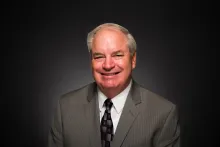
Robin Webber was born in Chicago, Illinois, in 1951, but has lived most of his life in California. He has been a part of the Church of God community since 1963. He attended Ambassador College in Pasadena from 1969-1973. He majored in theology and history.
Mr. Webber's interest remains in the study of history, socio-economics and literature. Over the years, he has offered his services to museums as a docent to share his enthusiasm and passions regarding these areas of expertise.
When time permits, he loves to go mountain biking on nearby ranch land and meet his wife as she hikes toward him.
