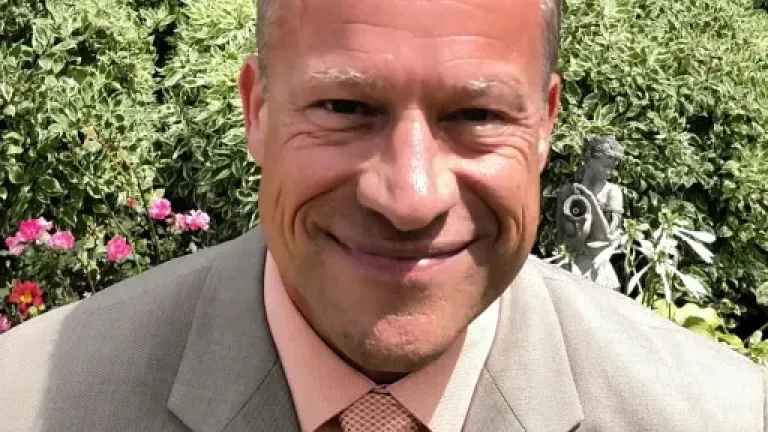

Mario Seiglie
We can really change our mind, physically and spiritually. Furthermore, with the help of God’s Power it will lead to the transformation of our human nature to divine nature. As we approach the Passover it is particularly encouraging that God is literally helping us change. We have a responsibility in this process of sanctification.
Well, good afternoon, everyone! And welcome to some of our guests here. Some of you haven't met yet, but welcome and it's nice to see you. I appreciate also Brian's Sumonet, how these things can affect your life, not just this life, but your eternal life. But it all starts, in a sense, in the brain. And today, brethren, I want to talk to you about, can our brains actually be changed? Which basically means, can our minds be changed? And can our ways of life be changed? And therefore, at the spiritual level, can therefore we change from human nature to divine nature? And obviously, the answer is yes. If you and I turn to Romans chapter 12, and I'm going to read Romans 12, verse 1 and 2, and it says, I beseech you, therefore, brethren, by the mercies of God, it was like saying, please, in God's name, please, you present your bodies a living sacrifice, holy, acceptable to God, which is your reasonable service. And do not be conformed to this world, but be transformed by the renewing of your mind, that you may prove what is that good and acceptable and perfect will of God.
God reveals us that we can change our minds with the help of God's Holy Spirit. And as far as changing the brain, which is the physical part of our mind, because the mind consists of the physical brain and of the spirit of man in man, as far as changing the brain, science is only now learning at the physical level that that can happen.
You see, so the Bible is always told as that. In other words, the old man can be transformed to a new man. And this is like a reconstruction, a rebuild, starting physically at the brain level, at the mind level, and at the spiritual level as a way of change of your nature, of your very nature.
And this is possible, obviously, at the spiritual level with the help of God's Holy Spirit.
As we now are approaching Passover, it's always good to remind ourselves of what we read in 2 Corinthians. And in 2 Corinthians chapter 13, 2 Corinthians chapter 13 verse 5, we read, examine yourselves as to whether you are in a faith. Test yourselves.
We are to examine ourselves and to test ourselves. And so today, brethren, I want to show you how we can really change, literally change, physically and spiritually. And spiritually is with the help of God's power, God's Holy Spirit. In other words, spiritually, we can change from our carnal human nature to become better people.
In other words, to have God's divine nature.
So this is particularly important, as I mentioned, as we are approaching Passover, because it's good for us to think about these things and give ourselves time to meditate and see how we can change.
To really become better people, to become like Christ.
And so let us start from a physical point of view of the brain. God has given us an amazing physical brain that mankind is only starting to understand now how amazing it is.
And the brain, with the spirit of man in man, it then becomes our mind. And we now, physically speaking, at the brain level, we understand that the brain can change, literally change.
And let's look at some of the scientific developments in the last century. In the 1940s, which is less than 100 years ago, Donald Webb proposed a theory in his book, The Organization of Behavior, which said something fundamental, and between quotes is, neurons that fire together wire together. In other words, repeated action, as we repeat action, that creates connections in our brain, in our neurons, and this becomes, in a sense, what we call a habit, a pattern. And if you and I can change our habits, we are reshaping the brain circuitry.
But this was a theory. Then, in 1970, Michael Mersinich demonstrated that brain maps, particularly sensory maps, could reorganize after an injury or repeated stimulation.
Like, for instance, if you have an accident or an injury or a stroke, you can work to get that part of the brain to recover to a certain point. And so that proved that the adult brain was not fixed. Like most of us, physically, after you get a certain age, you actually just start going down. But the brain, not necessarily.
And then, in the 1990s, with the advent of brain imagery, or imaging like MRIs or functional MRIs, this allowed scientists to see brain changes in human beings.
This is called, by people in that field, neuroplasticity.
In other words, it's the brain's ability to change, adapt, and reorganize itself throughout one's life.
In other words, it can physically and functionally change in response to learning, experience, environment, injury, and even thought patterns. Again, neurons that fire together, wire together.
In other words, when you repeat an action and you repeat, and you repeat that action, you repeat that thought and you repeat that thought pattern.
You repeat that behavior. You repeat that skill. Connections between the neurons in your brain become stronger for that specific action.
And therefore, the pathways become faster and more automatic.
And this is how habits develop.
Either positive or negative.
We heard in the sermon act about negative habits that people formed over years.
And so, typical examples, practical simple examples, is learning how to drive a car, or recovering from an injury, or memorizing scripture. As you repeat it, it becomes more automatic and you remember that.
But likewise, overcoming anxiety, or breaking a bad habit, or developing a new skill. The more you practice something, the stronger that brain circuit becomes.
And so, repeated behavior literally shapes your physical brain wiring. For instance, repeated gratitude strengthens positive pathways.
Repeated worry strengthens anxiety circuits.
Repeated discipline self-control strengthens self-control pathways. And so, what do you need to do, physically speaking? Practice, constantly, repeatedly, the right things. Have focused attention. Distraction weakens learning. Distraction weakens learning. That ties us to the point of always being on social media and things like that. It weakens learning.
So, other things help, like exercise, proper sleep. They're helpful for this brain rebuilding. Also, being involved emotionally, it helps the memory function. And so, a simple way to get about it is monitor what you're thinking about. What do you practice? What do you do? What do you focus on? What are you repeatedly doing?
You see, physically, science isn't only now learning that the brain can change. But God's Word has said it all along. Repeated wrong thoughts or good thoughts change your brain, your behavior, your habits. And this principle ominous as well with what the Bible says about renewal and transformation and spiritual growth. And so, I want to go back to what we read in Romans 12. And I particularly want to focus in verse 2. Because I read through it quickly, I just want to go now and dig a little deeper. In Romans 12, verse 2 says, Do not be conformed. The word conformed is schematizo, which is conformed to a specific pattern. Go on to that habit, that repetition, conformed pattern of this world.
And so, that repeated, old way of thinking, for instance, a negative way of thinking, I'm a piece of rubbish, I'm not good enough. And repeatedly saying that brings an environment in the mind that conforms you to that way of the world, a way of failure and negative thinking. Likewise, you could say, that's the way I am. That's the way I was brought up. It's not my fault, it's the way I was brought up. And therefore, that justifies me being that, because that's what it is. But you see, the brain learns with different thought patterns.
You can change. You can modify that. That's why then, in Romans 12, verse 2 says, But be transformed. What is the word transformed? It's metamorphal. Wherein you get metamorphosis. Which implies a complete internal change. Which results in an outward transformation. It's not just trying harder and working harder, but it's actually a change. Now, if you think about metamorphosis, you probably will think about a caterpillar becoming a butterfly. That's a metamorphosis.
It's not that the caterpillar is just trying harder to become a butterfly. Yes, it's got to work hard to get through that cocoon and work that, but it's a metamorphosis, a whole complete change. Now granted, the point of a caterpillar becoming a butterfly, it's only a physical analogy. But what are we talking about here? A metamorphosis is a metamorphosis of your brain, and a metamorphosis of your mind, and a metamorphosis of your nature.
A complete change. Now we go to the Continue Reading. And do not be conformed to this world, but be transformed by the renewing. Now the word renewing is anachinosis. Anach means again, and kynosis means new in quality. New in quality. So it's a, again, renewal of the quality of yourself. This is not refurbishing, like refurbishing old hours. It's a new house. It's rebuilt. It's not just that it's polished and looks better. It's a complete rebuild. A metamorphosis, a renewal, a gain in quality, and a new quality. And so, physically speaking, it's a weakening of those old pathways of thinking in your neurons, but forming new pathways in your brain.
And then Paul goes on and says renewing of what? Of your mind. Now this elevates that beyond the physical brain to the mind. You see, the mind is the brain plus the work of the spirit of man in man. That makes the mind. The brain plus the human spirit makes the mind. In Job 32, Job 32 verse 8, Job 32 verse 8, Job 32 verse 8, we read, but there is a spirit in man. There is a spirit in man.
There is the spirit of man in man. And the breath of the Almighty gives him understanding. The spirit of man is the breath of the Almighty, is the spirit of man in man, the spirit of man in man is the breath of God, is the something God has given us, a capability God has given us, and makes us to understand human things. Gives us understanding at a greater level than just the pure physical brain. In 1 Corinthians chapter 2 verse 11, it basically supports that. 1 Corinthians chapter 2 verse 11.
And now you read, for what man knows the things of a man except the spirit of man which is in him? You and I can only understand the things of man because we have a spirit of man in man, which is something that God has given to us. In other words, he gives us human intellect. He gives us self-awareness. He gives us the ability to reason and understand at the human level. And so, this amazing creation that God has done of the physical brain, it works together with this amazing human spirit that God has given us.
And therefore, just likewise, the brain literally rebuilds itself through positive or negative repetition. In other words, the brain changes structurally. And that it works in sync together with its spiritual component that works on the brain to make up your mind. It works in harmony with the human spirit, which then becomes what the Bible calls the mind.
So, our brain, with the human spirit, through repeated, godly thinking, literally develops and strengthens new physical, narrow pathways in the brain. That means, as you and I made a tight on the truth, rather than falsehood, on what's good, on what is encouraging, on gratitude, rather than negative thoughts and bitterness. In other words, we have positive trust and faith in God rather than fear. Our pattern of thoughts change. And so, the amazing beauty of the soul is that when you and I are baptized, and after the laying on of hands, you and I receive the gift of God's early spirit, which is the help from God, the spiritual help from God, that then gives you that extra spiritual help to your human spirit.
And then, with that help, which is God's power, you now have extra capability to use it, provided you and I are guided by the Holy Spirit. And as you then are being guided and putting that practice, you're going not only through a physical, restructureal change, but you're going through a spiritual, restructureal change from human nature to divine nature.
That is amazing how God has made us. And that's why we've got to live the way. The way is the way of life, is the way we live, is the way we talk, the way we think, the way we act.
And that's why in the New Testament it talks about the way. It's a new way of living. Now, continue reading in Romans 12. We get now to, at the end it says, because that you might prove what is good and acceptable in the perfect will of God. So as we examine ourselves, how are our repetitive thoughts, how are our repetitive actions, how are our repetitive words that come out of us, are we working in changing, in going through this metamorphosis? And then in verse 3 it says, For I say, through the grace that God has given to me, Paul is saying, through the abilities and capabilities and the wisdom and the gifts that God has given him, I say to everyone who is among you, to all of you Christians, not to think of yourself more highly than he ought to think. Don't think you're such a great superman, super hero, super woman, whatever, but think soberly.
Soberly. Sofroneo is the Greek word. In other words, to be of a sound mind. That is sane, moderate, in a right mind, sober-minded. Think soberly. In other words, think in alignment with reality. Think with truth using God's Holy Spirit. And you know what? That is conversion. Think about it. When you and I receive God's Holy Spirit, we go through this conversion and it is a process of overcoming with the help of God's Holy Spirit, and we are over time changing to become more and more like Christ. We are reshaping the inner man from the old man to the new man. The mind itself is renewed. And so Paul then, in Romans 12, talks through a few repetitive, positive actions, which are godly behaviors that you and I need to apply. That's why Denny says in verse 6, whatever gifts, whatever talents, whatever abilities God's given you, we all have certain abilities. We all have certain talents. Some people are very good in this. Some people are very good in that. That's why in the church, some people are good in helping with the sound system. That is helping decorations and flowers and whatever. We all have different talents. And so we help in that, he says, and those that have a talent of prophecy, usually you and I think prophecy, well, telling about the future. No. Most of the times in the New Testament, when it's talking about this, it's talking about a characteristic of being encouraging about God's Word. You and I could be talking after church, having a little snack out there, and in a conversation you give positive, encouraging things about what God did for you and what you learned. And this is prophesying. It's a different perspective of that Word, which is actually positive words about God and Christian living and things like that. So if you have that talent, do it according to the proportion that God has given you that ability. Verse 7, if you have a capability of serving, of ministry, of serving, serve. Help others. Maybe your ability in serving is one type of service, somebody else got a different talent in serving. Serve. He has the ability to teach. Teach.
Some of the ladies help with the Sabbath school, with teaching the little ones. If you have a talent yet, offer it. Use it. Serve it. Go out of your way to use it. He exhorts. Exhort. If you have a capability to exhort and encourage other people to keep going, do it. Because God's given you that ability. If you have ability to give, maybe it's financially, but maybe it's just give of your time. Give and listening to the other person in a way that the other person feels heard and encouraged. Geeving that way liberally.
If you have an ability to lead, do it with diligence. If you have an ability to be merciful and kind in your words to others, do it with cheerfulness. That's how the old man changes, rebuilds, metamorphoses to the new man. The spirit of man, with the help and being guided by God's early spirit, and you following that lead voluntarily, you practice, repeat, do, so that you are more and more becoming like Christ. You and I change through repetition, through thinking and living God's way. And that's why the Bible talks about God and have the love of God with all your mind, with all your heart, and with all your soul, which means with your life, your energy, focus of it in your mind, in your heart, and with all your life and energy, make an effort to go through this metamorphosis, which is changing as a habit, the way of thinking, and then the way of acting and the way of speaking. And this is what we read in other scriptures, like in Philippians 4.8. Philippians 4.8, probably a very favorite scripture to a number of you, and it basically supports exactly this, which says, Finally, brethren, whatever things are true, whatever things are noble, whatever things are just, whatever things are pure, whatever things are lovely, whatever things are of a good report, if there is any virtue, if there is any praise worthy, meditate on these things. What is meditate? Think and think and repeat and think and meditate on it.
It's not just, oh well, I'll empty my mind and just meditate and with nothing in my mind. No, meditate is repeated focus on something. And this is supported right in the beginning of Psalms. Turn with me to Psalm 1. Psalm 1, verse 2. Psalm 1, verse 2. But his delight is in the law of the Lord, and in his law, he meditates day and night. That implies thinking positively on God's principles, on God's law, which is the way of love, love towards God and love towards fellow man, day and night.
In Joshua 1, verse 8. Joshua 1, verse 8. You know, after the Israelites left Egypt and after Moses died, then Joshua was the one that led them into the Promised Land. And then Joshua 1, verse 8.
It says, This book of the law shall not depart from your mouth, but you shall meditate in it day and night. You will think about it. You will talk about it. You will continuously be developing these neural pathways in your brain, and developing these habits of positive, godly thoughts of love towards God and towards man, day and night, that you may observe to do according to all that's written. For then you'll make your way prosperous, and then you'll have good success.
Spiritual meditation is not emptying the mind, but it's filling it with truth, with God's law and God's ways. In fact, you'll remember the instruction in Deuteronomy 6. And you probably, as I mentioned, Deuteronomy 6 comes back to your mind exactly what I'm going to talk about. Deuteronomy 6, verse 7 through 9. Deuteronomy 6, verse 7 through 9. And you shall teach them, in other words, God's words, you shall teach them diligently to your children.
And you shall talk of them when you sit in your house, when you walk by the way, when you lie down. Can you see repetition? Repeat, repeat, keep saying, keep talking, keep educating them on God's law. And when you rise up, and you shall bind them as a sign on your hand, that's what you do. And they shall be frontless between your eyes. That's what you think. So you will talk to them, you will do the right things, you will think the right things all the time. You shall write them. You keep doing it all the time.
It's an act of developing and continuously focusing on good, godly things. In Colossians chapter 3 verse 2, Colossians chapter 3 verse 2, we read, set your mind on things above. Set your mind implies intention. Intention. You are intentionally, you are being intentional in setting your mind in the things that are godly. And it says, on things above, not on things of the world. You're not to conform yourself to the world, but you are to renew your mind, you to transform yourself, renewal of your mind. To repeat it, strengthening of these neurons at the physical level and developing these habits and you're becoming more and more like Christ. So, if you dwell continually on resentment, on envy, on fear, if your mind is continuously thinking about resenting, angry, things like that, those pathways grow stronger in your brain.
But if you dwell on God's promises, on God's Word, on Christ's example, on putting on the new man, those positive circuits in your brain get reinforced. And then Paul, we are in Colossians a little bit later, in verse 10 says, and put on the new man, who is renewed in knowledge according to the image of him, which is Christ, who created him. And so, this renewal again is anachinosis, which is new again in quality. That's what we got to put on. And then in verse 12 through 14 tells a little bit about what you got to put on. Therefore, as the elect of God, holy and beloved, put on tenor mercies. Put on kindness. Put on humility. Put on meekness. Put on long suffering. Put on bearing with one another. Put on forgiving another. If anyone has a complaint against another, even as Christ forgave you, so forgive. Above all, put on godly love, agape, which is the bond, which is the superglue, let's just call it that, of perfection. That's what we got to put on, brethren. But we must not be conformed to the world.
It's not just your brain, patterns, and habits, but you got to put down these fortresses. What do you mean? Turn with me to 2 Corinthians 10, verse 4. 2 Corinthians 10, verse 4. For the weapons of our warfare are not carnal, but mighty in God. You see, God is given as a weapon, which is his helper, which is God's only spirit. And we got to use it. We got to be guided by God's only spirit. And that works with our human spirit, and that works with our brain, and we are developing new habits, new ways. But these weapons of God that come through God's only spirit are effective for pulling down strong holds, for pulling down fortresses in your brain, in your mind, and around you.
What are these fortresses? For one, they are old brain patterns, of course, old habits, but it's also the carnal mind, the human nature. But it's also the demon world, which is around us. It's bad, evil influences. And, of course, the influence of society and peer groups and things like that. These are strong holds. These are fortresses. And we need God's help, which is God's power, which is God's only spirit, to help us fight. We need to be close to God. You see, these strong holds are like spiritual, gigantic castles in your mind, with a huge moat around them. And these are inside you and around you, and we've got to overcome them. And what are they? Well, in verse 5, it starts explaining them what they are, casting down arguments.
And every high thing that exalts itself against the knowledge of God. Arguments. What are these arguments? Sophisticated human reasoning apart from God. Sophisticated. Oh, these reasons are so smart, so clever, so sophisticated.
So evasive. So false. Lives. We've got to be prepared to be able to discern this with God's help, with a sound mind, being sober. And things that exalt themselves against God or the knowledge of God. Such as, I'm okay. I've got a good job. I've got a good money. Things are going well. And there's plenty of time. You know, the things that are happening in the world, this will come and this will go.
Brethren, I don't think there's plenty of time. I don't know how much time there is. But what if we are months, maybe a year or two? What if, in worst case, of us as a nation being attacked, or maybe a few more years? We are planting seeds to be hated by all nations. And we are going to be planting more seeds to be hated even more by all nations. Brethren, time is short. Don't have sophisticated human reasoning apart from God that you have all the time. We don't.
In 1 Timothy 6, 1 Timothy 6, verse 4 and 5, he's talking about people that are proud, in other words, that exalt themselves, that are proud. Knowing nothing. You see, because they've got all these arguments, sophisticated arguments, sophismas, as some people put it, and they obsessed with disputes and arguments over words. You know, brethren, there are people that come into church after services, start arguing about certain prophetic things that they don't really know, or they put certain perspectives to it. Well, this is my speculation. Become very strong about it. Arguments over words. From which comes problems like envy, strife, reveling, suspicions. Useless wranglings of men, of corrupt minds, and destitute of the truth.
Who suppose that godliness is a means of gain? For some might be gain of money, for others might be gain of, I know more than you do. From such, withdraw yourself. Brethren, we gotta be careful. We gotta be careful. Paul in Timothy, 1st Timothy, 2nd Timothy, Titus, continuously warns us about that. Let me give you another example in 2nd Timothy, chapter 4, verse 3 and 4. It says, for the time will come when people not endure sound doctrine, but according to their own desires, because they have itching years.
They want new truth. They want new understandings. They will live for themselves, teachers, and they'll turn their years away from the truth and be turned aside to fables. They master in twigs instead of mastering on the trunk of the tree. And yes, there are many twigs. There are things that we just don't know. And it's better to just say, well, we don't know. When we get there, we'll find out. But let's stick to the trunk of the tree. And what is the trunk of the tree? Becoming more like Christ. Becoming more like the stature of Jesus Christ. And so, that's what we're going to do.
Time is short, brethren. We have to fight against Satan's repetitive traps, pitfalls, landmines, the walls' pulls, repetitive pulls, as we heard in the sermon, it could be drugs, could be whatever. Repetitive, deceitful thoughts and ideas. Getting involved in things of the swelled. Please don't get involved in things of the swelled.
Please don't get involved in politics. How many times have I said? Ah, but people keep doing it. Please don't. Focus on the trunk of the tree. Then we need to become more like Christ. Think meditate on these things, as we read in Philippians 4. Whatever is true, whatever is honest, whatever is godly, whatever is virtue, think on these things. Our objective is to be a true follower of Jesus Christ.
As it says in 2 Corinthians 10, verse 5, it says, Bring every thought into captivity to the obedience of Christ. That means we gotta control our thoughts. We gotta rule our emotions. We must not allow them to rule over us like fortresses that want to control us. In Galatians 5, you read about the fruit of the Holy Spirit. What are those things? They're not instant traits like instant coffee. There you are. No. These develop with time, love, joy, peace, faithfulness, godliness, etc. They develop over time.
They are repeated acts of patience to strengthen patient responses. They are repeated acts of forgiveness because they weaken resentment. It's repeated prayer which strengthens trust and faith in God. It's spiritual disciplines that you and I need to have. We need to be transformed to the same image of Christ. Brethren, in the end, this is the process of conversion. In reality, it's the process of the sanctification of the Spirit and to obedience. In 1 Peter 1, verse 2, it says, we need to have, follow God's Holy Spirit to become sanctified, being set aside like true, godly people.
Their obedience, ongoing as a repetition, strengthens righteousness, weakens sin, shapes the brain, and honors God. Brethren, as we approach the Passover, there is a very important scripture that to me is very encouraging. It is really encouraging. And quite often, as we look at the Passover, we usually look at it negatively. I hope you don't see this as negatively. I'm just saying, you and I have the capability to use God's Holy Spirit to change. We've got now maybe five and a half weeks till the Passover. And let's use this time to work on positive thoughts, to be more prepared for the Passover.
But the scripture that I'm referring to is in Hebrews 10. And there, I just want to read to you 1st verse 14, which says, Hebrews 10 verse 14 says, For by one offering, that's Christ's offering, that's what he did for us, He has perfected forever. There's no need of another offering from Christ. The end result of this offering, the final output and end result of this offering, is perfection forever. Who? Those who are being sanctified. Those who are being sanctified. You and I, after baptism, till the resurrection, baptism is only the first step.
We've got to now overcome and remain faithful using God's Holy Spirit, remain faithful, improve and live and be an example. So that when we get to the point which is the end of our race, whenever that is, God says, I can change this person into a spirit being, and he or she will never, never be another Satan. Because he knows and he knows and he knows that he knows that you have been tested and proven through many trials and difficulties, that you will never leave God's way, that you have developed this path of being godly, being like Christ.
And so, therefore, verse 19, still in Hebrews 10, brethren, having boldness to enter the holiest, have boldness to enter God's throne. Today, how? Not physically, but spiritually in our prayers, we enter God's very throne, the holiest, by the blood of Jesus. And we do that by a new and living way. You know what? It's a completely new, different way that we have through Christ's flesh. So let's draw near with a true heart in full assurance of faith.
Don't say, I'll never make it! As much as you want to repent and you want to change, as much as you want to repent and you're striving to repent and change and become a very person, you have not committed the unpardonable sin. As much as you want to repent because you want to use God's early spirit to change, and God's spirit is what you need to use.
And so when you're using God's early spirit, you're not blaspheme against it. And so as much as you want to repent, you have not blasphemed against God's early spirit because it's God's help to help you overcome. And so therefore, draw near with a true heart in full assurance of faith.
Why? Because Christ and God will never leave you or forsake you. He's always there with you. But you and I got to do our part. We got to be led by God's early spirit. We got to work in going through this metamorphosis. We got to do our part. So can our carnal mind change? Of course. We can change with the help of God's early spirit if we do our part to become and to have God's divine nature. But we need to repeat this time and time again.
That's why God's early days repeat every year God's plan to actually get this into our mind through repetition. And so if we go back to where we started today, which is in Romans 12 verse 1. It says, I beseech you brethren, I implore with you brethren, please, by the mercies of God that you present your bodies a living sacrifice. Oh, don't we have to offer sacrifices now? Yes, we do. Do you know what the sacrifice is? You sacrifice your old way and you live God's way, the way of life.
That is the living sacrifice. That is the sacrifice we need to do. Not offering a bull or a cow or whatever. Hey, you offer your mind, your time towards God and creating these repetitions, repetitous actions. And so present your bodies a living sacrifice. Holy, acceptable to God. And this, brethren, is nothing more, nothing less than your reasonable service that you and I need to do towards God.
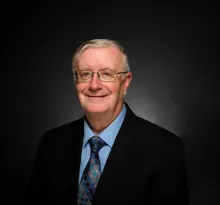
Jorge and his wife Kathy serve the Dallas (TX) and Lawton (OK) congregations. Jorge was born in Portuguese East Africa, now Mozambique, and also lived and served the Church in South Africa. He is also responsible for God’s Work in the Portuguese language, and has been visiting Portugal, Brazil and Angola at least once a year. Kathy was born in Pennsylvania and also served for a number of years in South Africa. They are the proud parents of five children, with 12 grandchildren and live in Allen, north of Dallas (TX).
