

Robin S Webber
This message given on the Feast of Trumpets speaks to God's abiding grace in the miracle of The Resurrection of the First Fruits both dead and alive at the 7th Trumpet. It not only deals with knowing about this event in Scripture, but what we embrace even when life is dark and stormy and death is at the door. It speaks to the awesomeness and intimacy of what Our Heavenly Father has planned since before time---and what His Son want us to lock down in our hearts and never let go---"I am the resurrection and the life. He who believes in Me, though he may die, he shall live!
This transcript was generated by AI and may contain errors. It is provided to assist those who may not be able to listen to the message.
I'd like to begin this message by harkening back to the message and melody that we just heard. I will wait for you, I will wait for you, through the storms and through the night.
And that is where I'd like to begin in a moment of darkness, how one person by his actions told one and all that would later meet him in death, that he was waiting for God. He was waiting through the storm of war and what he did at the last to allow what he did to touch us today as he touched something else. There was a wounded soldier and he was lying in a foxhole in the middle of a war and the soldier knew that he was about to die. He took out the Bible that was in his chest pocket and he opened it and he placed his finger on a verse to read, to comfort him in this moment as life was ebbing from him. Having reached for that and the blood flowing down his arm, when he opened his Bible to reach for a scripture that he wanted to know at that moment and needed to know to go through the dark, to go through the storm, to go through the battle, there was so much blood that was coming down his arm that the blood stuck to the verse that he read. The last thing that he read and it was simply this. John 11, 25 through 26, allowed me to share it with you.
In it it says, I am the resurrection and the life and he who believes in me, though he may die, yet he shall live, yet he shall live, and whoever lives and believes in me shall never die. And Jesus ends this in the book of John with simply this. Do you believe this? Now, Jesus is not here today other than in spirit, but I am a representative of the Lord Jesus Christ to the flock of God. And my question is, do you believe this? Heart of hearts, down deep, below the skin, whatever might come our way, that our Father above has given us a gracious Savior who did not take life but gave his life as was just sung in the song, and that is our champion, that is our sacrifice, that is our Savior, that is our high priest, and the one that sits at the hand of Almighty God himself. It's very interesting that later on when his remains were recovered, the attendants noticed this, that the finger, now with the paste of blood, the finger remained on the Bible. How stuck are you on the promises of God when it comes to what this festival date reminds us of? There are many different aspects as Mr. Gardinire brought out, but on this one I want to share with you because I think it is so very important. What may we today gain from this story, and why do I share it on this holy day? The Feast of Trumpets is designed to give God's spiritual children certain sticking points, and I want this to be a sticking point that you will never forget, now and always as you leave, that whatever storm comes your way, and sometimes it just seems like always night and dark, and dark things happen to good people. Dark things happen to Christians at times, beyond our comprehension. Lord, is this what I signed up for?
But to recognize that beyond this, beyond this, God is watching. He knows our heart.
Just as much as when he seems to have stepped off his throne in heaven and kind of came in that over that proverbial cloud and looked down on Stephen the Deacon, the first martyr of the church.
And it was like the heavenly, who could have more shooting for you in a dark moment?
Jesus actually got up, and it's like he was peeking down saying, I'm here. I am with you.
Quoting what it says in Matthew, lo, I am with you always, even to the end. We have some wonderful truths to discuss this afternoon, and yes, some promises that are there to guide us and to encourage us beyond our world of shadows. So here today, we are reminded and focused on the God who interrupts time and space. God is uncreated. God is eternal. You can't measure eternity. You can know what it's like, but don't get out your ruler. Just save it, because we're not dealing with measurements. We're not dealing with time and space, but it exists, and that is where God the Father and Jesus Christ are. And as we heard from Bob earlier in the first message, they are going to interrupt time and space once again. And what this day portrays is that the heavens are going to open. Christ is going to be coming with the heavenly host. The resurrected ones will be coming up to meet him, and they're not going to heaven because they're coming right back down, because as Bob said, there's some work to do down here on earth. So yeah, I remember many years ago—oh my, this must have been the early 70s, maybe late 60s, and I grew up in Pasadena, so I heard Herbert Armstrong all the time in that sense—and one night at Bible study, I think he just wanted to wake up everybody, and he said, brethren, do you know we're going to heaven? And everyone went, really? And he says, yeah, but we're coming right back down, because for those that are chosen and those that are resurrected, they're going to be there to assist Jesus Christ, bringing this earth into a state of the beginning of peace that's going to break out for a thousand years, the millennium of God. God's teachings through the Feast of Trumpets then gives us several powerful sticking points to bind our life's energies and devotions with powerful, godly truths. Not godly, maybe, no, truths. Loud. As you know as your pastor over these many years, I deal with what is loud in the Bible. I don't try to get over my skis on anything.
What I don't understand, I leave to God in faith. But what we're going to be discussing today is things that are very loud in the scriptures regarding the Feast of Trumpets.
God's teaching then gives us these points. And so what we're going to do is then we're going to look at this, some of the great sticking points. This day it pictures the resurrection of God's first fruit saints. Not all the world at this time. The Bible does not point to universal salvation.
It does point to universal opportunity. There is a difference, an opportunity beyond today. Into, yes, the millennium. Those that survived the tribulation and the day of the Lord. And yes, yes, as we observe the eighth day festival, to recognize when you think back to the Old Testament, them bones, them bones, them dry bones. And the house of Israel is resurrected, as it were. The house of Israel, this is the Old Testament. But the Old Testament is but a type of the prototype of what comes later on, and that is all of humanity. Our basic belief, if you want to know this, is that every human being is going to have an opportunity to come to know the Lord Jesus Christ in his time and when he's ready. And they're going to have a choice to make. What do you do otherwise? What else do you do with the down in 14th or let's go down to 12th or 13th century Africa, where people were not hearing about Christ at that time, when they weren't hearing about the truths of the Bible? Is God just going to leave that person in the grave? Or is he going to, in that sense, resurrect him and give that young lad down there an opportunity? God does not, God simply does not operate on chance. It's an opportunity. An opportunity is a word that, it's a Greek word, that means like in ancient days. If you were in Patoli, which was the harbor for Rome, and you're out there in the galleys, and the tradesmen would come in in the galleys, there was a certain time, a certain time, that the tide would come up, and then the ships could go into harbor and unload. There was a time, there was a specific time, and yes, you had to wait. But as that song says, I will wait on God, I will wait on God, and every human being is made in God's physical image, physical creation. But every human being is going to have an opportunity in God's way, and by God's grace, an opportunity to be a spiritual child, have the spiritual image of Jesus Christ, and have opportunity to be a more, a immortal within eternity as God and Jesus Christ, invite them out of the world of time and space into immortality forever, like hallelujah chorus, and ever, and ever. Do you want to do a break out in song? Nobody wants me to sing. Okay.
That's why we're here. This is the day, today, today, today, that the great sticking point comes out of scripture and blares at us, it screams at us with joy. I am the resurrection, I am the life, and he, not just somebody, but you and me that believeth on me shall not perish, but have everlasting life.
So my SPS, the title of my message is simply this, but, comma, we shall all be changed. We shall all be changed. That's from John 11.25. Let's stick our noses and our hearts into the Bible for a moment and take a look at this. John 11 and verse 25, it says, Jesus said, I'm the resurrection of the life, he who, yeah, read that, and whoever lives and believes in me shall never die. And then the question then comes across, do you believe this? What does that mean?
Why do we have to be changed? And what would God have us do now? Under God's inspiration, the apostle Paul answers that question in 1 Corinthians 1551. Join me if you would there. And again, the message that I'm giving you today, the excitement of Scripture to what God's intention is, but we, that's you and me, all those that have preceded us and all that will come up behind. Whenever that moment comes, we all shall be changed. So in 1 Corinthians, you're already there. Allow me to join you. 1 Corinthians 15. And let's pick up the thought in verse 51. 1 Corinthians 1551. Allow me to read it. Behold, I tell you, isn't that the one we're saying today? Behold, I tell you a mystery. We shall not all sleep, but we shall all be changed in a moment, in the twinkling of an eye, and at the last trumpet. That'll be the seventh trumpet. That's a sign of completion, of holiness. Just like the seven days of the week, six days for man, seventh one, we have the Sabbath. So the seventh trumpet, the seventh trumpet, not only initiates what we call the day of the Lord, judgment upon worldly society. And yes, Jesus Christ's coming back, but it's the time of the resurrection. And so we take a look at this again in verse 53. For this corruptible must put on incorruption, and this mortal put on immortality. So when this corruptible has put on incorruption, and this mortal has put on immortality, then shall be brought to pass the saying that is written, death is swallowed up in victory. I'm going to address this a little bit later in the mess—in the course of this message.
Right now, with God's Spirit, we may be able to do what we call all right in the here and the now, even with the Christian battles already at hand. But for the life of the world to come, we are totally not capable. For example, let me draw on the analogy of running.
You may be very good at running after the morning bus, and I've never missed it yet, but it requires an entirely different conditioning to run a marathon in the Olympics. Or have you not noticed? The Feast of Trumpets in its fullness is not about 26 miles, which is a marathon. It's about stepping into worthwhile immortality, and that's going to take work. That's going to take spiritual exercise, and even in that, being human beings, we will falter, we will fall, we will sin, we will come up short. So that recognizing that as that time comes and the heavenly portals open to recognize that the door is opened from God's side. It is God. There's no amount of works. There's no amount of look at what I am doing that merits immortality with God and Jesus and eternity. It is the gift of God. It is by the favor and the love of God, because it says that He loved us first, that we will enter. But with all that said, we can't lay back. We've got to go through the exercises. We've got to know which direction that we are going. But Paul didn't leave us with the fact of our inadequacies or lingering in frustration, but then guides us to God's ultimate solution. And in so doing, lovingly and excitingly tells us about the process. And that's what I want to share with the rest of this message. Number one, we don't... Are you ready for this? Because you may be, you know, your heart may be firm, but your knees might be shaking. Okay? Are you ready for this? Knowing what we're going to be talking about, we need not fear death. We need not fear death now and or later, and or fear the process of what the resurrection is all about. In verse 52 of 1 Corinthians 15, we notice again this...
Excuse me. Let me just take a look at my my notes here a second. Verse 52.
That may not be what I want, but anyway, I'll leave that one alone for right now.
God is giving to us what we need, and that includes, we shall all be changed. I like to talk about the word that is mentioned here, the Greek word for change, that we shall all be changed. The word there in the Greek is aleosso. And that offers a startling contrast. In other words, to make other than it is. To make other than it currently is. There's going to be a dramatic change. I want to share something with you. I like to talk about interruptions. Hopefully, I'm not interrupting you today, but maybe hopefully through God's Spirit I am, to think a little bit. But that to look at interrupt... God is a God that interrupts, and he intervenes in his time and in his way. And we have to be prepared for that. And his son, Jesus Christ, does the same thing. In Revelation 3, in verse 20, it says, I stand at the door. And he's speaking to all of the churches, not some segmented church, but all seven churches then and for the next 2000 years. And frankly, until this day is fulfilled in the future. He says, Jesus Christ says, I stand at the door and... ouch! He stands at the door and knocks. He will always knock on our door. The question that we have to have as the family of God is, will we open the door? And will you open the door of what we're talking about today to recognize that we can move forward in faith and not be afraid of the future, the fear of death, and to recognize the gift of God that lies behind?
That's what it's about. And it says in Scripture, we shall be changed. In fact, God says that twice. We shall be changed. If God says something once, that's pretty important, isn't it? But He says it twice, that we shall be changed. Very important. And this transformation isn't a long, painful process. The word there in the Greek of changed, it's like throwing a spear.
It's talking about there's going to be a thrust. There's going to be a movement. When it happens, it's going to come right to us. In other words, the Greek word denotes hurling or thrusting a javelin coming at you right away, just like that. But it's important to recognize that even though the process is immediate, the forethought behind it is long in coming. Long in coming.
God is the one that says back in Isaiah 46, I am God, and there is none other. I declare the end from the beginning and the beginning from the end. He's our out ahead of us. There's no time and space involved with Him. He's past, present, and future, and always. And He knows that when He calls somebody, He does not lose track of them because His Son, the shepherd, the good shepherd, the heavenly shepherd, says, I look over that flock and I know where you are. And that story of that man, man dying in the foxhole, I'm sure that God knew about this individual and His faith.
And the last thing that He did, He did not, like a Judas, deny His Savior, but rallied around Him for comfort and for peace. So that javelin is where that change is going to come very quickly. We talk about it's in the twinkling of an eye, or we talk about a star twinkling. And actually, it's reverberation of light. When we see a star, we say, oh, look at that nearby star. Now, sometimes down here in our solar system, we can be looking at a nearby star. And you know, some of that light has been coming at us for millions of years, hundreds of thousands of days, whatever you want to say, it's been out there. The dinosaurs probably looked at it at one time or another as it was coming towards us. And to recognize what happens here.
The Holy Days remind us God works with a plan and that He and the Word established it from the very foundation. We worship a God of design and purpose. And when He says He's going to do it, He's going to do it. Join me if you would in Ephesians, the epistle of Ephesians, Galatians.
Excuse me, Ephesians. And let's pick up the thought if we could in verse one. Ephesians 1, verse 3. Blessed be the God and the Father of our Lord Jesus Christ, our Lord Jesus Christ, those three words are all words of power. Lord comes from the Greek kyrios. That means Lord. That means our King. The Lord Jesus, Jesus, Yeshua, has a completely other meaning to that.
Yeshua, salvation. The Lord Jesus Christ, Christ, the anointed. So we have the King, we have the one that's been chosen, and we have the other. Lord Jesus Christ.
I like to personally think of that in that manner, because how would you like to just take one third of Christ and leave the other two thirds on the plate? This is what He is to all of us. And it says here, Just as those He chosen him before the foundation world, that he should be holy and without blame before Him in love. Having predestined us, thought ahead, in other words, to adoption as the sons of Jesus Christ to Himself according to the great pleasure of His will, to the praise of His glory, of His grace, by which He made us accepted in the beloved.
God is purposeful. God is up there not wondering what to do. He is the master of timing. Just like it says in Revelation 6, the people down through the ages, the saints, and perhaps even more the same when the tribulation time comes in the future, that the saints of God are going to say, How long, O Lord? How long? How long? And they may not just be saying it that quietly. How? I've done this. I've done this. I've done this. For you, for you, for you.
Maybe you're saying that right now. God not only created time, He is the master of timing, and He will know exactly the moment to intervene when those clouds roll back. And He says He's going to intervene in Matthew 24 for the elect's sake, the people of God, lest there not be any human beings left.
We're living in a pretty dicey world right now, aren't we? Think of Russia and the Ukraine, Russia being a nuclear power. You think of what's happening over in Iran and our country and a few outlines that we have with us. And recognize we live in a fragile world, but God knows what He's doing. And just when you think it couldn't get any worse, I thought of this. I've been in this way of life for 60 years and heard messages like this when I was 12 and 13, and we thought, is it not bad enough?
It begins to make me think about the days of Noah. It must have been really bad because God basically allowed the human populace to drown. He did not see any way back other than this one individual. One of my favorite verses in the Bible, but, comma, no, but, Noah, common. Our audience here knows and our newfound friends, one of my favorite words in Scripture is the word, but.
B-U-T. Just when you don't think something's going to happen, God puts down a but, and the equation is going to change. And that's what the future is going to be like. Now, when the seventh trumpet sounds, the but has come, and it's time to go into the next chapter of what God wants to do with his holy ones. I want to go to this again. When we go to 1 Corinthians 15 53, it says, for this corruptible must put on incorruption, and this mortal must put on immortality. Paul is answering a very important question that I want to share with you, and maybe get this equation into your mind.
Paul is answering a very important question in verse 35. In verse 35 of 1 Corinthians 15 says, with which body do they come? With which body do they come? Okay, you've always thought this way, but the world did not always think this way. The bottom line is this. At the resurrection, a body is forthcoming, and a new body, brand new God's will. This thought of a body was anathema to the Greeks that looked upon the body as evil and as a tomb.
Their belief allowed for an immortal soul, and I think most of us know Hellenistic philosophy, the immortal soul, and wandering into space and connected with the good, whatever the good was. That was their name for divinity, the good. And so you were amorphous. You were amorphous. That is not what Jesus, the master teacher, tells us. It says, which body? Very important. That thus at death the life forces of immortality were saved.
Okay, mention that. There was no thought of this personal immortality in the Greek world. There was no thought of personal immortality. What we find in the Christian resurrection, you may want to jot this down, in the Christian resurrection, the godly resurrection of the first fruits. There is individuality. There is individuality. And we are going to be granted immortality. You might say the two I's. We're going to know one another. I'm going to say, Dennis, good to see you. And I'm going to know who Dennis is. Even in that heavenly cloak.
He may look better by then. No, but anyway, no, he'll... But understand that. That God loves personality. He loves company. Why do you think he made us? I don't think that the one that we now know as God the Father and the I am that we know as the word of Jesus Christ today, I don't think they got bored with one another.
But they wanted to share. They wanted creativity. You know, you look at the flora, you look at the fauna, you look at the world. It has variety. It has personality.
Even a cactus has personality, especially when you get stuck by it. You talk to it like it's a person. I won't go into that, okay? Whatever you might say when you're stuck at that moment.
Remember this. Individuality, immortality, all by the grace of God. Understand that.
Hold on to that one. Live for that. Live for Jesus Christ and God the Father that they might grant that incredible gift to each and every one of us. You don't want to miss out on that. You want to be a part of that. I like to go to 1 Thessalonians 4.
Because this actually fits in with this very well, because what happens in the book of Thessalonians is that the the early very new Christians, they are Hellenistic in nature, and they're not quite sure what is going on. They actually think that maybe they've been, you know, maybe that movie left behind. They thought that they were left behind. Where is everybody? What happened? So Paul, that Renaissance man that is both Jewish, Roman citizen, and training in Greek from the city of Tarsus, which was known as Little Athens in what is now Turkey, he comes back. He calms them down. He's there to say, are we all alone? Did we miss something? God, could you speak up a little bit louder? So this is what Paul says about this, verse 13. But I do not want you to be ignorant, brethren, concerning those who have fallen asleep, lest use sorrow as others who have no hope. When death comes amongst us, it's horrible. It's tough. It's not easy to handle. We all handle that differently in grief. And we are going to—Christians are going to sorrow when somebody dies in their family or an acquaintance. God has put that grieving in us to cope, to come through it. It doesn't come immediately. Maybe it never ends. But here's what Paul is saying. We do not sorrow as others sorrow. For if we believe that Jesus died and rose again, even so God will bring with him those who sleep in Jesus. And that sleep is kind of, again, referring to what Paul had heard from the disciples, now the apostles in Jerusalem, about Lazarus. When the disciples said, aren't you going to go up? Aren't you going to go up and see Lazarus over here in Bethany? He's your dear friend. What are you going to do? What are you going to do?
And he said, Lazarus sleeps. And that's what life and the resurrection are like. You know how it is you go to bed and you wake up in the morning? I find as I'm getting older, I wake up a little bit more at night. But anyway, but for you that are younger, that you go to bed at night, you wake up in the morning, and it's like, where did time go?
Where did it pass? And that's exactly what it's going to be like. When that trumpet sounds, that we're going to be able to firsthand see God and know what He is like. And that's what's going to happen. Let's continue the story. For this we say to you by the word of the Lord that we who are alive and remain into the coming of the Lord will by no means precede those who are asleep. For the Lord himself will descend from the heaven with a shout with the voice of an archangel and the trumpet of God. We heard that at the beginning of services. I don't know if it was the trumpet of God. It might have been Sandys, but anyway. And the dead in Christ will rise first. You know, God is a God of order. It's really amazing. So it's not like ladies first, but it says that when we look at this, it says, and the dead in Christ will rise first. Then we who are alive and remain shall be caught up together with them in the clouds to meet the Lord in the air. There's going to be a traffic jam. It's not the whole world, but there's still...you think about the people for thousands of years that have trusted God, not only believed in Christ, but believed and did what Christ did as he lived on this earth. Then we caught up together with him in the clouds to meet the Lord in the air, and thus we shall always be with the Lord. Now, notice verse 18. We have an assignment. We have an assignment. Homework, artwork. Notice what it says. Therefore, comfort one another with these words. Does that sound like an assignment?
I think so. Now, as a pastor, before that, an elder, I've had this opportunity, and it is an opportunity. It is one that we have to go in carefully, though.
We will know this in Church of God culture. Sometimes we want to be be cheery and happy, and just, you know, somebody has just lost their mate or lost their child, have a very good friend in the ministry that just had a grandson crash and die in the middle of the night. So what do you do with that? Is the first thing out of your mouth? Oh, don't worry. He's going to be resurrected. That can be immature in how we handle the faith and understanding of the resurrection. But we need to come to that. That individual needs to come to that. And you have to use a lot of love and navigation. When you might share that, if you share that at all, then I would hope that we could. But, you know, one or two days in after a funeral, or at the funeral, oh, don't worry. We're going to see him again. You know, that doesn't really kind of make or shake it. That means when we handle the gospel and the good news, we need to be wise stewards. And have you ever noticed that timing is everything? So ask God for that wisdom. Ask God to put that patience in you. And there's going to be a come of time. And maybe that person will welcome it by then, and you'll smile at them, and they'll smile at you. Just a thought as we're thinking about this.
I'm going to skip about two pages of notes.
I want to get right to it at the end.
When we look at this, I like to go to Ephesians 2. Ephesians 2.
Ephesians 2.
Okay, I'm there too. Let's pick up the thought into Ephesians 2, and I'm going to start reading.
Okay, here we go.
Is that what I want? One second. Oh, Ephesians 2, verse 4. Here we go.
I'm so sorry. I've got this new Bible, and I'm still working with it. I'm training it, or maybe myself. Okay, sorry. Let me just make sure I've got the right verse here. Ephesians 2, verse 4. Here we go. Stay with me. But God, who is rich in mercy because of his great love with which he loved us, even when we were dead in trespasses, made us alive together with Christ.
By grace you have been saved, and raised us up together and made us sit together in the heavenly places in Christ Jesus, that in the ages to come he might show the exceeding riches of his grace in his kindness towards us in Christ Jesus. For by grace you have been saved through faith and not of yourselves that is the gift of God. It's not of works lest anyone should boast. For we are his workmanship created in Christ Jesus for good works which God prepared that we should walk in them. God's not done creating. He's not done creating. More is going to be coming in our way and in our day. To conclude, I'd like to have us go to 2 Corinthians 4. And picking up the thought in verse 16. 4 2 Corinthians. Okay. In verse 16. 2 Corinthians 4. Verse 16. Wrong place. Okay. Here we go. With what I've shared today and starting with the story about the man with the blood coming down his arm and pointing to a scripture that was going to see him through the last minutes of his life. Let's look at this. In those times of darkness and in those times of storm that was sung to us this afternoon.
Therefore, we do not lose heart. Even though our outward man is perishing, yet the inward man is believing and renewed day by day. For our, this is as Paul is describing it, for our light affliction, which is but for a moment, is working for us a far more exceeding and eternal weight of glory. While we do not look at the things which are seen, but at the things which are not seen, maybe around God's horizon, coming our way in his time, in his way, by his love, not only for us, but all the billions of people that have ever lived. For the things which are seen are temporary, but the things which are not seen are eternal.
I'm following what Paul told the Thessalonians, comfort by these words.
Talking about the resurrection is talking about comfort. You just have to know how to put the gloves on to do it, to make sure that you inspire the audience rather than to alienate them. Thinking about the resurrection at the end, I'll just take my notes, at the end, is to remember the resurrection of Lazarus and Jesus, the great Redeemer, at the sepulchre, at the tomb. Remember what it says? And it says, he said, and Lazarus come out. He said that with a loud voice, and that's what the scripture says.
This was a day of magicians and shamans and professional weepers. They still have that in the Middle East. Nothing like a funeral in the Middle East, whether it be Arab or Israeli. It's a lot going on if you've ever seen one. He wanted everyone to know with this loud voice that he was on the porch of Jerusalem, just three miles out in Bethany. He was coming their way, and he was giving that stamp of authority that through his father he was the one that enabled life and death and to have resurrected life. That nobody would make a mistake. This was not magic. This wasn't somebody shaking in a piece of cloth that was dead. Lazarus came out alive.
Think of the story of Jesus dead for three days and three nights. Why was he dead for three days and three nights? Because that is a matter of finality in that community with death. The same way again why he did not go to heal Lazarus immediately, because he didn't want to have any accident. The Jewish community at that time always felt that the Spirit was still hovering over the individual that died. He didn't want this to be the ending of Romeo and Juliet, where you thought one was dead and they woke up. I want to share something with you. Are you with me?
God the Father and Jesus Christ do not have accidents. You are here for a purpose and for a time. And when the rest of this rolls out, it's not going to be accidental.
And an announcement is going to go out. An announcement that was made long ago, after three days and three nights in the sepulchre, when a dear friend like a sister came to the grave to grieve. Mary of Magdalene, of all people. We all know about her past and her problems. Isn't it amazing who God gives tasks to do to wake the rest of us up sometimes?
Well, I would never. Well, that's why you're not God. Okay? God knows what he's doing and who he's picking. And she came back and said, He is risen. Gals, ladies, women, guess who God chose to bring out the announcement and with her voice, her vocals, to share with the rest of the world.
In a trumpet-like manner, He is risen. That's the kind of faith, that's the kind of announcement that we need to give. That needs to be our witness of it absorbs us, not only this life now, but in the future. I'll finish with this thought. I've shared this, I think, with this congregation before, probably more as I get over and forget, but that here's a story, and I've written about it in our publications before. I want you to, and if you're going to take notes, you can do this, it's going to be real simple. It's called Three Tombstones to Eternity. Three tombstones that I've been acquainted with or have run into myself. The first one is by a Dutch lady. Susie, what's her name? Who? Corey Timbroom. How many of you have heard of Corey Timbroom, Dutch lady?
Wonderful, evangelist type of lady, knowing what happened to her during World War II. She and her sister being put in the concentration camp, etc., etc., etc. But she went out to share a message of peace. She may not completely believe like we do, but oh boy, don't ever limit who God is going to use. And what occurred years later at a meeting, a man came up to her, came down the aisle, and she knew immediately who it was. It was an SS guard, the same one that had watched over she and her sister in a concentration camp, held them prisoner, oogled and ogled at them, and on and on. The sister died just a week or two before the end of World War II.
And the man approached Corey, and this SS guard, which is, I could describe other things, he came to her and said, you know who I am? She said yes. And he said, will you forgive me?
Will you forgive me? And Corey in her book, just like she says, the blood drained out of her. It was every human instinct to walk away. Not him, not him.
And then the spirit put her back together.
They shook hands, they held hands, and she said, I forgive you. And it was like this flush of whatever was released. And that's what forgiveness will do. That's what forgiveness will do.
You hold a grudge, it's going to hold you. And this is a big one to hold.
Susan and I, about 12, 15 years ago, we were down in Orange County, one of our Orange County members had died. And we knew where Corey Tinboom, who was German, oh no, she was Dutch. She was Dutch, pardon me, my people, the Dutch. She was Dutch, but for some reason she was over at the end in Anaheim. Anaheim is German for Anna's farm. I know you really wanted to know that. But she was buried in an old cemetery up in North Santa Ana, and we told the individual whose funeral I was actually conducting, but she's a dear friend, said, we're going to go over and look around here for a moment because we've heard that Corey Tinboom is buried here. Susan has never missed a search yet. New England, Ohio, when we were in, where's that town where I got you lost in the cemetery? Rich, which was it? Richmond? No, she was lost, but she was found. But here we finally came to Corey Tinboom's point. It was simple. And on that tombstone, this very world-famous woman did so much. You know, sometimes you see these tombstones. They go longer than the Psalm 119. You know, I did this, I did this. There was only one word, three words. Number one, Jesus is Victor.
That's it. That's where it begins, when God's grace begins to touch you and to work with you. I want to share another tombstone. I'm not that macaw, but these all have meaning. Another tombstone. I've read about this one. There was a man with him on his tombstone, and we don't know who he is. That was not the important part for him to convey to everybody that would come on later on. On that tombstone was not three words, but one word. The one word that he wanted to be identified with was forgiven. How are we doing? Forgiven. Then comes the third tombstone. I'm still looking for it again. Susan, we go to lay flowers on my folks' gravesite up in Riverside National Cemetery. No, military. But one time I have not found it again, but I think it was just for that moment. If not for a moment, forever. And I looked down. There was a name on this one, so they did I fit in. They wanted to be identified because they wanted the rest of the message to come out. This was it. The property of God. Wow. Since Chills is just thinking about it.
As we think about the resurrection, on this day, this high day, this beautiful gift of God to bring us into alignment with him and his son. Let us remember these three stepping stones towards immortality and being raised at the resurrection to recognize that Christ is victor.
He has conquered all by not giving your blood, but by giving his blood. Number two, we are forgiven. God is forgiven, God. And we ask and he'll come forward. Number three, when we are baptized, we go underneath that water and we come up. Going down is a type of death. Coming up out of the water is a type of resurrection. And then you are set apart by the efficient and you are set before God to receive the Holy Spirit. To recognize this, that you are owned by God. And he's not a Simon Ligri. He gave his son for God so loved the world, for God so loved the world that he gave his only begotten son, that whomsoever should believe in him should not perish, but have life ever after.
God did not send his son into the world to condemn the world, but through him that the world might be saved. Not only in our current lifetime, but that we will come up in the grave in glory.
Individuality. Immortality. To be able to look upon God's face and see him face to face unlike mankind down below. That is the intimacy that God wants with each and every one of you. As we attend these high days, come into realignment with his love, with his grace, through his son, the door. I am the door. Through his son, that we might have life evermore.
And with that, I'll simply say this. Amen.
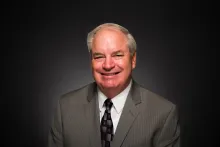
Robin Webber was born in Chicago, Illinois, in 1951, but has lived most of his life in California. He has been a part of the Church of God community since 1963. He attended Ambassador College in Pasadena from 1969-1973. He majored in theology and history.
Mr. Webber's interest remains in the study of history, socio-economics and literature. Over the years, he has offered his services to museums as a docent to share his enthusiasm and passions regarding these areas of expertise.
When time permits, he loves to go mountain biking on nearby ranch land and meet his wife as she hikes toward him.
