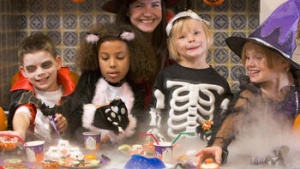
Blood-sucking
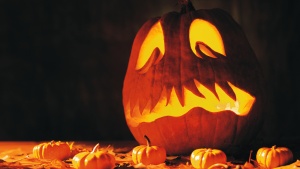
bats transforming into nocturnal vampires, candle-lit pumpkins illuminating
the night through carvings of mouths, eyes and noses, sinisterly
cackling women flying on broomsticks through the moonlit sky, and
eager masquerading children walk the sidewalks of city streets chanting,
“Trick or treat” on an evening in late October known
as Halloween. Most people recognize these common images and take
part in the "hallowed evening’s" festivities with
little thought of what they are actually celebrating. In this Bible
Study Discussion Guide we will discuss the origins of modern-day
traditions on Halloween, read through the Holy Scriptures how God
views the observance of holidays such as Halloween, and finally,
consider how we can apply this knowledge in our lives.
1. What practices and images come to your mind when you think of
Halloween?
2. What emotions do they evoke among the participants?
History of Halloween & the Origin of its Customs
Ask people where the traditions surrounding Halloween came from
and most will not be able to tell you. Most sources agree that the
modern holiday of Halloween finds its origins in the Celtic and
Druid festival of the dead, “Samhain.” This festival
marks the Celtic New Year. It encompasses the eve of October 31st
and the day of November 1st. Common Halloween practices point directly
to the pagan festival of Samhain.
"Trick or treating," bobbing for apples, and visiting
haunted houses were all practices associated with this pagan festival.
During the Samhain festival the Celts believed the physical and
spiritual world interacted like at no other time of the year. They
thought "souls" of the dead would visit the living. People
offered sacrifices of animals, plants, and, some speculate, even
humans, to those of the spirit world for a bountiful harvest. Some
built huge bonfires to ward off evil spirits. With the souls of
the dead roaming about, witches, demons, goblins, and ghosts would
appear as the physical world desired to interact with the more easily
accessible spiritual one. In fact, many people visited mystics and
mediums concerning marriage, death, health and fortune with the
presumed more available spirit world lurking around on October 31st.
Bobbing for apples on this supposedly “hallowed eve”
served as a popular means of fortune-telling and the length of an
apple-peel was considered an indicator of one’s life span.
1. What is the true state of the dead? Do the dead speak or communicate?
Can they roam the earth? Read Ecclesiastes 3:19-20; 9:5-6,10.
2. What is a "soul" according to the Bible? Is it a spirit?
Read Genesis 2:7.
COMMENT: A few translations of Genesis 2:7 say man became a living
soul. However the original Hebrew used here is "nephesh",
which is correctly translated in most translations as “being.”
(Man became a living being.)
3. Do "souls" die? Read Genesis 3:19. What happens to
a "soul" -- such as Adam -- that dies?
PSALM 27:1: "The LORD is my light and my salvation; Whom shall
I fear? The LORD is the strength of my life; Of whom shall I be
afraid?"
PSALM 96:4: "For the LORD is great and greatly to be praised;
He is to be feared above all gods."
JOSHUA 1:9: "Have I not commanded you? Be strong and of good
courage; do not be afraid, nor be dismayed, for the LORD your God
is with you wherever you go."
4. Clearly Halloween traditions grew out of superstitious fear.
If we worship the true God, what do we need to fear?
LEVITICUS 19:31: "Give no regard to mediums and familiar spirits;
do not seek after them, to be defiled by them: I am the LORD your
God."
5. What are "mediums" and "familiar spirits"?
How are they involved in fortune-telling?
6. What does God command concerning the use of fortune-tellers?
1 CHRONICLES 10:13: "So Saul died for his unfaithfulness which
he had committed against the LORD, because he did not keep the word
of the LORD, and also because he consulted a medium for guidance."
7. Does it really matter much to God whether or not we “dabble”
in these spirit areas such as witches, "ghosts," demonic
beings, etc.? What reasons does the Bible give for Saul's death?
8. Could we visit a fortune-teller just out of curiosity? Do you
think that would be okay in God's sight? Why or why not?
9. What about using Ouija boards or other occult techniques of
telling the future or getting advice?
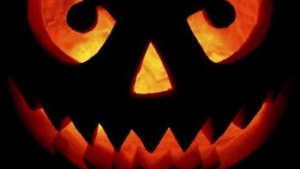
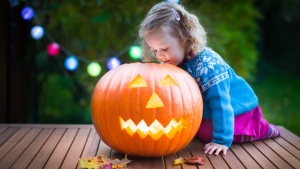
Some Halloween traditions, for example, the Jack-O-Lantern, come
from Irish legend. The story behind this sinisterly-smiling vegetable
tells of a man stuck between heaven and hell as a result of a bargain
with the devil. The turnip was the original hollow, candle-lit head
of choice, but when the Irish immigrants came to America, they traded
their tiny turnips for giant pumpkins.
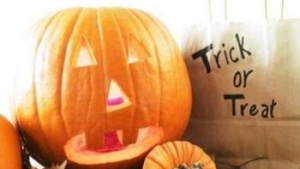
As for the "trick-or-treat" tradition, the idea of demons
and evil spirits playing tricks on the living prompted humans to
disguise themselves as goblins or ghosts to escape their evil tricks.
Soon, the masquerading evil spirits began playing the tricks instead.
Threatening people with tricks in exchange for some kind of a treat
soon followed, and now children dress up and chant "trick or
treat" to fill their bags with candy.
Regarding common Halloween characters such as witches and werewolves,
their origins can also be traced to paganism. Werewolf legends began
in Teutonic Europe, where various cults proclaimed their devotion
to "wolf-gods." Witches are women who made potions and
used magic to worship pagan gods, especially the Greek Mother Goddess,
Demeter. A witch's cauldron symbolized the womb of Demeter in ancient
custom. In paganism, the witches’ concoctions possessed healing
powers, but in the more "Christianized" holiday, the tonic
contained poison and had evil in store for all partakers of the
brew. Foreign gods and goddesses represent an integral part of this
holiday.
10. In your opinion, do the traditions of this holiday seem to
be associated with God or Satan?
11. What does Satan do to the world? What is his true nature? Read
1 Peter 5:8 and Revelation 12:9.
12. Do you think Halloween customs teach people about Satan's nature?
If so, how?
13. What part does "trick or treating" play in God's
way of life?
PROVERBS 14:9: "Fools mock at sin…."
14. Who makes fun of sin and evil?
15. What harm could there be in trivializing the existence and
activities of the devil and the evil spirit beings?
Syncretism
As Christianity began spreading in Europe, November 1st became known
as “All Saints’ Day,” with the preceding evening
having the name of "All Hollow’s Eve.” This holiday
actually came about in hopes of suppressing the non-Christian holiday
of the Samhain. Soon the mixing of the traditions of the Celts’
"Samhain" festival with "All Saints Day" produced
a holiday we know as Halloween. This mixing of pagan traditions
with Christian beliefs is called "syncretism." Many well-meaning
religious, church-going people today approve of this concept. Some
even see the observance of the "watered-down" pagan observance
as an opportunity to teach others Christian beliefs.
DEUTERONOMY 12:29-32: "When the LORD your God cuts off from
before you the nations which you go to dispossess, and you displace
them and dwell in their land, take heed to yourself that you are
not ensnared to follow them, after they are destroyed from before
you, and that you do not inquire after their gods, saying, 'How
did these nations serve their gods? I also will do likewise.' You
shall not worship the LORD your God in that way; for every abomination
to the LORD which He hates they have done to their gods….Whatever
I command you, be careful to observe it; you shall not add to it
nor take away from it."
1. When Israel came into their promised land, did God tell Israel
to "redeem" the pagan means of worship by adopting and
adapting those practices to worship Him? What did He tell them concerning
foreign means of worshipping Him?
2. How were the other nations to learn of God from Israel? Read
Deuteronomy 4:5-8 and then answer. Did God advise them to adapt
the pagan festivals to God's true religion?
3. Can one presume too much in regards to how to worship God? Consider
Numbers 15:29-31,37-40.
4. Do you think a truly repentant and converted individual would
want to start his or her life afresh and learn the way God wants
His people to live and how to worship Him, what His festivals are
and how He wants His people to celebrate? Or do you think such a
person would ask, "How can I make God pleased with the way
I've lived in the past?" Consider the following scriptures:
Romans 6:4, 2 Corinthians 6:17, Ephesians 5:11, 1 Peter 4:3-4.
5. What truth, if any, can one derive from Halloween festivities?
JEREMIAH 10:2: "Thus says the LORD: 'Do not learn the way
of the Gentiles; Do not be dismayed at the signs of heaven, For
the Gentiles are dismayed at them. For the customs of the peoples
are futile…."
6. Why is knowing the origin of Halloween and its customs important?
7. Tell what is "futile" about each of the customs associated
with Halloween.
Summary
For each of the following statements, explain why it is true or
why it is false:
1. The origin of Halloween doesn't matter.
2. Halloween is a celebration of evil and the dark forces of Satan.
3. A Christian seeks to honor and please God in all that he or
she does.
4. It is okay to observe Halloween just for the fun of it.
References for history and origins: (1) Halloween Through Twenty
Centuries by Ralph and Adelin Linton (New York: Henry Schuman, 1950);
(2) The New Encyclopaedia Britannica, 15th ed., v.5, p. 646; (3)
"Halloween: A Celebration of Darkness" sidebar in the
booklet Holidays or Holy Days: Does It Matter Which Days We Keep?
by the United Church of God, an International Association,1999.