

Chuck Smith
This transcript was generated by AI and may contain errors. It is provided to assist those who may not be able to listen to the message.
I'd like to begin the message by asking a question. I think we have posed ourselves with this question in the past. Just how real is God to us? Just how real is God to us? Do you sometimes struggle to find Him real? If you do, the best solution is to constantly go back to our foundations and review them. Any time you start feeling doubtful, you start feeling discouraged. It's always good to go back and review our foundation, just like it tells us in Psalms 11 verses 3 through 5. And I'd like to read it from a modern version. It brings out a bit more color to it. While you always have to be careful, you have to make sure it's accurate, but in this case it's accurate. You can follow along in the version that you have. Psalm 11, 3 through 5, it says, What can the righteous accomplish when truth's pillars are destroyed and law and order collapse? Yet the eternal one is never shaken. We can be shaken by what we see around us in society. God is never shaken. He is still found in His temple of holiness, reigning as Lord and King over all. He is closely watching everything that happens, and with a glance His eyes examine every heart, for His heavenly rule will prevail over all. He will test both the righteous and the wicked, exposing each heart. God's very soul detests those who love to resort to violence. And we see a world increasingly violent. It seems like now, every week, you're having mass shootings, you're having rebellions rising up in different countries. It is disheartening, especially in the area where I serve in Latin America. We talked to the pastor in Bolivia last night. We were concerned because in Bolivia there's a lot of unrest. As a matter of fact, right after the feast, they were able to finish the feast, and he was able to take a plane. The next day he had to really accelerate his departure because things were getting so bad. But everybody made it fine back into their different cities. He's from La Paz, and he mentions that now it's been over a month that they have not been able to meet in a regular hall because there's just so much violence, disturbances, foodstuffs. He has to have one of his helpers go out and see where there's food because it's not just readily available. The brethren are all doing well, but there's a lot of unrest as the president was virtually kicked out from all the corruption going on in his regime. And also Chile is still having a lot of unrest. They burned down two churches and also attacking now the police headquarters of different areas. And so police can't leave, and so they're burning down stores, sacking them. And it's a spirit of rebellion and senseless violence. It seems like that spirit is just going from one place to the next, and we don't know what all of this means. And we will have to see if this continues and it just engulfs the world because this is a different type of spirit. It's a satanic spirit. They're destroying their own transportation systems and their own stores where supermarkets, and then they say, well, where's the food? Well, you just burned it down. But they're not rationing. They're not reasoning as normal people would. And so, as we see the news, and it is quite discouraging, you know, Satan and the world's system can sow a lot of discouragement. Who wants to look at the news very often? Oh, we can just take it by little doses because it's so difficult to not let all of this rancor affect you and discourage you. And if you go to colleges, even in schools nowadays, many are taught to doubt about God.
People have to go through illnesses, you know, breakups, money problems, fear, terrorism, the politics. It's becoming embarrassing. There are protests and tragedies. And also, it always happens that some people drop out or start believing something else, and all of a sudden they're not with us.
Some also start doubting God's existence and asking, you know, why does evil exist if God is good and all-powerful? Why does he permit evil to be in the world? Well, those are some of the realities of the difficulties in life.
And it can make you doubt about God and about the biblical foundations that we have committed ourselves to. And yet, on the Sabbath day, it's like an oasis where we can be comforted through God's Spirit and God's Word. We have nothing to fear. We have that firm foundation if we recall and remember it. Notice in 2 Timothy 2, verse 19. And again, these are scriptures to study and meditate. I hope you just don't jot them down, but you use them during the week to study them deeper. 2 Timothy 2, verse 19. Paul is speaking here, and he says, Nevertheless, the solid foundation of God stands, having this seal, the Lord knows those who are His, and let everyone who names the name of Christ depart from iniquity. And so there is this solid foundation which the world has forgotten about in a large part.
In spite of the unfaithful actions of some, that solid foundation is what Paul is saying still stands. He was having troubles at that time. He was trying to encourage the brethren.
He was saying, let's go back a little bit to verse 14. He says, Remind them of these things, charging them before the Lord not to strive about words, to know profit, to the ruin of the hearers. Some people parsing the language, and you've got to get everything right, and they get all worked up about words and phrases and pronunciations. And Christianity is a lot more than just technical, grammatical things. He says, verse 15, Be diligent to present yourself, approve to God a worker who does not need to be ashamed, rightly dividing the word of truth. With experience, with study, you can see the balance in Scripture. But shun profane and idle babblings, for they will increase to more ungodliness, and their message will spread like cancer. Hymnias and Phileidas are of this sort, who have strayed concerning the truth, saying that the resurrection has already passed, and they overthrow the faith of some. Some were saying that the resurrection isn't going to be physical, that it's some spiritual experience that you can have in your life. And so some people were being led by this, and that's why he talks about the solid foundation of God's stands, and that we need to go back to that foundation. He goes on to say in the next chapter, verse 16 and 17, about that solid foundation. It says, All Scripture is given by inspiration of God, and is profitable for doctrine, for reproof, for correction, for instruction in righteousness, that the man of God may be complete, thoroughly equipped for every good work. And of course, dealing here with any church member, that we use this as our foundation. It takes study. It takes meditation and experience to use God's word in the proper way. So how real is God to you? We should be so thankful to have the God that we have.
First, I'm so thankful because of God that I knew growing up in the Catholic Church. That God was not really helping me very much as far as daily living. I just would go to Mass once a week, and it was all about rituals. There wasn't that real personal relationship. If you wanted to pray to God, they gave you this string of beads, and you had to just repeat endlessly these things. And somehow some mystical experience was going to give you that lift. It never did. It wasn't until I started speaking with God as I would a person that I could develop that relationship. And so going back to the times of the New Testament Church, there they had to face the Roman Empire. Their culture, their philosophy, very influenced by the Greeks. That was the reigning power of the day. They taught you how to think, how to act. And the gods that the Romans had were basically the ones that they had imported from Greek gods. And so Zeus, which was a Greek major god, to the Romans it was Jupiter. And they had the family there of different gods, feuding, and full of jealousies. And so from the Greeks, that was imported all into the Romans. So the gods were just bigger than life persons. They still had human nature. You still, as a human, had to placate their whims.
And these gods were, as they were taught, the people. They weren't really very interested in human beings. And Paul and Athens had this encounter with the Roman Empire, the way they were teaching, and the Greek philosophy of their days. So let's look at a man of God who had to face that culture in his days, because that culture has been brought up to our days. And we see in Acts chapter 17 Paul's visit to the Greek capital of Athens. How many have visited Athens? Can I see your hands? How many? A couple? It's a very interesting, I have never been there, but I've studied the city and what it looks like. In Acts 17 verse 16, he goes on to say, Now while Paul waited for them at Athens, his spirit was provoked within him when he saw that the city was given over to idols. And at that time, one of the Roman historians called Pliny wrote a history of that empire, which included the Greeks, and he mentioned that Athens had 30,000 gods with idols to represent them. 30,000! So imagine Paul going in there and just seeing statue after statue, and everyone was, you could get a particular favor from them. He goes on to say, Therefore, he reasoned in the synagogue with the Jews and with the Gentile worshippers and in the marketplace daily with those who happened to be there. Then certain Epicureans and Stoic philosophers encountered him. Now this is what's so incredible that at that time, the two major religions that were being spread from the Greek world were the Epicureans and the Stoics. And sure enough here, these were the main representatives of Greek philosophy, the Epicureans and the Stoics, and they were basically polar opposites. The Epicureans were the ones who had decided that God did not exist, that everything came from atoms, and that it was just matter and energy, and that your main goal in life is just, you could resume it in three words, you know, eat, drink, and be merry. And this is why these Epicureans were also a term hedonists, which were pleasure seekers because they thought there's nothing after this life. So just enjoy it. Try to be happy. But the Stoics were the opposites in the sense that, well, they believed that God was actually the whole universe. Everything was included in God, and that he was not a god of feelings, and basically you had to suffer your consequences with discipline. You shouldn't have ups and downs. You should just be what they call impassive, which is not having passions. And so when a person says, oh, how stoic he is, it's because after there's a big problem, you know, he has not reacted emotionally. He has just been very level emotionally. And so these were the two groups that influenced religion.
And then they went ahead and said, what does this babbler want to say? In other words, they didn't think he was an expert in anything. He was just one that was picking up different ideas and bringing them to the marketplace. Others said he seems to be a proclaimer of foreign gods because he preached to them Jesus and the resurrection.
And they took him and brought him to the Aropagus, saying, may we know what this new doctrine is of which you speak. The Aropagus was the place where they would get together with the philosophers and evaluate what you were saying. It was at the Aropagus, hundreds of years before, that Socrates, the Greek philosopher, was judged at the Aropagus and judged to be killed, to be executed for what he was teaching. And so then it goes on in verse 22. So he stood up there and then Paul stood in the midst of the Aropagus and said, men of Athens, I perceive that in all things you are very religious. How could you not be if you built all of these expensive statues representing the gods? He goes on to say, for as I was passing through and considering the objects of your worship, I even found an altar with this inscription to the unknown God.
Therefore, the one whom you worship without knowing him I proclaim to you. So he says, this doesn't have to do with your Greek gods. This has to do with a God that you don't know, and you need to know because he is the true God. You imagine how strong that was.
He goes on to say, verse 24, Therefore, the one whom you proclaim without knowing him I proclaim to you, God, who made the world and everything in it, since he is Lord of heaven and earth, does not dwell in temples made with hands. So he wasn't very impressed with the Parthenon and many of the other great architectural wonders that were there at Athens. They had all kinds of statues to the Greek gods. Some of them are part of the eight wonders of the ancient world. One was the statue of Zeus there, and there were many others. Then he goes on to say, verse 25, Nor is he worshiped with men's hands, as though he needs anything, since he gives us all life, breath, and all things. And he is made from one blood every nation of men to dwell on all the face of the earth, and has determined their pre-appointed times and the boundaries of their dwellings. So he's saying, look, you don't need all of these statues. You need to worship the one true and invisible God, who is the one that created all things and that created man and set everything with its boundaries around the earth. He goes on to say, verse 27, And so that they should seek the Lord, in the hope that they might grope for him and find him, though he is not far from each one of us. For in him we live and move, and have our being, as also some of your own poets have said. And then he said, For we are also his offering. So he quoted here Erastus, one of the Greek poets. He was familiar with their poets and ideas. He says, Therefore, since we are the offspring of God, we ought not to think that the divine nature is like gold or silver or stone, something shaped by art and man's devising. Truly, these times of ignorance God overlooked, but now commands all men everywhere to repent, because he has appointed a day on which he will judge the world in righteousness. By the man whom he has ordained, he has given assurance of this to all by raising him from the dead. And when they heard of the resurrection of the dead, some mocked, while others said, We will hear you again on this matter. And they mocked because they believed in the immortality of the soul, that you don't really need a resurrection. They don't believe that a person is going to be resurrected from the grave. They think your soul, once you die, just floats up to be judged, either to go to heaven or hell, as the Greeks taught. So they mocked him. Verse 33, So Paul departed from among them. However, some men joined him and believed among them Dionysus the Arapagite. So he was one of the ones, the judges. He was an esteemed philosopher because to be there, he had to have a position. And actually, he just said, You know what? This man just destroyed all of my false beliefs. This makes sense. And God called Dionysus and also a woman named Damaris and others with them. So they started a small church through Paul's efforts. So we don't have to be worried about this God's world. The world with all of these false teachings going on, false religions, we have an abundance of them.
As Francis Schaeffer, the Christian philosopher, in his book, How Then Shall We Live, he says, the Greeks and later the Romans also tried to build society upon their gods. But these gods were not big enough because they were finite, limited. Even all their gods put together were not infinite. Actually, the gods in Greek and Roman thinking were like men and women larger than life, but not basically different from human men and women. Consequently, their value system was not strong enough to bear the strains of life. So now who believes in the Greek gods today? Who believes that they're still up in Mount Olympus? You know, you can go up there. There's nothing. And so all of this just shattered and became rubble. It's another false religion down the drain. And so here we are in a society that has so many false values. Now, humanism, which is the focus on humans and their reasoning to try to figure out their values, their principles, and this is what is so damaging. I heard one of the candidates for president in his talk about he is very liberal and he just says, well, you know, the Bible shouldn't be taken literally. It should just be metaphorically. It should just be taken more symbolically. And so he goes on and just says, well, when God says that you know, you should punish sin and things like that, well, that was those days. You know, we don't do that today. And those are not the right values. And who is talking about, well, the man who's living with another man. And so he's trying to impose his values based in humanism.
And that's what we have to face. I always go back when you talk about the foundations and principles that last and also that are supported by scripture, men who have said things that go and coincide. Alexander Solzhenitsyn, who was a Soviet prisoner, and he lived in one of these, what they call Gulag Archipelagos, which were these concentration camps in Siberia. He lived there for 11 years. And he was finally let out. And he became the main writer of all the atrocities that the Soviets did during those years. And he won a Nobel Prize in Literature. And he said the following. He said, our life consists not in the pursuit of material success, but in the quest for worthy spiritual growth. Have you ever heard that? Something like, you know, why were we born? And about spiritual character being the primary thing. Well, here's another man that had to go through concentration camps and suffering. And he was purified to the point where he understood what the true values were. He goes on to say, our entire earthly existence is but a transitional stage in the movement toward something higher. And we must not stumble and fall, nor must we linger fruitlessly on one rung of the latter. To the ill-considered hopes of the last two centuries, which have reduced us to insignificance and brought us to the brink of nuclear and non-nuclear death, we can propose only a determined quest for the warm hand of God, which we have so rashly and self-confidently spurned. And the title of his speech was, Men Have Forgotten God. And that's why society is the way it is.
So, again, how real is God to you? You can put it this way, that there are two stages in faith.
You go from belief in God to a belief and trust in that God. So, just because you believe in God doesn't mean that you're going to trust and follow Him. Some people believe in God, but it doesn't really change their lives. I'm going to quote from another book. It's by Jim Wallace. He was an ex-detective here in the Los Angeles police force for many years, and he wrote a book called Cold Case Christianity, which he examined the gospel writings to see if they were worthy as a witness that could be trusted or not. And he used all of his detective experience and knowledge and tools. He went through the four gospels to see if, from a detective's point of view, which they are very skeptical. They can catch any small lie, anything that is out of place. And he went through those four gospels, and he concluded that these were reliable witnesses, and he became a Christian. Well, he goes on to talk about the two stages of faith. And he uses the example of the bullet proof vest that these men, when they have to arrest somebody, they wear this Kevlar vest under their shirts. And he says here, one of the detectives was Mark. He says, well, Mark knew that his vest could sustain the impact of a 45-caliber round. Tonight, he trusted in the vest for the very first time. In that singular moment, Mark went from, quote, belief that to belief in that vest. One thing is saying, oh, yeah, that's what it says it does. The other one is when they shoot you and you find out whether it really works or not. He says it's one thing to believe that the vest can save a life. It's another thing to trust it to save your life. And the good news was it did save his life. But you see, a lot of people, they can believe in something, but they don't really put it to the test. And that's why in the Bible it talks about the shield of faith. It's not talking about some idea. It's a shield to be protected, to use it, to ward off wrong thoughts, wrong actions.
It says it will ward off the darts of the devil. In Hebrews 11 verse 6 tells us about that faith.
Hebrews 11 and verse 6.
Here we see the two elements of faith. It says, but without faith it is impossible to please him. For he who comes to God must believe that he is. First of all, that we have proven his existence, but it has to go further, and that he is a rewarder of those who diligently seek him, that he does care for us, that he looks at us, that he will reward us, that he will help us in our need. The Kevlar vest you put on every day, the spiritual Kevlar vest, and put it to the test. See how many bullets of doubt are going to come at you.
In Ephesians chapter 6, I just thought of this scripture.
It says, verse 16, Ephesians 6, 16, it says, above all, taking the shield of faith, with which you will be able to quench all the fiery darts of the wicked one. So it's not just a piece of tin or cardboard. No, it's a shield that will protect you.
But in Hebrews 10, verse 38, when it talks about what faith is, it also tells us what faith is not. Hebrews chapter 10, verse 38.
He's quoting here from the Old Testament. Habakkuk 2.4, it says, but now that just shall live by faith, but if anyone draws back, my soul has no pleasure in him.
So if a person shrinks back, that is, if the righteous commits apostasy, leaves the faith, denouncing his Christian profession, God's favor can no longer be extended. That person's on their own. And of course, God's not there to bail him out while he's in that stubborn state. So why does evil and bad things exist in the world? Talk about those doubts that Satan throws at us. There's a term, theodicy, T-H-E-O-D-I-C-Y, which is good to be familiar with, according to Webster's Dictionary.
It's the theological discipline that seeks to explain how the existence of evil in the world can be reconciled with the justice and goodness of God. So it's a subject that is studied under this banner. And again, going back to that book, Cold Case Christianity, by Jim Wallace, an ex-Atheist and a detective for many years who became a Christian, he goes into this subject about, you know, why does evil exist? If God could eliminate it, if he can just get rid of it.
So this is a good explanation. He says, I can think of a number of very good reasons why God would allow people to behave immorally, even though he loves his creation and is certainly powerful enough to stop evil. Ask yourself this question.
Which is more loving? A God who creates a world in which love is possible, or a God who creates a world in which love is impossible. It seems reasonable that a loving God would create a world where love is possible and can be experienced by creatures who are designed, quote, in his image. But a world in which love is possible can be a dangerous place. Love requires freedom.
True love requires that humans have the ability to freely choose, but it what we can call free will also. Love cannot be forced if it is to be heartfelt and real. The problem, of course, is that people who have the freedom to love often choose to hate. That's why freedom of this nature is so costly. A world in which people have the freedom to love and perform great acts of kindness is also a world in which people have the freedom to hate and commit great acts of evil.
You cannot have one without the other. In addition to this, from a Christian perspective, we are beings destined to live beyond the grave through a resurrection. If this is true, then questions about why God might not stop evil are a bit premature.
At best, we can say only that God hasn't stopped evil yet. But God has all eternity to act in this regard. Our potential for eternal life provides the context for God to deal justly with those who choose hate and perform acts of evil. God is powerful enough to stop evil completely, and He does care about justice. But as an eternal being, He may choose to take care of it on an eternal timeline.
Compared to eternity, this mortal existence is but a vapor created by God to be a wonderful place where love is possible for those who choose it. If there are good reasons why God might permit evil in this life, such as the preservation of free will and the ability to love genuinely, concerns about His failure to act are simply unreasonable. Doubts about God's existence based on the problem of evil may have emotional appeal, but they lack rational foundation because reasonable explanations do, in fact, exist. Reminds me going to Ecclesiastes chapter 12, the last part of Ecclesiastes chapter 12 verse 13.
This is the summary. It says, Let us hear the conclusion of the whole matter. Fear God and keep His commandments. For this is man's all. That's what we were designed to do. That's what God wants us to do. For God will bring every work into judgment, including every secret thing, whether good or evil. So God has a timeline that's very different from ours.
He doesn't have to work in our timeline, necessarily. And we can't impose our will over Him. We have to have faith, do our part. He will do His part according to what He knows. But to just limit it to what we think God needs to do is limiting God. Remember, the person who dies in the faith is not gone forever. In Hebrews chapter 9 in verse 27, Hebrews chapter 9 in verse 27, it tells us what's going to happen to every one of us unless Jesus Christ returns.
It says, And as it is appointed for men to die once, but after this the judgment, so Christ was offered once to bear the sins of many, to those who eagerly wait for Him, He will appear a second time, apart from sin for salvation. God's concerned about our salvation more than our skin, saving our skin. And if we are faithful, we've got a whole eternity to enjoy in God's kingdom. At that time when Christ returns, the faithful will have glorified, perfect spiritual bodies. They never again will feel pain or the ravages of sickness and age ever again.
In the first resurrection of the kingdom, Satan will no longer be there, sickness will be gone, and evil will be removed. We're just at the wrong time frame right now, but we're looking forward to being at the right time frame when that happens and nobody's going to be concerned about the Odyssey, explaining things. It's going to be there, right in concrete examples of it. And so, how real is God to us? I'd like to cover the witness of the Apostle John. He wrote the Gospel of John and also the Revelation, the book of Revelation, and again, Jim Wallace, that detective with 30 years of experience.
He went through, he's had thousands of interviews with people that were arrested, tried to lie, tried to swindle, get away, and he carefully checked through the personality profile, and the writings of John the Apostle. And he concluded after months of study that John was a reliable witness. In other words, if he lived today and he went through all of these interrogations, Jim Wallace would say, this is a reliable witness. From all that can be construed. He didn't find any ulterior motives.
And he says that crimes are committed mainly because of three things, money, sex, or power. And he didn't say, you know, John wasn't in it for money because these guys hardly had any money during their whole life. They weren't worried about seducing people because they had their own wives, and they gave an example that even their enemies could not talk about a wrong lifestyle. And power, they were persecuted by the great power of those days. They knew they were going to be in jail. That's not something to impress people with.
And John was faithful to the end. So as a word of encouragement, let's see what John saw, because he was able to glimpse at something that is in the future and just look at the type of God that we have and the type of Bible that we have, that we have these reliable witnesses, that what they say is so genuine, so true, so sincere. Let's look at Revelation chapter 4.
Revelation chapter 4 and verse 1. Of course, John has no idea. He's in the island of Patmos as a prisoner, and he receives a vision from God. Revelation 4 verse 1, it says, after these things, after he had talked and written to the seven churches, and there are different eras throughout time, he says, after these things I looked, and behold, a door standing open in heaven. And the first voice, which I heard, was like a trumpet speaking with me, saying, come up here, and I will show you things which must take place after this. So first, Christ focuses on the churches that he would care throughout time until the end time, which is what's happening now. Immediately I was in the Spirit, which means he was receiving a vision from God, and behold, a throne set in heaven, and one sat on the throne. And he who sat there was like a jasper, which is mentioned in other parts, like a transparent diamond. It's something pure and shining, and a sardius stone, which is intense red, like the ruby in appearance. So all he could see was the splendor and glory. He couldn't actually see the face, he couldn't see the figure, but he could see the glory. And there was a rainbow around the throne. So God said that he would always remember never to have another flood on the earth, and there was this rainbow in appearance like an emerald. So it was giving out predominantly a green light with a mixture of different colors, and it was a green light. And green in the Bible talks about God's mercy, about health and wellness, just like the fertile greenery produces that effect. He goes on to say, around the throne were 24 thrones, and on the thrones I saw 24 elders sitting, clothed in white robes, and they had crowns of gold on their heads. Now, from everything we have in the Bible, right now it's God the Father and Jesus Christ only are surrounded by angelic beings, different positions, different types. And then it goes on to say here in verse 9, whenever their living creatures give glory and honor and thanks to him who sits on the throne, who lives forever and ever, the 12 24 elders fall down before him who sits on the throne and worship him who lives forever and ever and cast their crowns before the throne, saying, you are worthy, O Lord, to receive glory and honor and power, for you created all things and by you, your will, they exist and were created. So they just marvel at God's decisions, which many times God will ask him because he is an educator in chief and he's also a delegator in chief. He doesn't do everything on his own. He likes others to participate, to learn from him and Jesus Christ how to do things. And then this is the opening scene and now comes the main protagonist, the main one who is going to take from God the Father, the scroll, verse 1, and I saw in the right hand of him who sat on the throne, God the Father, a scroll written inside and on the back sealed with seven seals. Then I saw a strong angel proclaiming with a loud voice, who is worthy to open the scroll and to lose its seal. This important scroll, which has to do with the end time. In the moment, God is going to call Jesus Christ and he's going to give him the scroll to open up world events. And believe me, when that happens, this world's going to know it.
And then in verse 8, it says, Now when he had taken the scroll, talking about Jesus Christ, the four living creatures and the twenty-four elders fell down before the Lamb, because he symbolizes he who sacrificed himself, each having a harp and with golden bowls full of incense, which are the prayers of the saints. So God listens to our prayers.
And so this is reality. The Bible from the very book of Genesis talks about Satan being crushed, his head being crushed. And here at the end of the Bible, we see it happening with Jesus Christ. He has not been sent down here yet, but it is a God who is real, who is carrying out his will, and who is our Father, and Christ is our elder brother. So it tells us in Hebrews chapter 4 to conclude, Hebrews chapter 4 and verse 14.
It is a God who listens. Why? How can we be sure? Because of who is there. Verse 14, Seeing then that we have a great high priest who passed through the heavens all the way. First heaven is the atmosphere. Second heaven is the outer space. And this goes to the third heaven there, who has passed through the heavens. Jesus, the Son of God, let us hold fast our confession, not doubt, not weaken our belief, our trust. For we do not have a high priest who cannot sympathize with our weaknesses, but was in all points tempted as we are. He came down. He wanted to feel our pain, our sufferings, our frustrations. But was in all points tempted as we are, yet without sin. He never sinned once. Let us therefore come boldly to the throne of grace, that we may obtain mercy and find grace to help in time of need. And so, brethren, after all that we have seen in the scriptures, how real is God to you? He should be very real.
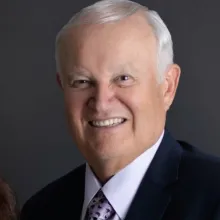
Mr. Seiglie was born in Havana, Cuba, and came to the United States when he was a child. He found out about the Church when he was 17 from a Church member in high school. He went to Ambassador College in Big Sandy, Texas, and in Pasadena, California, graduating with degrees in theology and Spanish. He serves as the pastor of the Garden Grove, CA UCG congregation and serves in the Spanish speaking areas of South America. He also writes for the Beyond Today magazine and currently serves on the UCG Council of Elders. He and his wife, Caty, have four grown daughters, and grandchildren.
