
Rick Shabi
Part 8 of the Acts bible study series presented by Gary Antion and Peter Eddington.
Well, go ahead. Mr. Eddington and I are going to go through chapters 11 and 12, hopefully. I'll be doing the first 18 verses of chapter 11. He'll conclude. Then I'll start off with chapter 12, go to about verse 11 or 12, and then he'll take over from there. So we hope we can give you some good spiritual meat from the Word of God and those who are listening in for Sabbath services. While you may not be getting a sermonette and a sermon, you will be getting a lot of scriptures from the Word of God. So I hope it will be inspirational to you. And if you want us to sing, change your mind. If you want me to play the piano, change your mind. I only do one hand. I'm a one-handed piano player. And believe it or not, one time in New Brunswick, Canada, I gave the sermonette... Did I give the sermonette? No. I had somebody else lead songs. I played the piano, because otherwise it would have been acapello.
So I played the piano one hand, and then I got up and gave the sermon, gave the announcements, gave the sermon, came back down from the sermon, played the piano one-handed. So at least they had some music at that time to be able to sing to. But you don't want us to sing up your solos. We don't really sound that great. Chapter 11, the book of Acts, the Apostle Peter, who had just been with Gentiles, Acts 10 being a wonderful, focal chapter in the book of Acts, because it was the God opening salvation to the Gentiles en masse. And when you think of a Jew going to a Gentile's home, meeting with him, fraternizing with him, and other Gentiles, this was a serious breach of their cultural expectations. And Peter comes back to Jerusalem, and basically Acts 11 is a defense. Now, as Barkley points out in his book, the daily Bible study series, Acts of the Apostles, Revised Edition by William Barkley, he points out in there that when they wrote down things, as Luke would have been writing them, Luke only had so much material to put things in. So much. Many times it's scrolls. I guess there was one scroll, something like 18 feet long. But what he puts in there has to be really important to him. For him to repeat almost word for word in chapter 11, what took place in chapter 10, shows you the importance they placed on the conversion of the Gentiles. And indeed, it was important, because we have many Gentiles around the world in the Church of God, many of them sitting in here too, who are so grateful that God opens salvation to the Gentiles. So Peter comes back to Jerusalem, and he's got to vindicate his ministry, as my introduction to the book says. Peter has to relate his story of Cornelius a second time. So let's read it. Acts 11, verse 1. Now the apostles and brethren who were in Judea heard. So once again, a telegraph or whatever gossip went forth, and people already heard what happened. Those who were in Judea, apostles and brethren, heard that the Gentiles had also received the Word of God before Peter even got back. They heard about it, so somebody is gossiping. It was good gossip. And when Peter came up to Jerusalem, those of the circumcision contended with him. Because you see, in the early years, the Church was a Jewish Christian Church. It wasn't a Christian Church, it was a Jewish Christian Church. If you wanted to be a part of the Church, you had to be a Jew first. You had to be an Israelite. You had to be circumcised. You had to be accepted in the community of Israel. And so they contended with him, because they questioned, what was he doing? Sort of like this, we heard you actually ate with the Gentiles. And Jews did not even walk with the Gentiles. Saying, you went in to uncircumcised men, verse 3, and ate with them? We can't believe what you just did! So Peter's ministry is being questioned, because he did something very bold. Verse 4, Peter explained it to them in order from the beginning. So Peter recounts it again. The one thing I want to mention to you, Barkley brings this out as well. Apparently, back in those days, if you wanted to be sure that your statement and your story was verified, you had seven witnesses. It's interesting, he relates in here that he took six. Six others from Judea, or six of the brethren, along with him. Six plus Peter makes seven. So, whatever he says can be verified by seven witnesses.
Seven eye-witnesses, including Peter himself. So he says in verse 4, Peter explained to them in order from the beginning. So he goes on to discuss what he was going to do. And verse 5, I was in the city of Joppa praying, and in a trance I saw a vision. So he explains what happened. He was in this trance.
And now object descending like a great sheet let down from heaven by four corners. And it came to me. So he was praying all of a sudden, gets his vision, he sees a sheet coming down, knitted at the four corners, having in it what? All manner of four-footed beasts and creeping things. So he said, and when I observed it intently, I looked at it. He was wondering, what is this sheet coming down here? It was knitted. I saw four-footed animals of the earth, wild beasts creeping things, and birds of the air. So he saw all types of animals and birds and fowl and reptiles and whatever, everything in here. And I heard a voice saying to me, rise Peter, kill and eat. Now this was strange. Hmm. He's telling me to eat something that's unclean.
Apparently, that's those manner of four-footed beasts. He didn't say there was a cow in there. He doesn't say there was a chicken. He just says, all manner of four-footed beasts creeping things. Rise Peter, kill and eat. But I said, not so, Lord, not so quick, for nothing common or unclean has at any time entered my mouth. How many years would this be? Several years from the time Christ died, when He did away with everything He's going to do away with, and Peter doesn't know that it was okay for him to eat porcupine, skunk, elephant, crocodile.
He doesn't know it's okay for him to eat those things? No, he didn't know that. I guess he didn't find a pig in there. He could have had at it. But there was not one of those that he would go after either. He said, I've never eaten anything. So several years after Christ did away with whatever He was supposed to do away with, Peter is still observing clean and unclean meat laws.
Lord, I've never eaten anything clean or unclean. Anything unclean has entered my mouth, nothing common or unclean. Verse 9, But the voice answered me from heaven, What God has cleansed you must not call common. If God has cleansed it, so did Peter say, Oh, Lord, I was mistaken. Bring on the ham. Serve up some pork chops. I can't wait to get my teeth into that shrimp or lobster or whatever else was there. I can't wait to eat some of those creeping things, those chocolate-covered oysters or whatever else they had.
I can't wait. He didn't say that, did He? In fact, it happened several times, but the voice answered me. Verse 10 now, Now this was done three times. So He says, Three times it was let down. Three times He said, No. Three times it said, You shall not call anything common or unclean.
Three times. And all were drawn up again into heaven. He didn't leave a pig behind. He didn't leave a pig. He didn't leave some lobsters. He didn't leave some shrimp. It would take it up into heaven, whatever was in it.
Verse 11. Verse 11, And at that very moment three men stood before the house where I was, having been sent to me from Caesarea. I'm wondering about what this meant, and these three men are standing there. Then the Spirit told me, Now how does the Spirit tell you, either by placing it in your mind, inspiring you? I don't know exactly how it tells you, but the message came across to Him that He was to go with them, doubting nothing.
Moreover, these six brethren, six brethren plus Him makes seven, and that's what they usually had to have, seven witnesses. These six brethren accompanied me, and we entered the man's house. So they could verify everything He was saying.
He's not making up this story. And He told us how He had seen an angel standing in His house, Cornelius tells Him what He had seen, and said, Send men to Joppa, call for Simon, whose surname is Peter, who will tell you words by which all your household will be saved. Send these men, get Peter, Peter will come back and teach you words of life. Words of life. Interesting, I think it's Romans 10.14. How can you hear without a preacher? Romans 10.14. How shall they call on Him in whom they have not believed, and how shall they believe in Him of whom they have not heard, and how shall they hear without a preacher?
So He came to teach. Also in the book of Acts 8, back in verse 31, I think it is, Acts 8, verse 31, when the Ethiopian eunuch didn't quite understand all that he was reading, to remember Cornelius was a devout man. He feared God. He gave to the people that he could have taken from. He was an honest, honorable, wonderful man, but he didn't understand the way of God perfectly or clearly. Acts 8, verse 31, when the Ethiopian eunuch couldn't quite understand, he said, how can I?
How can I understand? Because Philip asked him, do you understand what you're reading? He said, how can I, except some man should guide me. So God was sending Peter over to help Cornelius understand. Verse 15, and as I began to speak, Peter relates, the Holy Spirit fell upon them as upon us at the beginning. It was evident to me that God was pouring out His Holy Spirit upon these people. It was evident, just like He did to us. I remember meeting one lady on a baptizing tour, and a visiting tour with Mr.
Baird in St. Louis in Missouri. It wasn't in St. Louis, outside of St. Louis. And this lady had related her story, how she came to the knowledge of the truth. She had heard the broadcast, gotten the literature, read the booklet on baptism, and believed she needed to be baptized right away, because it said, if you're ready, you should be baptized immediately. So she found a Baptist who would baptize her, Baptist baptized, Baptist who would baptize her, but not into the church.
Baptize her into Jesus Christ. And she had them do it. And I don't know if it was in the name of the Father, Son, and Holy Spirit, but she had them do it. And when we tested her and asked her various questions here and there and everywhere, it was evident that this woman was converted. We just felt that we would be wrong to lay hands on her, her heart, her attitude.
Everything about her was converted. She didn't even know about the Sabbath at that moment, but we told her about the Sabbath. Immediately she was going to keep the Sabbath. Came to services, played the piano for us every week, and was...her whole heart and attitude was converted. We did not lay hands on her, because we perceived by her fruits that she had the Holy Spirit already. So, once again, how did he tell? Well, it also talks about similar to us.
I think there was a manifestation of speaking in tongues, too. But they could tell the Holy Spirit was there. Verse 16, Then I remembered the word of the Lord, how He said, Join how He said, John indeed baptized with water, but you shall be baptized with the Holy Spirit. What does it mean to be baptized with the Holy Spirit? Is this some type of special occasion?
1 Corinthians 12, verse 20. 1 Corinthians 12. I may be wrong on the 20. 1 Corinthians 12, 12. 1 Corinthians 12, 12. For as the body is one, and as many members, and all the members of that one body being many are one body, so also is Christ. Verse 13 is the key. For by one Spirit are we all baptized into one body.
Baptism with the Holy Spirit is the Holy Spirit immersing us into the church, the body of Christ, after we've been baptized with water, receiving of the Holy Spirit, putting us into the church of God. 1 Corinthians 12, and verse 13. Great Scripture there. Going on. Then in verse 17. If therefore God gave them the same gift as He gave us, when we believed on the Lord Jesus Christ, who was I that I could withstand God? Can I tell God what to do?
That was His expression. Can I tell God what to do? Answer? No. Often I tell my students, what if we make it into the kingdom of God and you see somebody there? You say, what are they doing here? Well, I don't think if you have that attitude, I don't think you'll be there.
You know what? God can save whoever He wants. God could do something. Why was that person healed? Why? They have this problem and that problem. God can do whatever He wants. He can save whoever He wants. He can heal whoever He wants. I'm not going to tell God He can't. And this is what Peter said, who is I? Who is I to stand in the way and tell them? These people can't be converted. They're Gentiles. They can't have God's Spirit. God won't let them.
Well, they did. And that's what Peter's answer was. And of course, he had the six witnesses who could agree. Verse 18, And when they, the ones who questioned Him, the apostles and brethren of Judea, when they heard these things, they became silent and they glorified God, saying, Then God was also granted to the Gentiles repentance.
What an awesome time this was! Turn it over to Mr. Eddington. Thank you, Mr. Eddington. Good afternoon again, everyone. We'll pick it up in verse 19 here of Acts 11. Well, we read, Now those who were scattered after the persecution that arose over Stephen, and you recall the persecution of Stephen and then his final murder, traveled as far as Phoenicia, Cyprus and Antioch, preaching the word to no one but the Jews only. So here we see they're still in the old-school way of doing things, and that is just preaching to the Jews at this point. It hasn't caught on yet what Peter is trying to show as far as preaching the gospel to the Gentiles as well.
And then verse 20, But some of them were men from Cyprus and Cyrene, who when they had come to Antioch, spoke to the Hellenists, preaching the Lord Jesus. So here's the gospel being preached in Venice, Cyprus, Antioch, and it doesn't say who did this preaching. These are nameless individuals in the book of Acts 11.
But what you come to realize is the book of Acts is just a sketch of all that was going on at the time. So there were other preachers, other leaders, other elders, other deacons that were involved in the preaching of the gospel way beyond Jerusalem. And so now we see them all so down in Cyprus and Cyrene too.
The Hellenists here would be the Greek-speaking Jews or Greeks as well. So one translation says Hellenists, one translation says Grecians. But what we're about to see here, now getting past verse 19 and 20, is the city of Antioch coming up center stage for quite a number of verses and chapters. And the city of Antioch becomes quite significant. Antioch was the third greatest city in the known world after Rome and Alexandria. It was a major city of the time. I have a note here from the Encyclopedia about Antioch. Antioch was on the river Orentes, O-R-O-N-T-E-S, and as Wikipedia here says, it was an ancient city on the eastern side of the Orentes River.
It is near the modern city of Antakya, Turkey. We had an educational trip to Turkey about 12 months ago, and they were very, very close to this site. Antioch was founded near the end of the 4th century BC by Seleucus, one of Alexander the Great's generals.
From when Alexander died, remember, his empire was split into four regions by his four generals, while Antioch was founded by Seleucus. Antioch eventually rivaled Alexandria as the chief city of the Near East. It was a cradle of what was termed Gentile Christianity. It was a cradle of those who were no longer mainly Jews that were believing and hearing the Gospel. It was one of the four cities of the Syrian tetrapleus, and its residents are known as Antiochanese.
There you go. Antiochanese from Antioch. So Antioch is now coming on the scene. He's going to play a major role here as we read forward. William Barkley in the Acts of the Apostles here on page 89 has a little bit more background on Antioch, just to give you a feel for what the disciples were dealing with when they started to preach the truth in Antioch. Barkley says, Antioch was the third-greater city in the world next to Rome in Alexandria, stood on the mouth of the River Arantes, 15 miles from the Mediterranean Sea.
And then Barkley continues, She was lovely and cosmopolitan, but she was a byword for luxurious immorality. She was famous for her chariot racing, for a kind of deliberate pursuit of pleasure, which went on literally night and day. And what you find with a lot of the Greek cities of the ancient world and their false gods, very much a riotous living with immorality, immoral pursuits. She was famous for chariot racing, deliberate pursuit of pleasure, night and day, but most of all, she was famous for the worship of Daphne, where the temple stood five miles out of the town amidst its laurel groves, in groves of trees.
The legend was, says Barkley, that Daphne was a mortal maid with whom Apollo fell in love. He pursued her, and for her safety, Daphne was changed into a laurel bush. It's almost like they're worshipping the trees, then. Almost sounds familiar to some things today. The priestesses of the temple of Daphne were prostitutes, and nightly in the laurel groves, the pursuit was reenacted by the worshippers and the priestesses. So, total immoral living going on in Antioch as they worship Daphne. The morals of Daphne was a phrase that all the world knew for loose living.
So, this is Antioch, okay? A major city, third biggest city in the known world there of the east, and a very immoral city, and they worshiped the goddess Daphne. Verse 21, we move on, And the hand of the Lord was with them, these people, these leaders of the church who were preaching, and a great number believed and turned to God, turned to the Lord. And like I said, there's a lot going on behind the scenes, and no names are mentioned. The key players are mentioned in the book of Acts, but there's a lot more going on, and it's not who does it, it's all about the honor and glory of God.
And so their names aren't even mentioned who they were, that God was working with in this region. And it's the same for us today. The credit must go to God, and actually we're going to see a little bit more about giving the credit to God in chapter 12 in a very significant incident, incident about giving glory to God. Verse 22, the news of these things came to the ears of the church in Jerusalem. So once again, up in Jerusalem, they're hearing stories about what's going on elsewhere.
Peter had to come in and explain himself, and now news has reached them of Antioch and other cities having converted Christians now. And so they sent out Barnabas to go as far as Antioch. And so when the church leaders in Jerusalem heard of the wonderful news of the Gospel being preached in Antioch, they sent Barnabas down to check it out to verify what's happening, maybe even to make sure it was legitimate. Now, notice verse 23. This is Barnabas. When he came and had seen the grace of God, when he saw that this was legitimate, he was glad and encouraged them all that with purpose of heart they should continue with the Lord.
And what I'd like to do for a moment is just concentrate on Barnabas himself. Notice that when he went to Antioch, saw what was going on, he was encouraged, and he encouraged them all to continue with what they were doing. It was right and good. And we see a description of Barnabas. Verse 24, Barnabas was a good man, full of the Holy Spirit and of faith, and a great many people were added to the Lord, added to the Church of God. So here's a description of Barnabas. First of all, he's an exhorter, an encourager, full of the Holy Spirit and faith and truth.
Barnabas is known in the Scriptures as the Son of Encouragement. And you may recall from Acts 4, verses 36 and 37, that's when we first meet Barnabas, back in Acts 4, verses 36. And it's actually recorded. And Joseph, who was also named Barnabas by the Apostles, which is translated, Son of Encouragement, says Acts, a Levite of the city of Cyprus. So Barnabas was the Son of Encouragement, that's what his name means.
He was a Levite from Cyprus, and that's where you read about, that he had land and sold it and gave it to the church. That's in Acts 4. So Barnabas is known as the Son of Encouragement. If you've been in the church for a while, you've probably heard sermonettes and Bible studies just on Barnabas alone. There's quite a bit in the New Testament about the role Barnabas played in several important situations. Here is where he's sent to Antioch. But other important situations as well. He was known as the Son of Encouragement, someone who would encourage and exhort.
If you want to make a note of Acts 14, verses 21 and 22, let me read that for you. Acts 14 verse 21. Right before verse 21, the apostle Paul had been stoned and left on the street, and they thought he was dead. Everybody thought the apostle Paul was dead. But then, of course, he was revived. And when they, says Acts 14, 21, that's Paul and Barnabas now. When Paul and Barnabas had preached the Gospel to that city and made many more disciples, they returned to Lystra, Iconium and Antioch, back to Antioch again, strengthening the souls of the disciples, encouraging them to continue in the faith.
So here's Barnabas, once again, with Paul, encouraging everyone to stay strong. Even though Paul had just about lost his life, Barnabas says, let's get everybody encouraged here, let's move on, let's move forward, saying we must, through great tribulation, enter the kingdom of God.
So Barnabas knew it wasn't going to be easy to enter the kingdom, and so he tried to encourage everybody to stick close to the faith. Let's notice verse 25, back in Acts 11, then Barnabas departed for Tarsus to seek Saul. So he was in Antioch, and now he's headed off to Tarsus to find Saul, who is also called Paul. This verse, verse 25, is about nine years since Acts 9, verse 30. In Acts 9, verse 30, Saul disappeared for a while, and he was gone for nine years.
Paul was gone for nine years. What happened in Acts 9, verse 30, if you recall, was that the brethren grabbed Saul, grabbed Paul, and they sent him to Tarsus for his own protection, because a mob of angry Greek-speaking Jews tried to kill him. Because Paul was now preaching the gospel message, and they got upset and tried to kill him. So the brethren grabbed Saul, took him to Tarsus, and Saul's been there for nine years.
So that's just a couple of chapters ago. You see, we're covering a lot of ground here as we go through the book of Acts. Sometimes between verses there's several years of time going by. In this case, it's nine years, just in a chapter or two. Peter, just a comment as we... verse 24, according to the New King James, it says, for he was a good man, full of the Holy Spirit. But I thought there were no men good. No man is good as God. No man is good as God. Jesus wouldn't let anybody call him good.
When they came to worship him, when they came to him, a good master, what good thing may I do? He said, don't call me good. But in the same context, you could read in Titus 1, verse 8, the minister is supposed to be a lover of good men. You find in Luke 23.50 that Joseph of Arimathea was a good man. So there's good as far as humans concern. Nobody's good as far as God is concerned, as far as good in godliness, but good in character, good in nature, good in approach to life, good in what they do.
So here you find Barnabas being called a good man. He was a good man, full of the Holy Spirit. So I just wanted to share that. That's the Holy Spirit, of course. It makes that change in us, from carnal to being more like God. And so in verse 25, Barnabas departed for Tarsus to seek Saul, who had been gone for nine years.
And verse 26, when he had found him... By the way, I'm still trying to figure out how they do it without Google Maps and... ...Ran McNally or something, you know, that got in the glove box in the cart. You know, you walk into a city, the third largest city in the known world, and say, I'm gonna... where is this guy anyway? It must have been rolls or books or something where people lived.
I don't know. But anyway, he found him and brought him to Antioch. So Barnabas grabs Saul from Tarsus, brings him up to Antioch. So why is that for... Yes, so... He wasn't in the big city yet, sorry. So it was that for a whole year, they assembled with the church and taught a great many people. And so what we see here is that Barnabas is now using Saul and putting him in charge of a special work here in Antioch. Saul is being prepared here with Barnabas to take on a major role, and it's beginning here in Antioch. So they're assembled with the church, taught for a whole year, many people. And the disciples were first called Christians in Antioch.
Now, Christian means these Christ people or these Christ folk. Okay? It was a derogatory, contemptuous nickname that eventually stuck and became the name of the Church of God movement. But initially it wasn't a good thing to be called a Christian.
I actually, I don't go to Wikipedia for everything, but there's a very good explanation of this in Wikipedia on the subject of Christian. And here's how it's put, of course, by many authors that contribute to Wikipedia.
Regarding Christian and Acts 11 here, they say the first recorded use of the term is in the New Testament. So everybody acknowledges that. In the whole world, everybody knows you go to the Encyclopedia. The first recorded use of the term Christian is in the New Testament.
In Acts 11.26, the second mention of the term follows in Acts 26 verse 28, where Herod Agrippa II replies to the apostle Paul, Do you think that in such a short time you can persuade me to be a Christian?
You see, it wasn't a good thing to be persuaded to be a Christian. So Herod Agrippa is saying, you think you can make me a Christian? No way I'm going to do that.
The third and final New Testament reference to the term is in 1 Peter 4 verse 16, where Peter exhorts everybody, If you suffer as a Christian, do not be ashamed, but praise God that you bear that name. You see, it wasn't a good name to have at the time, to be called a Christian.
These three verses reflect the original, derisive use of the term Christian to refer to followers of Christ, who did not acknowledge even sometimes the emperor of Rome as supreme in their life, but Jesus Christ and God the Father. So the town Antioch itself had a reputation for coming up with such nicknames. Apparently Antioch came up with nicknames for all kinds of things. And they were the first to call these people Christian. And so it wasn't necessarily a good term at the time. But eventually, of course, it caught on and became the name of the Church of God movement itself.
Now, notice verse 27.
And in these days, prophets came from Jerusalem to Antioch.
So once again, these are some more unnamed preachers and prophets that God was using. Then one of them named Agabus, verse 28, stood up and showed by the Spirit, the Holy Spirit. So this was God's intervention here to help people, that there was going to be a great famine throughout all the world, which also happened in the days of Claudius Caesar. So a famine is prophesied. Claudius Caesar was the fifth Roman emperor.
And he ascended to the Roman throne in the year 41 AD.
And right now, I think we're right around 45 AD, if I'm not mistaken here in the books, in the Book of Acts.
Claudius Caesar reigned for 13 years, 41 to 54 AD.
And his life was brought to a rather spectacular conclusion when one of his wives, Agrippina, poisoned him so that her son could become on the throne.
So the Claudius Caesar we're reading about here, at the time of the famine, reigned for 13 years, was poisoned by his wife, because she wanted their boy to take the throne. And during the reign of Claudius, and you can find this in the history books, several different famines are known to have occurred.
The first famine during this period was centered around the city of Rome in the years 41 and 42 AD.
The second famine known to have occurred during the reign of Claudius was in the fourth year of his office, 45 AD, and was particularly centered in Judea.
And so this is probably the famine that's been referred to here in Acts, the one that was in 45 AD that mostly affected Judea.
The third famine during the time of Claudius was centered in Greece, about AD 50.
And so I guess the middle of the first century was a particularly bad time overall for either a lack of rain or food production or something, but there were three major famines all within the space of a few years. There was a fourth famine that took place in 52 AD, and once again that one was in Rome.
Josephus mentions in his account, the Jewish historian Josephus, gives a little more information about the intensity of this famine in Judea.
And he says that it had great distress and many deaths, and in a footnote he says that the Judean famine may have lasted for three years.
So this is the stage being set here, and it was a serious famine, and there were others going on in the rest of the Mediterranean area before and after it as well. And so obviously God is looking out for His early church. The Spirit is used, the Holy Spirit is used to have some of the prophets warn of what's impending to come. And so that's Agabus.
And so then verse 29, "...then the disciples, each according to His ability, determined to send relief to the brethren dwelling in Judea." And so those in Antioch said, we've got to help these people down in Judea. This is going to be a bad famine that's been prophesied. Let's help them out.
So relief is sent to the needy brethren. This is the original Good Works program. We need to start this.
Early on in the church it was recognized that we're all one body. We're all part of one family. And when one part of the body suffers, we all suffer and we do what we can to help. And so, of course, we help the household of faith first and then move on to help as many in the world that we can as well. We need to care for one another, even in far-flung places. And so the first instinct of the church in Antioch was to help their brothers in Jerusalem. They saw the church as a whole unit. We're all brothers. We're in this together.
And as we read in the history books, the famine did happen and was quite nasty for about three years if Josephus was correct.
So verse 29, and the disciples, each according to his ability, determined to send relief to the brethren dwelling in Judea. This they did and sent it to the elders by the hands of Barnabas and Saul. So Barnabas and Saul got together their wagons and carts or whatever it was and whatever servants and help they needed and gathered everything up and took it to Judea, to Jerusalem, to help with the famine. And that leads us into chapter 12. In chapter 12, we're going to see Peter being arrested. We're going to see the care of the church for the ministry. We're going to see diligence in prayer and people coming together to pray to make a difference. And so chapter 12 and verse 1, we see, now, about that time, Herod the king, because you had so many of these other things taking place, Herod the king stretched out his hand to harass some of the church. So church is moving along all right. Persecution, trouble comes in. Who is this Herod? Berkeley, in his book on page 93, has a section on Herod. This is Herod Agrippa. There are a number of kings. In fact, let us briefly, page 93, I'm quoting, let us see briefly the various ramifications of the family of the Herod's in the New Testament connections. First of the New Testament Herod's is Herod the Great, who reigned from 41 B.C. to 1 B.C. He's the Herod of Matthew 2, who was in power when Jesus was born. This Herod the Great was married 10 times, really, respected women and marriage. Those of his family who crossed the pages of the New Testament are Herod Philip I. He was the first husband of Herodias. Remember, we read about Herodias that did that dance that enticed Herod to have her to require her daughter to get the head of John the Baptist. He was the first husband of Herodias. Then Herod Antipas, he was the ruler of Galilee and Pariah, he was the second husband of Herodias. He was the one who consented to the death of John the Baptist. So he had already married his Philip's wife, and he was the one who required it. He was the Herod to whom Pilate sent Jesus for trial. Then there's Archalaeus, and then there's Herod Philip II. In New Testament, he's called Philip. He mentioned in Luke 3 and verse 1. Then there's Herod the Great had another son called Aristobulus. His mother was named Meriam-ni, and a princess who was descended from a great Maccabean heroes. He was murdered, this Herod, this Aristobulus, he was murdered by his own father, but he had a son named Herod Agrippa. This is the Herod of our present passage in Acts 12. So that's the stage. It's from page 93 in Barkley's book on the daily Bible study series on Acts of the Apostles.
So now about that time, Herod the king stretched out his hand to harass someone in the church. Verse 2. Then he killed James, the brother of John with the sword. I think I'll have a little fun. I'll kill an apostle. It's called Kill an Apostle Day. What kind of fun is that to kill somebody? But he would. He would at least have the Jews who didn't like this new sect called Christians.
He would harass them and indeed kill James, the brother of John. One of the sons of thunder has just been quieted. Okay? One of the sons of thunder has just been quieted.
And because he saw that it pleased the Jews, there we go, pleased the people, do what we can, don't do what's right, do what's convenient.
Don't do what's right. So he thought, well, pleased the Jews to do that. He proceeded further to seize Peter. Well, grab another one. And now it was during the days of Unleavened Bread. Now, it's interesting the Bible keeps note by that. It doesn't say, well, it was around Easter, although they tried to use Easter. In the Old King James version in verse 4, they do put Easter in instead of Passover. New King James changed that to one of the gross mistranslations ever made, putting Easter in for Pasha, for Passover. So anyway, he grabbed him, but he was doing the days of Unleavened Bread. They didn't want to kill anybody, cause more of a stir, but will hold him up as a delicacy to do after the days of Unleavened Bread. When he had arrested him, he put him in prison, delivered him to four squads of soldiers. Each one had a four men.
So 16 of them, to keep him intending to bring him before the people after Passover. We'll have a good old time, we'll celebrate the post-Passover situation by putting Peter to death.
Peter was therefore kept in prison, verse 5, but constant prayer was offered to God for him by the church.
Church found out about it. What did they do? Did they organize a band of individuals to go break him out of jail? No. They prayed about it. They put it in God's hands, and they prayed, and they prayed, and they prayed for him by the church. Just like you would do. I was saying, in Canada, somebody threatened my life, my family's life. The deacon, the deacons in the church said, we'll come and we'll stand guard.
Each one of us, every night, said, no, I don't want to have you put your life before mine.
But they wanted to come, and each one, take turn, we'll come and we'll spend the night, because that man was real, and the police knew that man was a real threat, based on his letters, based on what he had to lose if he did it.
And the deacon said, we'll come stay there. And I know the brethren prayed, and prayed for me, because they didn't want to lose a pastor in Toronto, Canada.
So I know what that feels like to have people praying for you. Verse 6. And when Herod was about to bring him out that night, Peter was sleeping, so he's going to bring him out. Peter was sleeping, bound with two chains between two soldiers. I don't know if he has a hand cuff to this one, a hand cuff to that one. He's sleeping there.
Peter was sleeping. Great guy! I mean, all the troubles he's in. He has enough peace and confidence in God he can sleep.
I might just point out, usually it was one God, and you had your chain together just to one God.
But with Peter, they decided they needed two, and they chained him like this to both, instead of just together to the one.
Thank you. Thank you. And the guards, so he was sleeping between them, and then there were guards before the door who were keeping the prison. So you had guards keeping this area locked up, and you had him chained to these two soldiers. Now behold, but nothing's too hard for God, is it? Now behold, an angel of the Lord stood by him. So, an angel of the Lord comes by and even brought a flashlight. Shine the light. I'm sure everything's okay here in the prison. It's a little dark here. He needs to help him find his way out, how to take these chains off, how to put on his shoes or whatever. He struck Peter on the side, tapped him on the side, and to raise him up. Get up, Peter. Let's go. Get up.
Saying, arise quickly, and his chains fell off his hands.
Now, how did that happen?
Well, you know, spirit beings, they know how to jimmy the lock. They don't have to use any type of special thing. They just got them off. They just, psh, they fell off. By their own means, they know. Spirit beings know what goes on, what it takes for physical things to transpire. So they fell off his hands. Then the angel said to him, gird yourself. Get dressed. Quick. Put on your... Gave him time. Tie on your sandals. Here, I'll put this flashlight over there so you can see what you're doing. It's dark now. So he did. And he said to him, put on your garment and follow me.
So get dressed. Come after me. So he went out and followed him and did not know that what was done by the angel was real, but thought he was seeing a vision. Now, if you're in jail, what might you be thinking about if you had a work to do outside of that jail? You might be thinking about being free. And if you think about that enough, you might even dream about it. And so when it actually happens, you think, is this real that's happening to me? Things fell off of him. Guy has a light with him. He's leading him out of the jail. He takes him past... guards are standing outside the jail. He takes him to sleeping prisoners. How do they... I mean, two sleeping soldiers. How do they stay asleep? And the angel said to him, get him on. Come with me. And he thought, what's going on? Is this real? Verse 9.
Verse 10. When they were past the first and second guard posts, they came to the iron gate that leads to the city. So now they got out of the main prison area, but they're still within the main whole area of the prison, that leads to the city, which opened to them of its own accord.
So this door just... they walk up to it, and it magically opens. It's an electronic door back in those days. Like you go into a Walmart or a supermarket, and you come up close, and the door opens for you. So he walks up to this thing, and it opens for him. Pretty amazing. Automatic doors, even back in those days. Of course, it had a little spirit help. Open to them of its own accord, and they went out, went down the street, and immediately the angel departed from him.
So it's interesting that this angel moves away. When we can do something on our own, God lets us. While he was still in a daze and needed help to get out, the angel was right there. But when he could go on his own, the angel said, okay, find your way. And I'll read verse 12, turn it over to Mr. Eddington. I think that's verse 12 I turned over to you. I'll start in 13. Okay, verse 11. Now when Peter had come to himself, he said, Now I know for certain that the Lord has sent his angel.
He wasn't too sure about it. Till then, it has delivered me from the hand of Herod, from all the expectation of the Jewish people. What was the expectation of the Jewish people? Kill him. Kill him. Verse 12. So when he had considered this, He came to the house of Mary, the mother of John, John Mark, whose surname was Mark.
So he knew where that place was, where many were gathered together, praying. So here he is. God chooses to be so gracious, merciful, and kind to lead him out. We have a scripture, Psalm 91 verse 11. Psalm 91 verse 11 fits in with verse 11. Psalm 91 verse 11. Read it to you.
It says, For he shall give his angels charge over you, to keep you in all your ways. So God gave his angel charge over Peter to keep him. It wasn't Peter's only angel, just an angel, it wasn't just his personal angel, but an angel to look after him. So God did bring him out, saved him from the expectation of the people, because God decided to protect his servant. The prayers of the people meant much. Now we'll see what they were praying about, and what they were thinking, how faithful they were to their prayers.
Peter? Yeah. Every once in a while we quote from the Acts of the Apostles by William Barkley. When it comes to historical information, you know, it's interesting, he gets it pretty right. When it comes to interpreting some of the Scriptures, he's a little off. And I thought, this story that Mr. Antion just went through, is Barkley's idea of what happened. Barkley says, In this story we do not necessarily see a miracle.
It may well be the story of a thrilling rescue, you know, by the church, I guess. You know, the Navy SEALs or something. I don't know what he thought it was. But he said, that's probably not a miracle.
And yet Peter says in verse 11, Now I know for certain that the Lord sent his angel. This was a miracle. There's no hiss ands or buts about it. Poor Mr. Barkley got it wrong on that one. But it is helpful, of course, on many items.
But I just want to point that out. If you have this, don't take every word as gospel in the Acts of the Apostles book by Barkley. So then we get to verse 13. Acts 12 verse 13. As Peter knocked at the door of the gate, so they come to Mary's house, John Mark's mother's place. As Peter knocked at the door of the gate, a girl named Rhoda came to answer. And when she recognized Peter's voice, because of her gladness, she did not open the gate. But ran inside and announced that Peter stood at the gate.
But they said to her, you're beside yourself. In fact, one translation said, you're mad. Don't you know he's back in prison with two guards shackled together, a steel gate, extra guard post number one, extra guard post number two? Yet she kept insisting that it was so. So they said, well, maybe it's just his angel at the gate. Maybe there's an angel there saying that he's Peter. In verse 16, now Peter continued knocking, and when they opened the door and saw him, they were astonished.
What's interesting, I think, first of all in these four verses is that Peter knew where they would be. So it seems that Mary's house, John Mark's mother's place, seemed to be some kind of a gathering place or a headquarters of some kind for the church.
When they wanted to get together and pray for Peter, one of the lead apostles, they knew where to go and get together and be praying for him. So it was a central location. He knew where to go to find them. Well, Rhoda was overcome with excitement when she saw Peter released. Their prayers had been answered. But I can just imagine Rhoda. It's like someone who just won a new car.
And they're running around in circles with excitement, and they can't even get the key and the ignition because they're so excited. And that's how she was. She was beside herself. And when everyone else eventually saw Peter, they were astonished, too. And so this was a miracle. No normal human being, Navy SEALs, or not would have gotten out of that situation. It had to be a miracle. So then he had to tell them to calm down and be quiet after that.
So he'd talk from him and get a word in, edgeways, because he wanted to tell them what happened. He was excited to tell them about his story as well.
But I think the lesson here is sometimes we don't see or don't believe the answer to our prayers. When God has answered our prayer, sometimes we don't realize that he has, or we're looking in another direction, or we're looking for a different solution than what he gives us. When he's answered our prayer all along. And for us sometimes, as he is later when you go, God did answer that prayer, but not in the way I expected. And so the brethren here were overcome with excitement, and at first didn't recognize that what they'd been praying about all night had actually taken place. Peter, I just thought I'd relay a personal incident. I lost my keys somewhere, keys to my car, my ignition key. And I couldn't find them. I looked all over. We looked in jackets and pants and shirts and suit jackets and trousers that I may have hung up. Where? What happened to that? I couldn't figure it out. And I was doing it all on my own. And then I just said, you know, God, you know where that is. You know where that key is. I mean, something simple. I don't really ask God for a taxi or something like that. But, you know, I can't find this. You know, I can't find my keys. Where would they be? My wife had a duplicate set, so we weren't without being able to drive the car. Where's my... What happened to those keys? I went out to the car, and I moved the seat all the way forward. And there, in between the seat, but down and bedded, where I couldn't see it, were my keys. I prayed about it, but before that time, we searched all over the place about to give up and get a new seat, see if I can go buy a new one. And here they were. But I didn't pray about it before. And I just said, God, you know where that is. You know where it is. I don't. You know. You've seen where it is. You know. And please help me, because it's frustrating to me that I can't find these keys. And I've been doing it on my own. The moment I committed it to Him, I went out and checked the car one more time. I checked it before, moved the seat on. There they were. So don't discount God. Even in the little things, and I know you're saying, I can be frustrated on the job sometime when things... You have a computer problem, and it's critical. It's before the Sabbath. You're trying to get your nose together. It's frozen up. Nothing's working. You say, God, you know I don't have the time for this right now. You know. And that's what I'll say. You know I don't have the time for this right now. The Sabbath is upon us. I've got to get this finished. I've got an assignment. Ding, and it'll come back home. I mean, that has happened to me before when you just say, it's in your hands, God. I am so frustrated. So notice verse 17. Motioning them with His hand, He said, please be quiet. He declared to them how the Lord had brought him out of the prison, and He said, go tell these things to James and to the brethren. And He departed and went to another place. So James was another respected leader, of course, of the church at the time. And he needed to be apprised of the situation and wanted to take place in the prison, so that the rest of the church knew as well. And Peter here is giving directions to the assembled brethren, too. So He's showing that He's playing a leadership role in this church, as He tells them what they need to do.
And then verse 18. Peter left, took off, then as soon as it was a day, there was no small stir among the soldiers about what had become of Peter. Now, I'd like to read you a couple of different translations of no small stir, okay? Because basically no small stir means they were fearing for their lives, literally.
Because if you let a prisoner go, if a prisoner escaped, you got the penalty that was due the prisoner.
And so really, there was no small stir. There was a big stir. Now, the Bible in basic English says, now, when it was day, the armed men were greatly troubled about what had become of Peter.
Greatly troubled. The NIV says, in the morning, there was no small commotion among the soldiers. Darby's translation says, when it was day, there was no small disturbance among the soldiers what then was become of Peter. So they were fearing for their lives, realizing that their prisoner had escaped. And so, if Peter was going to be put to death, then they would be too. Notice verse 19.
So Herod is a vicious ruler. He's a vicious leader. He's taking joy in killing people in the church of God and even his own soldiers.
He's a cruel, vicious leader. And notice verse 20, because what follows here now seems to be unrelated to the work of the church. But it really does bring closure to this situation in many aspects, and it certainly brings closure to Herod. Okay? God sees and knows all. So, verse 20. Herod has just put the guards to death. Verse 20, now Herod had been very angry with the people of Tyre and Sidon. It's not only is he angry with the church and the people of God, it's also upset with these other related cities down on the coast.
An angry leader overall, it seems like. So the people of Tyre and Sidon came to him with one accord, having made blasters to King's personal aid their friend. So they tried to get in into the inner workings of the government through a friend of Herod.
The people of Tyre and Sidon tried to get some mercy here and some help. So they made friends with blasters to King's personal aid, and they asked for peace. They didn't want war with Herod because their country was supplied with food by the King's country. Tyre and Sidon was very dependent on the Palestine area, the Holy Land area, whatever you want to call it, the Judean area, for its food and supplies that Herod controlled. So a meeting was arranged with Herod to work out the dispute over these food supplies with the people of Tyre and Sidon.
And the population, the people of Tyre and Sidon, were very dependent on what Herod controlled. Verse 21, so on a set day Herod, arrayed in royal apparel, sat on his throne, and gave an oration to them. One translation said Herod was haranguing them. He knew he was the boss, and he was going to let them know. He was sitting on his elevated throne, his seat of honor, his rostrum, and he was going to give them a speech.
And he obviously thought a lot of himself. Otherwise, what's about to happen in verses 22 and 23 would not be so significant. Notice verse 22. The people in the audience in the king's chamber started shouting, saying, This is the voice of a god, and not of a man. Wow! What a speech! Pat him on the back. You're awesome. You're a god.
Verse 23, then immediately, here's another angel again, then immediately an angel of the Lord struck him because he did not give glory to God, and he was eaten by worms and died. Josephus describes it this way. In Antiquities of the Jews, Josephus says, After Agrippa had ruled in Judea for three, four years, he traveled to the city of Caesarea, which in the past was called Stratos Tower. There he put on an exhibition in honor of Caesar, declaring this to be a festival for the emperor. And there came a large number of officials and those of a high-ranking status.
And at sunrise on the following day, and of course there were officials that came, the Bible tells them were from Tyre and Sidon. So there were officials that came. At sunrise on the following day, he put on a robe made of silver and walked into the theater, into the court. Then the silver shone brightly as the sun's first rays fell upon it, and he sparkled in the sunlight, dazzling the crowd and causing a sort of fear and trembling in those who were viewing the spectacle. The crowds then began to shout from various parts of the theater, words which in truth were not for his best, addressing him as a god and crying out, We have in the past honored you as a man, but now we honor you as one with a nature greater than any mortal being.
So the people fed his ego big time, and someone in the back just was going like this, Yeah, his head was swelling. Thank you, Derek. His head was swelling, big time. And God had had enough of this arrogant man. He was destroying the church, he was destroying the population, he was killing his own soldiers, and then basically said, Yeah, you're right, I am a god.
Zap. And he died fairly quickly, we're told. It says here, by worms and died. So we have to be very, very careful to give the honor and glory to God in all we do. Not for our own benefit. Herod was a vicious leader who paid for his ungodliness. And as you know, sometimes things go on for many, many years. Well, after three years, God had had enough of this fellow. And he died miraculously at the hand of an angel. He didn't just get sick.
A couple of scriptures about giving honor and glory to God that you can put in your margin next to this verse. And that is 1 Corinthians 1, verses 30 and 31. But of him you are in Christ Jesus, who became for us wisdom from God, and righteousness and sanctification and redemption. That as it is written, he who glories let him glory in the eternal, glory in the Lord. And of course, that's talking about not many wise men now are called. There's a reason for that. So we don't become like Herod here. Don't think too much of yourself. Of course, once we're called, we do then take on the nature of God, and we do not continue to just be the lowly scum of the earth. We just know we are God's children. But let the glory be in God. 1 Corinthians 10, verse 31. Therefore, whether you eat or drink or whatever you do, do all for the glory of God. 2 Corinthians 10, verse 17 and 18. 2 Corinthians 10, verse 17. But he who glories let him glory in the Lord. 3 Corinthians 18, verse 18. For not he who commends himself is approved, don't put yourself up on a pedestal, but whom the Lord commends. So let God give you the honor and glory. Don't take it upon yourself. Let everything you do be done with the honor and glory of God. And even in the smallest things in life, don't forget that. We are just mortal human beings. Without the power of God's Holy Spirit working in us, we are absolutely nothing. Anything that we accomplish with the power of God's Spirit is to give him the honor and glory. And so, a very important lesson is to what happened here in verses 22 and 23. Verse 24, we'll just finish up here. But the word of God grew and multiplied.
And so, the work of the church continues to move forward. Verse 25.
So, through all of these circumstances, Peter in prison, the death of Herod, miracles, God used everything to ensure his will was accomplished, that his word grew, and that he was glorified. So now Barnabas and Saul in verse 25 have finished their good works project. You know, it's not a well in Zambia, but they've delivered the food to Judea that they've brought from Antioch. And so then they go on their way. They now leave Jerusalem. Barnabas and Saul now leave Jerusalem. And they head back to Antioch, back to that major metropolis of Antioch, to continue what's going to be quite a powerful ministry of Barnabas and Saul, Saul who's also called Paul, as we will read. So that ends chapter 12, Mr. Antion. What would you like to do now? I'm going to... We have any questions that need to come forward? If anybody has any. I was just wondering if you wouldn't mind or want to comment on verse 17 on that James. I think that's one of the first times he's ever been in the paperback. Go tell these... On who that James is. Yes. James, the brother of Christ. Right. So Mr. Fentrell's asking a question about verse 17, where Peter said, Go tell these things to James and the brethren. And this James is the brother of Jesus Christ, the brother of Jesus, our Lord and Saviour. And this is one of the... You're saying it's one of the first times that he's mentioned here. And obviously one of the brothers of Christ was converted. 119 of Galatians. Galatians 119. Call him James. But other of the apostles saw a nun. Save James, the Lord's brother. That's in Galatians 1 verse 19. So this is the James, it is Jesus' brother. And the point that some people try to make is that Jesus had no other blood brothers and sisters, so to speak, from his mother Mary. But he did. He had brothers and sisters, and James is one of them, the brother of Jesus.
Same James that's also listed in the book of Galatians as being very Jewish-minded. And that particular one, go tell James all these things that have happened. And maybe James is thinking Peter got his comeuppance for going to the Gentiles. I don't know. Go tell James that I'm out. The angels took me out of this prison. So James was the one later on in Acts 15 who was the one who rendered the decision or enunciated the decision that was added to and contributed to by both Peter and Paul about whether the Gentiles had to be circumcised or not and keep the Mosaic law.
And so he was the one who stood up and gave the decision on that. I had one question that was just briefly sent to me and it was regarding David, King David. In the kingdom of God, will David be over the twelve apostles? Because each of the twelve apostles is given a position. The only positions we really know of are the twelve apostles who will be over the twelve tribes of Israel. But it also says in Ezekiel 34 and Jeremiah 30 that David will be raised up to be king over Israel. So I see David being over the apostles in that sense.
And when God does call David a man after his own heart, I would say it's a pretty good title to be called by God Almighty Himself. Any other questions anybody has? Anyone want to send any up? Yes. Do you want to clarify more about Antioch or two Antiochs? One in Syria? The Antioch that is spoken of here is the Antioch of Syria. We will see in chapter 13 that Paul does take a trip to Antioch in Pisidia.
There was an Antioch in Syria, which is below Asia Minor. Near Turkey. Near Turkey, which is Turkey today. And there's an Antioch in Pisidia, which is one of the regions or the provinces of Turkey. Antioch of Syria was by far the most, the more popular city. One of the main centers of Christianity. So, as far as I know, all my parents and my family were always Christian.
Whatever that means. They were not Muslim over in Syria. So, they did it in the first church, first place to be called Christian. Syria. Put that in your pipe and smoke it. No, don't smoke it. So, they were called Christians first and Antioch. Of course, they didn't mean it in a good term. They meant it as Christ-folk. Any other questions? Scentil, I can read a couple more verses, but I think what I'll do today is let you out early. It's been a long day. Everybody's done well.
And I want to thank all the ladies and all the men for the set up, for the food. It was delicious for your cooperation, and I hope it was helpful today. Probably won't have another one of these for another six or seven weeks. I don't even think I have one scheduled yet. Another Super Sabbath, you mean?
Yeah, Super Sabbath. We will have Bible study on Wednesday night for those faithful who come to Bible study. And those who don't, who listen in or who care about it and pray about it. I'm glad to have you do. We have like 170. Last time we were low, 140 to 170 hits. But we've had over 200 hits, 240 hits, people tuning in all over the world, people out west.
In Denver, by the way, my trip to Denver went very well. We had, I think, over 100 at services there, 120. We had a meeting with all the deacons and the elders afterwards. They were very gracious and very kind. And they had a potluck meal, and we visited right up until the time we had to leave till 9 from 9 o'clock. We were there at 1 o'clock. They had services. We were at 2. They had potluck at 4.30. And that went till about 6.30.
And then we had a meeting till 9. So it was a very quick visit. But we felt that we met that group. Six faithful elders were there. One of the elders was in a California visiting family. They have seven faithful elders. And you know what was interesting? One person wrote me a note. They said, thank you.
We are really being fed well by the elders who are here. They are humble. They are caring. They are loving. And we are growing as a congregation. So I thought that was really a nice compliment. Mr. Scott Ashley, who's full-time, but he works in the editorial media area. He assumed the pastor's responsibility there. And Mr. Charles Mollier, who also works with arranging everything from the feast tabernacles to all the council meetings and everything else. He's full-time with us, but he also is helping out with doing the pastoring out there, associate to Mr.
Ashley. But they're doing a great job. All the elders are working together, and kindly so. So I'm really pleased to report that. And we had a good trip. Good to be back. We got back on Sunday night and then jumped right back into things on Monday. Anyway, we wish you a wonderful Sabbath. Thanks again. Happy Mother's Day to all you ladies. And also, thanks to Barb Fauch and her crew, Kim Preston, and all those who arranged buying those little bags for you all.
That's for us. And if you didn't get one, you need to see one of them if you're a mother. If you didn't get one of them, did you give it to all the ladies or just to the mothers? Just the mothers. Just the mothers. So if you wanted to get one, you should have borrowed somebody's child. Anyway, I hope you have a wonderful Sabbath, the rest of the Sabbath day, and safe trip on the way home. Good night.

Peter has retired as Operation Manager of Media and Communications Services.
He studied production engineering at the Swinburne Institute of Technology in Melbourne, Australia, and is a journeyman machinist. He moved to the United States to attend Ambassador College in 1980. He graduated from the Pasadena campus in 1983 with a Bachelor of Arts degree and married his college sweetheart, Terri. Peter was ordained an elder in 1992. He served as assistant pastor in the Los Angeles and San Luis Obispo, California, congregations from 1995 through 1998 and the Cincinnati, Ohio, congregations from 2010 through 2011.
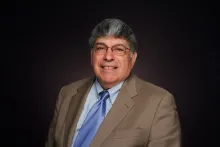
Gary Antion is a long-time minister, having served as a pastor in both the United States and Canada. He is also a certified counselor. Before his retirement in 2015, he was an instructor at Ambassador Bible College, where he had most recently also served as Coordinator.

