

Rick Shabi
Part 14 of the Acts bible study series presented by Aaron Dean and Randy Stiver.
I'm glad you could make it tonight to our weekly Bible study series here at the Home Office. Aaron, Dean, and I will be conducting this particular one in the book of Acts. We'll get into it in a little bit, but we'll be starting at the beginning of chapter 22 and get into at least part or all of chapter 23, depending on how things go here. But before we start, we're going to go ahead and ask God's blessing on the Bible study. So if you'll all bow your heads, Mr. Dean will go ahead and ask the blessing. Our Father in Heaven, our great and loving God, we come before you to throne now. Thank you for the opportunity we have to read your scriptures and have you talk to us through them. We appreciate the fact that as we go through the book of Acts, we can see people's lives, that they have the same problems and things, a different set of names, but the same problems, the same things, the challenges that they face. And we thank you that you can let their examples be an example to us, that we can make the same changes toward you that they did. We thank you that even though the problems are the same, that you also are the same, and that you guide us the same way you guided them. So we ask you to be here in spirit, to be with us, to help us to understand what your word says, and to guide and direct all of us to the hearing and the speaking. We ask this in the name by the authority of your Son and our older brother, Jesus Christ. Amen. Amen. Okay, we thought maybe we'd just update you a little bit on what's going on around the work at the moment. And I have, since I made a prayer request during the Bible study last time, two weeks ago, as I bring you at least a little bit up to date on how Margie Pierce is doing up in the Columbus, Ohio congregation. She's doing better.
We're very happy to hear that. I haven't had an update in several days myself, but at least I know she is... last I heard she was doing quite a lot better and was, again, conscious because they had had her sedated for, if I'm not mistaken, it was nearly 10 days with the heart condition that she was battling and other complications. So please continue to remember her and lots of other brethren who do have prayer requests in or need them in based on their health situations.
The past couple of days, I've been traveling in Wisconsin with Dan Dowd. We were looking at winter camp locations. We looked at two. One is actually at the edge of Wisconsin Dells, which is a very nice facility, lots of possibilities there, and it's called Camp Chai. And the other one is southwest of Milwaukee, just a little ways out of the Milwaukee metro area, about a half hour.
And it also is a very nice facility. Either one would work very well. You know, we were... when we went up there, we had no particular camp that was working out for us, but now we have to decide between these two. So we're... it's a much better situation. Now we just need God's guidance to make the right decision on the two of them. The one to the south, or one to the north in Wisconsin Dells, would have a greater chance of being snowed in properly for winter camp.
Although on a rare occasion, this happened about four years ago, at winter camp, we had no snow at all, and we had just moved the camp as far north as Wisconsin Dells, actually a little bit further north. That year was just weird. It rained, and there wasn't any snow at all. The next year made up for it, we had a foot on the ground and got 18 inches more before camp was over, and it's four days under...
below zero during the day, all day below zero. So it was proper winter camp. So we're... we're in a process of evaluating those two locations. Mr. Luecker is traveling on the west coast right now. He's... was at the last weekend with the northwest camp, out of... which is literally on the Oregon coast, and he was able to be there and see the campers. And then he traveled down to Southern California, where he's had a number of meetings and visiting with some of the elders and... and...
and wives. Mrs. Salcedo is battling cancer. Dan Salcedo's wife Esther, and so they wanted to... to visit with her, as well as with a variety of others. The Lueckers used to pastor down in Southern California, so this was a chance to see some old friends as well. They'll be back... well, they're traveling back, maybe already back, by this time, but are on their way back today, and he'll be back in the office tomorrow after his journeys. And do you have any updates that you wanted to...? I'm always glad to have two campsites so we can have a bit against each other.
As treasurer, that always helps. That's right. But the income's doing fine, and we're thankful we got to that. Yeah, that's good news. Okay, let's jump into the book of Acts then. Let's see, we left off with chapter 21 last time, and Paul had traveled to Jerusalem, went through all of that. He was determined to go to Jerusalem, in spite of the fact that the various prophets and even prophetesses, because at that time we had some who were...
you know, ladies who were prophets or girls, and the daughters of Philip in their case. But the advice was, if you go to Jerusalem, you will be imprisoned. And Paul said, well, hey, I'm not worried about that. I'm ready to go to Jerusalem and die. But it wasn't time for him yet to die. God had other plans for Paul, and he ended up getting involved in a riot. Well, he was the cause of the riot because he was there, and, you know, the zealous Jews who considered him to be an evil person.
So he came, as they were dragging him away, the Romans sent down, because, as we remind you from last time, Rome hated riots. Any civil unrest, they came down on like a hammer on a fly. As that could destabilize elements of the empire, and they didn't like that. So if you were calm and relatively behaved, then the Roman government wasn't quite so bad as when you acted up.
So the soldiers came down out of the tower of Antonia, which was on the corner of the Temple Mount area, where they could see all the Temple Mount, because, you know, that's religion and emotion seem to go together in the world. Emotion certainly is a part of religion, but so often religion has left out, you know, spiritual matters. The spirit is not involved. It's just the emotions that were involved. And in most of the world today, that's really what religious experience is. It's fundamentally an emotional experience without the benefit of it being an actual spiritual experience. You know, we, knowing the worship of God in spirit and in truth, and we understand God's truth, you know, we have our emotions are involved, but the spirit is involved.
That's not so much the case, and it wasn't the case, for the most part, in Judaism, because Judaism and the true religion were parting at this time. As Paul, or at least we believe it was Paul that wrote the book of Hebrews, later said that that which, you know, is old is vanishing away. I mean, it hadn't disappeared yet. The temple was still there. The sacrifices were still there. Levitical priesthood, as constituted by God, was still functioning and active, but it was coming to its end as the new covenant was ramping up, and the new covenant was ramping up through the church.
So it was a gradual ramping, and we're still in a gradual ramp, and the new covenant will be made with all of mankind, of course, when Christ returns and the world tomorrow is established. So Paul was being dragged out of the center of the riot, and we go back to verse 40 of chapter 21, and when he had given him permission, that is, the centurion had, he stood on the stairs and motioned with his hand to the people. Paul was not, according to tradition, not a big man, he was a little guy, but he got up on the stairs so they could actually see him, and he waved his hand, beckoning for silence, and there was a great silence, and he spoke to them in the Hebrew language.
Now we've moved into chapter 22. Now, it says the Hebrew language, some translations render that the Hebrew dialect. It is generally believed that he was speaking in Aramaic, and you think, well, why couldn't he speak in Hebrew? Well, he could. Paul could speak in more languages than you could shake a stick at. He made that point in 1 Corinthians chapter 14. He says, I speak more tongues than any of you. By tongues, he meant glossa in the Greek, which means language. He's got more languages. Aramaic was the common Hebrew dialect that was typically used at that time. Hebrew had its own dialects. You know, in America here, of course, we have dialects even of American English, and you get the English involved. And we may have some English brethren who are watching the Bible study. We apologize for how we've treated the language since we revolted and became Manasseh on his own, rather than Manasseh on the Ephraim. But it works for us. And yet we have dialects in America, very distinct ones. We're kind of at a bridge of dialects where this home office is located in southern Ohio, and then you go on across the Ohio River to the south, and you begin to develop the southern dialect. And I come from the west, so I tend to have what is called a western drawl. But, you know, we have our own dialects over here. And likewise, Hebrew did that. Hebrew had dialects. There was the northern dialect of the northern ten tribes. It is apparent that they spoke the same kind of dialect that the Phoenicians had. The Tyroneans and the Cydonians spoke Punic. Later, that was called what their language was called, the Punic language. But that was a northern, basically a northern Israel dialect. They spoke a variation of Hebrew. So the Carthaginians, who were originally from Tyre and Sidon, spoke that language. And so the wars that the Carthaginians fought with Rome were called the Punic Wars in the 200s and 100s BC. They fought with the Roman Republic.
So they were, and they spoke a variation of Hebrew as well. So the Aramaic was the language that Paul was speaking in, according to what most commentators believe. And this is what he said.
Brethren and fathers, hear my defense before you now. And when they had heard that he spoke to them in the Hebrew language, they kept all the more silent. He was the focus of this entire uproar. When he raised his hand, they all got quiet. And then when he spoke to them in the Hebrew language, they even got quieter because he connected with them. Remember the principle of relatedness of 1 Corinthians 9, where Paul says, I am to make myself all things to all men. That I might by all means save some to the Jew. I am as a Jew. Because in fact, he was a Jew, as we're going to see. So he said, I am indeed a Jew, born in Tarsus, but brought up in this city, Tarsus of Cilicia. And that was north in what would be the northern borders of Syria of today. And it points out that he was brought up in Jerusalem. He was sent to Jerusalem to study as a young lad. And we'll run into another young lad of his relation later on in the study today, or this evening. And I studied at the feet of Gamaliel. When it says at the feet of, evidently disciples typically sat at the feet of whoever their great teacher was. He might sit on a higher stone, and that way his voice carried better, and the rest of them sat lower where they could hear. Not unlike what we do today. You know, why we have a stage because sound carries, even with amplification, better. Taught according to the strictness of our father's law. He not only taught what the Bible said, but he carried on the traditional teaching, into which, of course, was not always what God had said. And the Pharisees and Sadducees had their traditional teachings that were in opposition to what Jesus had said.
And was zealous toward God as you are today.
Ice persecuted this way to the death, binding and delivering into prisons both men and women. Now this goes back to Acts chapter 8 and chapter 9. And we've already covered that part of the Bible study, but this is, he's recounting what he had done. As also the high priest bears me witness in all the counsel of the elders. Now bear in mind that it happened some quite a few years earlier, because we'll look at the sequence of Paul's ministry here in a little bit. As also the high priest bears me witness in all the counsel of elders from whom I received letters to the Brethren, that meaning the Jewish brethren, and went to Damascus, to Syria. Damascus then was where it is today. To bring in chains, to imprison those and bring them in chains who were there to Jerusalem to be punished. So he had, you know, he was, if you want to call it that, using the irony of it, he was sort of the the Jewish Gestapo. This is what Paul was, dragging people out of their homes in the middle of the night. It's exactly what he did, until God sort of put a stop to it.
You know, God has a way of putting his foot down, and we always feel like a bug when he does that. Now, I want to draw your attention when he says, I am indeed a Jew. You might look at Philippians chapter one, because here we have a very brief synopsis or autobiography of Paul from that perspective to give you the impact. Philippians 1, and let me see, it's in, sorry, Philippians 3, verse 3 we start in. Not 1, verse 3. For we are the circumcision who worship God in the Spirit, rejoice in Jesus and have no confidence in the flesh. You know, we are the circumcision, meaning the church is the circumcision, the biblical Church of God, are the circumcision, circumcision of the Spirit. So whether the Gentiles or Jews, whether it's physical circumcision or not, we are spiritually circumcised. And we rejoice in Christ Jesus and have no confidence in the flesh. Though I also might have confidence in the flesh, you know, I could, he said. If anyone else thinks he might have confidence in the flesh, I more so, circumcise the eighth day of the stock of Israel, of the tribe of Benjamin. So Paul was not of the tribe of Judah, he was a Benjamite, shall we say. When the northern tribes were taken captive, two tribes were going to be left to be the inheritance of the heritage of David would be carried on through them, and it was the tribe of Judah and the tribe of Benjamin. Now elements of both tribes got carried away with the northern ten tribes. There were about 200,000 Jews taken away during one of the invasions of the Assyrians, and they were, they ended up into captivity. Probably the jutes of the Anglo-Saxons and jutes that invaded England would have been carrying the name of Judah there. Some of Benjamin would have been taken captive as well, and so we've always looked for Benjamin out in the territory. The Normans who invaded England, we have always felt, belonged to Benjamin. They fought under the banner of the wolf, which was a symbol of Benjamin. They were north men that came from Norway. They didn't, they didn't, they weren't all the Norwegian inhabitants at all. They actually, lock, stock, and barrel moved to Normandy because their leader, who was a famous Viking at the time, had taken his long boats and a raiding party and had threatened Paris so frightfully that the Frankish king said, well, what if I gave you Normandy? Would you leave Paris alone? He says, okay. And that's how they ended up there, and William the Conqueror was among them, and that was 1066 and all that. Now, back to, back to Paul. The eighth day, the stock of Israel, of the tribe of Benjamin, a Hebrew of the Hebrews concerning the law of Pharisee, concerning zeal, persecuting the church, concerning the righteousness which is in the law, blameless.
So, what did Paul do with all those credentials? Well, but what things were gained to me? These, I have counted loss for Christ. Yes, indeed. Or, yet, indeed, I also count all things lost for the excellence and of the knowledge of Christ Jesus, my Lord, for whom I have suffered the loss of all things and count them as but rubbish. They weren't of great value in the spiritual long run.
Paul considered his understanding of Christ and the truth that Christ brought far above and beyond what he had had as a heritage as a Pharisee. So, now we go back to Acts 22, where we were, and he's reciting his credentials, in essence, into verse 6. Now, it happened as I journeyed and came near Damascus at about noon. It's suddenly a great light from heaven shone upon around me. Now, when you stop and think about what Paul is about to do, he is giving a personal experience.
And a personal experience is always intriguing. When somebody has experienced something, they're going to talk about it. He knew how to build the story. He knew how to hold the audience's attention for as long as possible. I think he also knew that he was talking to a powder keg, and so it was only about so long until their fuse was burned up and the explosion began. Now, it happened. I journeyed near Damascus at about noon. Now, he's reciting his conversion, and it's suddenly a great light from heaven shone upon me. And I fell to the ground and heard a voice saying to me, Saul, why are you persecuting me? Now, that was Christ speaking, so it's usually in a red letter edition of the Bible. That will be in red letters. So I answered, who are you, Lord? And he said to me, I am Jesus of Nazareth, whom you are persecuting. And we went through that in Acts 9. So Paul was recounting his own experience. And those who were with me, indeed, saw the light, and they were afraid, but they didn't hear the voice or didn't understand the voice. And the word can mean they didn't understand it. They heard something, but they didn't know what it meant. Apparently, I was reading one commentary today. It's obviously dated commentary because it talks about a man who was listening to the Gettysburg Address being delivered, the commentator, heard the Gettysburg Address. And he could hear people say, we can't hear what he's saying. He knew that they could hear it, but they just couldn't understand Abraham Lincoln because he was too far away. And, you know, they didn't have, their iPads weren't tuned in to the right frequency or something like that.
So it's a matter of being, they heard a noise, but they didn't understand what it said. But Paul understood what it said. So I said, What shall I do, Lord? And the Lord said to me, Arise and go to Damascus. And there you will be told all things that are appointed to you to do. And since I couldn't see because of the glory of the light, the brightness of the light, had blinded him, I was being led by the hand of those who were with me, I came to Damascus, and there are certain Ananias. Now, notice the talk of how he describes Ananias. And we read about Ananias. A devout man, according to the law, having a good testimony with all the Jews who dwelt there. These people would know that. They would know Ananias. And even as a member of the church, evidently Ananias still commanded a lot of respect among the Jewish community.
He came to me and he stood and said to me, Brother Saul, receive your sight.
And at the same hour I looked up at him and he said, The God of our fathers has chosen you, and there are three things that he has chosen Paul to do. That you should, number one, know his will.
When you stop and think about it, these three things apply to all of us.
That we should know God's will. And you think, well, what is God's will? You know, we're supposed to prove it is the good and perfect will of God, Romans 12 and verse 2.
Well, let's start with God's law defines God's will and our application of it in the Spirit. And you know, learning to love our neighbor as theirself and loving God above all the two great commandments and all the ramifications of those. So we seek to know God's will and to see the just one. Okay, to see the just one. It means Christ, obviously. So how do we see the just one? How do we see Jesus Christ? Well, we have to know about him. We have to know what he taught. We have to think about what we've read of what he's taught, whether he taught it to the Israelites in the Old Testament as the Lord God of Israel or the Lord God of the Old Testament, or whether he taught it as Jesus Christ in the four Gospels, or as the apostles amplified what he taught as they were applying it in their ministries throughout the New Testament. We need to be able to see him. That means when we read the Bible, we try to envision what Christ was like and what he is like now, what he was like on earth as a guide for us to live our lives and what he's like right now. Not just to listen sort of one dimensionally, but to see him far more than even three dimensionally, because we're looking at the spiritual dimension, which is far bigger than any of the physical dimensions, but to be able to see him in that sense, in our mind's eye, and to envision what he meant and taught, and to hear the voice of his mouth. Now, Christ doesn't speak to us today, literally. He speaks through his ministers. He speaks through his word. We can read, and that ties in with getting to being able to see or envision him, is also to see what he said. But it means reading the Bible so that we really deeply understand it. Christ was real. He walked the earth. He is alive, the Son of God, and part of the eternal family of God now. But can we envision that, or do we sort of put him off on a shelf and don't think about him so much?
Or maybe even don't think about the Father so much? We need to think a lot about what we read in the Bible. It's a living, dynamic, energetic book. There are people in here, and there's God in here, too. For you will be his witnesses, and Anias goes on to say, those are the three things, know his will, see the just one, and hear the voice of his mouth. You will be his witnesses to all men of what you have seen and heard. So Paul was giving marching orders. You're going to be doing some work for me, Jesus is saying. And now, why are you waiting? Arise and be baptized, and wash away your sins, calling on the name of the Lord. So Paul is recounting all of this to this Jewish audience, and they're so far spellbound. Nobody's interrupting it.
And it happened that as I returned to Jerusalem and was praying in the temple, that I was in a trance and saw him saying to me, make haste and get out of Jerusalem quickly, for they will not receive your testimony concerning me. Now, I might point out that Luke has telescoped. You know, you take a telescope and you stretch it out, but when you're done, you hear the captain on the pirate ship, he slaps it all back together again. So it's about this long instead of this long.
So Luke is collapsing. When he returned to Jerusalem was three years later, because Christ makes a very important point, and it's worth just a real brief excursion into Galatians, chapter one for this, as another bit of evidence or an explanation of the timing here, and also of Paul's education in seeing and hearing Christ directly.
He notes in verse 11, it's in Galatians chapter one, verse 11, But I make known to you, brethren, that the gospel which was preached to me is not according to man. And I didn't learn it from somebody, some person. For I neither received it from man, nor was I taught it, but it came through the revelation of Jesus Christ. Now the implication of that paragraph, verses 12 and 11, is that Paul received his teaching directly from Christ, like the apostles themselves had. For you have heard of my former conduct in Judaism, it says in verse 13, and how I persecuted the church of God, and so we have a rehearsal of those details we just rehearsed, and tried to destroy it. And I advanced in Judaism beyond many of my contemporaries. He was a whiz-bang, whiz-kid of the Pharisees, being more exceedingly zealous for the traditions of my fathers. But when it pleased God, who separated me from my mother's womb and called me through his grace to reveal his son in me, in other words, God had a plan for Paul, Paul came to see that, that I might preach him among the Gentiles. I did not, when that separation became evident, I did not immediately confer with flesh and blood. And Aeneas baptized him and told him that you're going to have a special commission. God's got plans for you, and we went through that. But he said, I didn't immediately confer with flesh and blood, nor did I go up to Jerusalem. And yet, back in Acts chapter 22, he says he went up to Jerusalem. Well, he did eventually. We're getting to that. Nor did I go to Jerusalem to those who were apostles before me, but I went to Arabia and then returned again to Damascus, where he was with Aeneas. So Paul, after being baptized, went to Arabia, and therefore, at that time, received direct revelation directly from Christ. And he speaks a number of times of actually, personally, being instructed by Christ. He said, well, how could Jesus do that? Well, it's the same way that he walked through the doors when they were closed after he was resurrected. He just manifested himself physically to do the instruction. It's not unlike how he appeared before his human birth. He appeared to Abraham, planes of mammary. He just walked up and talked to him, because he could make himself visible. And he did that with Paul. And then we get a time frame in verse 18. Then, after three years, I went up to Jerusalem to see Peter. And he was there 15 days. And then the Jews wanted to kill him, so he had to escape out a window in the wall of the city in a basket. And they took him back up to Tarsus and let him stay there for a few years. So now, getting back to the book of Acts, when it says, now it happened when I returned to Jerusalem, three years later, he's returned to Jerusalem. Then he was reciting and praying in the temple. I was in a trance. He had a vision. And he said, Make haste and get out of Jerusalem quickly, for they will not receive your testimony concerning me. And I said, Lord, they know that in every synagogue I am imprisoned and beat those who believe you. He said, Paul essentially is in a positive sense, he's sort of arguing with Christ. But they know that they know me. I was Jewish. And I persecuted the people they don't like. And when the blood of your martyr Stephen was shed, I was standing by, consenting to his death.
Paul is approving of it and guarding the clothes of those who were killing him. And, you know, Christ listens to that because Paul probably wanted to preach to the Jews. He was people. He wanted to correct the wrongs he'd made. And Christ said, No, get out of here. I've got better plans for you. Depart, and I will send you far from here to the Gentiles. And so Paul has recited all this to the Jews, and he gets to this point. And that's where Mr. Dean takes over. Yeah, they decide to interrupt him there. Don't you love conversion stories? I always enjoy Paul recounts that story so many times. I never seem to live it down. I'm always thankful I didn't kill any Christians, because I don't have to worry about that, neither do you. Which is good. We have our own crosses to bear. But again, Paul wasn't worried about going to Jerusalem. He knew this was going to happen, because Christ led him, and he was going to follow Christ no matter what. He knew where he had to go, even though it had been prophesied that he would be bound. So he was prepared for it. Verse 22, it says, they gave him audience to this word. So up to this point, they listened to him, and they saw where he was going, didn't like it. And they lifted up their voices and said, Away with such a fellow from the earth! It's not fit that he should live! You know, when people say, it's not fit that he should live, they've got a pretty big chip on their shoulder. It's interesting, the Romans had let Paul talk up to this point, and he didn't get that far, because of the interruption. Because of the interruption. And it broke down, and when you look at the political arena or the religious arena, usually when the facts don't play in your favor, you start name-calling. And you start saying things like, they should die, or I think about the latest thing with the Tea Party, that we're all terrorists if you're a Tea Party member. So you start throwing invectives at people, rather than trying to prove what they say is right or wrong.
And so they didn't want to let him keep talking out louder and louder. Verse 23, They cried out and cast off their clothes and threw dust in the air. It's interesting, not only loud, but casting off their clothes. Which is interesting, a few verses before, where Mr. Stiver read, he kept the ramen of those when they stoned Stephen. It seems like they were throwing the dust in the air, it's kind of like symbolic of stoning, and taking their clothes off. I guess they didn't want to be burdened or some kind of symbolic thing, so they took their clothes off, almost the same way that Paul had stood before watching Stephen with their clothes taken off. They knew they couldn't have stoned him because the Romans were protecting him and got it intervened for that, but they were symbolically stoning him, in a sense, throwing dust in the air and taking their clothes off in the same way.
And so, you know, if you go, even today, and Mr. Stiver and I, it's funny we were in the dig together in 1973. He and Paul would also become his wife a little later. And I've been there a number of times. I've actually been there when they started stoning someone for going to the wrong court. I mean, they're really emotional if you go in the wrong place and they don't like you. They pick up rocks and start throwing them. So they're very emotional people, and you want to know some of the rules when you go there, so that you don't get in trouble.
So anyway, they put this big, loud, righteous Indian nation against evil show on that he's hurting our law and against us, and basically name-calling and saying you should die.
And which is, again, the same thing people do. And they can't win. They start throwing evil and vectors at you and start deciding who the evil people and the righteous people are. Again, the same thing we see today.
Any century of the church, you're going to see things like that. So you can use that to understand. When people start doing things like that, there's usually a problem. And so, it seems the Romans bought into at least some of the things they were screaming and yelling, and because the next verse shows they sought to get a confession. Verse 24 says, The chief captain commanded him to be brought into the castle, and made that he should be examined by scourging, that he might know wherefore they cried to go against him. It's kind of like waterboarding in Guantanamo Bay, I guess, because we're going to get a confession out of him. They knew he was a Jew. It's interesting that they spoke Greek earlier on in the end of the last chapter, and they should have figured out if he spoke this many languages that they might be more important than he was, but they figured they'd get a confession out of him, maybe end this tumult that way, and maybe the Jews could have their way if there was something really wrong. Because they talked earlier about someone thinking he was that Egyptian who led a rebellion against Rome, which would be caused to kill him, but he wasn't that person.
And then, as they bound him with thongs, and tied his hands up, Paul said to the centurion that stood by, is it lawful for you to scourge a man that is a Roman, an uncondemed?
So he used the law in his favor here. Notice Paul was calm. He was rational. It was a controlled reaction because he didn't say, you know who I am or assume they did. He just kind of put them on notice that he was a Roman citizen. It's not a reactionary statement or a rational statement. He didn't try to condemn them, but he used his rights.
And he had done that before. In Philippians, of course, Acts 16 and 30, Tevin talked about where he was called and bound there and beaten openly. And then they were going to come secretly and let him out. And he said, I'm a Roman and he was unlawful. And if you want to get out of this, then you come let me out in public so everybody can see that you're wrong. So he did use it when they overused it or abused it. And so using your citizenship is certainly nothing that is wrong. I've used mine a lot. When I was traveling in the 70s and 80s, I used it a lot because being an American then offered protection. More recently, I wear a French flag t-shirt or Canadian t-shirt or something so I don't get kidnapped and killed. But not quite the respect that once America once had in that. But Roman citizenship was a very, very valuable asset in that day and age.
And so you wanted to use it and it was something good to have and makes sense to use it when it's appropriate. And in verse 26, again, when the centurion heard that, he went and told the chief captain, saying, be careful what you do. This man's a Roman. You do the wrong thing, you'll be in trouble. Romans had a law. It was called lexempronia. And lexempronia said that if any magistrate chastised or condemned a freeman of Rome, in dictacosia, without cause, and without hearing him speak or understanding the whole situation and having a judgment, then he was liable to the sentence of the people. They could decide what to do with them. And the people who loved their rights and their freedoms wouldn't take kindly to someone taking their rights. So they were real careful not to violate their own laws. Again, they were very law-abiding in a sense. They created a set of laws. They didn't care about other people's laws, but their laws they were very specific and careful with. And so Paul was able to use his citizenship. And now the one Roman was telling the other one, be careful, you can get yourself in trouble with this. And so it's interesting, our citizenship is in heaven with God. And I wonder if we value our citizenship in the same way that the Romans and Paul valued his citizenship there.
So something to think about when you're facing trials and things. Verse 27, Then the chief captain came and said to him, Tell me, are you a Roman? He said, Yes.
And the chief captain answered him, He said, With a great sum obtain thy this freedom. And you could, if you made enough money, buy your freedom. Not so similar to, Unsimilar to American status. If you have enough money, you can kind of buy your way into US citizenship.
And Paul says, I was free born. I was born a Roman citizen. And of course, in our country, if you're born here, you're a citizen. Kind of like the immigration laws, And other people try to break in or swim across Or come here in education and don't go back. Because there's all sorts of ways that people try to gain citizenship. Because it's such a valuable asset. In situations in various countries. And it was a valuable asset to Paul and to any Roman at that time. So the captain was kind of surprised that this Jew, He figured he must have bought it if he did or something. How did you have this? And how do you know your rights and everything? And Paul was, of course, very educated in the spiritual laws, Well as the physical laws of the land and the Roman laws. And he used them.
And in verse 29, it was effective. It says, Straightway they departed for him, which would examine him. And again, they were examining him by beating him. And they get a confession. So the water burning stopped at that point. And because the chief captain was also afraid. Because he knew he was a Roman and because he had bound him. They had already broken the rules just by putting handcuffs on him, so to speak.
And when you're caught doing wrong, and often a lot of people make assumptions. And they're caught in those assumptions. They figured he was just another Jew. And you can treat him like they want and get away with it. Because the Romans don't care about it. But, ooh, he's a citizen. And all of a sudden, the decks change differently. Kind of like kids who, you know who I am. Sometimes their parents are important. And so they use that. And again, it's used wrongly all too often, unfortunately. And the funny thing is, I know children who have used things like that wrongly get damaged by it because they don't learn to respect for the law and society. And oftentimes, the parents get damaged by it, too, because they cast aspersions and problems for them. So again, but using it properly as Paul did for justice, it works really well. And that's what you want to do is use your rights. And I'm sure Christ and the Holy Spirit led Paul as he was talking as well. So it does hell.
But they were concerned. That citizenship was valuable, and they could be in trouble for it. As we see a little later on, they try to cover over some of their tracks and be a lot nicer. But right here, they just shut down the Inquisition. It was totally gone. Verse 30, On the morrow, because he would have known the certainty for which he was accused of the Jews, he loosed him from his bands, and commanded the chief priests and all their counsel to appear, and brought Paul down and set him before them. Kind of like, now we're going to do it according to the books. This is the rules, like Sempronia and Indictacosia. We're going to follow it, see what the cause is, and let's hear the whole case, just the facts.
And so verse 23, verse 1, is a chapter break, but the story just goes directly on. It says, In Paul, earnestly beholden the counsel. There wasn't some simple glance. He was really looking at them. I just, you know, like you look at the audience, you kind of see who's there, and size up everything.
And he says to men and brethren, I have lived in all good conscience before God to this day.
My conscience is clean. I'm there. Paul did what he thought was right. He acknowledged when he was wrong and changed, regardless of the consequences.
And this hurt the feelings of the high priest, Ananias. I apparently thought he was smarting up or something as if he was good. And of course, nobody's good but God, and he wasn't part of them. And so Ananias, in verse 2, commanded them that stood by him to smite him on the mouth.
Kind of like, how dare you speak to us that way and make those claims? You know, I'll wipe that off your mouth. You know, Paul used to work for the high priest. And possibly the high priest saw him as a deserter from their cause. Was angry as well. But it's interesting that he commanded those that attended the court to hit him.
And that wasn't something that wasn't uncommon. In fact, if you go down to John 18, when you go back there where Christ was, we go back to John 18.
In verse 20, it says, Jesus answered him and they were taking him again. And he had been in the temple, and he's talking about them being there openly. He says, I spoke openly to the world. I ever taught in the synagogue and in the temple where the Jews always resort. And in secret, I've said nothing. In verse 21 of John 18, why did he ask this? Ask them which heard me what I said. They know what I said.
In 2022, when he had thus spoken, one of the officers which stood by struck Jesus with a palm of his hand, saying, Do you answer the high priest so? So this is the same thing that happened to Paul in that sense. And I'm sure Paul knew that as well. And Jesus answered, If I've spoken evil, bear witness of the evil. But if well, why do you smite me?
Okay. Of course, I was fulfilling a prophecy in Micah 5.1 when they said they'd smite the judge of Israel on the cheek.
So why was he so offended with Paul and Ananias? Well, some think it's his audacity not to speak directly to him. Sometimes whoever's in charge, you expect him to talk directly to you. And obviously, Paul was talking to the whole audience that he looked at.
And perhaps he thought he was facing them down instead of being compliant and afraid. Usually when you're bought before magistrates, you're kind of timid and your knees are knocking. But Paul didn't have any fear of them at all.
And they wanted to be compliant. Satan wants us to be compliant. He asked Christ to bow down on worshiping. He wants, bullies always want you to cower before them. And God's Spirit is a spirit of courage and a sound mind.
And Paul didn't particularly address Ananias as the high priest. He didn't know, as we see in the next verse, who he was.
And so therefore, Ananias probably wanted him to honor and respect his title. And he spoke freely to the whole group as if he was one of them, as fellow Jews.
And so he didn't play up to Ananias. And a lot of people, they can get offended when you don't recognize them as such. That's an interesting thing. You find the people, they find out who you are, and all of a sudden, oh, I'm sorry, I'm sorry, or whatever. And even in the world. I was in the Dorchester Hotel once when I was in the elevator in the group ABBA. You remember that group? They're still around, but the old days, all of you older people know. And I was in the lobby, they got in, and I looked at them, they looked at me, and I didn't say anything.
And it's funny, all these people want to be left alone, but then when you leave them alone, then they wonder if you know who they are. And so they said, do you know who we are? And I said, yeah, you're ABBA. Okay, and then they quit and rode next to the elevator up. But they want to be recognized, they don't want to be recognized. It's kind of crazy with people. And they tell you, since you know that, fine.
Did you give them your autograph? Yeah, they didn't ask who I was. I should ask them, do you know who I am? But didn't do that. So that was interesting. But there was an order from the court, and when Ananias said, strike him, that was an order from the court of session. I'm sure they struck him, and Paul reacted to it when he spoke to them next. You know, uncondemned and even tried, he shouldn't be hit. But in verse 3, Paul said to him, God smite you, you whited wall. And that really offends someone who's a high priest, I'm sure. For you sit to judge me after the law and command me to be smitten contrary to the law? Hadn't been tried, hadn't been condemned yet. And he clearly brought this to their attention that he was being treated unlawfully. And it was interesting, he was calm with the Romans. The Jews, he wasn't that calm. And he, I think, was calculated, because they were very volatile, emotional people, and he knew what they were doing wrong. And he was sizing them up to be able to use their own nature to his advantage. And it annoyed, you know, he knew that when Jews got emotional, the Romans got annoyed, too. And so they, and so they, but the Jews had a rebuttal in this case, because verse 4 says, they stood by and said, You were vile, God's high priest. And Paul didn't mean to offend the high priest. Obviously, he didn't know he was. Because he says, Paul said, I didn't know, brethren, that he was the high priest. For it's written, you shall not speak evil of the rulers of your people. So like Christ, he quoted Scripture, and he wasn't trying to be disrespectful. So, you know, what he was saying, it was still true what they did. It was wrong. But he was still wanting to follow Scripture. So he's saying, sorry, I didn't know that, and I wouldn't have. And so he tries a different tack now. So he read the audience. Like I said, he looked at them intently, and he discerned what they were and who all the crowd was.
And so he used their own disagreements now to change the focus of this Inquisition. Verse 6, When Paul perceived that one part were Sadducees, the other Pharisees, he cried out in the council, Men and brethren, I'm a Pharisee. Well, he knew, he said, hey, I'm one of you guys on this side. So the other side is going to be unhappy. The son of a Pharisee. This is in my family tree here. Of the hope of the resurrection of the dead, am I called into question.
So he knew they had a big disagreement on the resurrection. Now, of course, he was in one way called into question for the resurrection. It was an untrue statement because Christ was resurrected and they didn't want to believe that. So he is being called in question of the resurrection because he's saying Christ was resurrected. Now, the Pharisees didn't believe Christ was resurrected, didn't want to. So different argument from their point of view. But it was a good argument to get them disagreeing with each other. Take some heat. Verse 7, When he had so said, there arose a dissension between the Pharisees and the Sadducees. And the multitude was divided. Yeah, that's right. There is a resurrection. No, there's not a resurrection. Yes, there is. I mean, you can just see these Jews going back and forth now between each other. Kind of like if you've ever seen the Israeli Knesset, it's exactly like that. You watch them go back and forth and start shouting at one another. So Paul got them all stirred up against each other in that sense. And so in verse 8, For the Sadducees said, There's no resurrection, neither angel or spirit, but the Pharisees confess both. And so there arose a great cry and the scribes that wrote the Pharisees part arose and strove, saying, We don't find anything with this man. He's on our side now. He's kind of fighting for our position. But if a spirit or angel has spoken to him, we shouldn't fight against God. Kind of like Gamaliel's advice. In that sense, of course, Gamaliel was a Pharisee as well because Paul was taught. And so they're willing to accept Paul's argument to be able to put down the Pharisees. The Sadducees. And of course, that probably made the Sadducees more angry. And division always creates problems. That's why God hates division. So now they're fighting among themselves. And it wasn't a simple thing. Like I said, it says, when there arose great dissension, it was getting really loud. The chief captain, fearing less Paul should be pulled in pieces of them because he was kind of center of this thing.
He commanded the soldiers to go down and take him by force from among them and to bring him to the castle. Bring him up to the Antonio fortress. It was good protection. Sometimes prisons are for incarceration and sometimes they're for protection. And it's interesting. If you've been there, if a distraction ordered me into exile once to protect me, my life had been threatened. Because I wouldn't take part of a plot that someone who wanted to take over. And you know, you get offered money and you know the inside track of what people do. And like Paul, he knew the inside of the Jews. And when you know the inside and you don't join them, they get upset.
So I've lived a little bit of the book of Acts, as all of us may, someday, as this country goes against religion and things happen as we near the end, any of us may fall into some kind of problem that way.
And now that he's in prison, I'll give it back to Mr. Stiver. Well, one of the things that you say there, Aaron, is I think is important as well. We've used our citizenship as a church in America to advantage back in the crisis of 1979 when some who hated the church convinced the state of California to file a class-action lawsuit and you know, commandeer the church. So we use the law that we have as physical citizens in the nation to combat that. And that was essentially what Paul was doing as well. Paul was a great portion of the work himself, you know, of what he did personally, you know, being the apostle to the Gentiles. And when it was necessary to use the laws as the nation, in this case the Roman Empire, had standing, then he was able to use that, as well as using the differences between the Pharisees and the Sadducees. It's that's almost comical in the way he could just turn their focus on him into the big argument that these two groups always had. But still, you put yourself in this situation for a minute, you remember Paul? Paul was a regular human being. Now, he was one tough cookie, but he was, you know, a little guy, as the tradition says, and he wasn't all that well, you know, all that necessarily that healthy, but he certainly had a lot of resilience.
And maybe part of the reason why he made the comment about the high priest, not recognizing it was a high priest, could have been accounted for by his eyesight difficulties. And he was struck blind when he was converted, and there are illusions periodically through the book of Acts, as well as his epistles, that he continued to have problems with his eyes. And that's what tradition also corroborates. That's been stoned a few times, too. Yeah, that too.
And stoned and left for dead, so they thought they'd done it properly.
Not to mention being beaten with rods, and you can go and read that in 2 Corinthians 11, all the things that happened to him. And he was a walking, talking welt and bruise, in that sense. So when you get to the next night in verse 11, the following night, the Lord stood by him. So Christ appeared to Paul again.
You know, Paul was a chosen vessel, like it's headed back in chapter 9. I think it's what, verse 13 or verse 15 of chapter 9.
He said, Be a good cheer, Paul. You know, cheer up. It's all right. Now, why would he say that? Paul was, the way I would read that, that the reason Christ would choose to say that is because Paul was feeling a bit down. You know, you'd just been just about pulled apart, and you were threatened with being scourged by the Romans, which normally led to death. Most people didn't survive scourging. They, you know, they would confess to whatever the crime was that they were suspected of, simply because they tried to stop the pain, but most of them didn't survive it very well.
So Paul was, he almost had that happen to him. The stress levels have been phenomenal in the past few days.
And so you can realize that we face stress. We don't face this kind of stress. This is world-class stress. We face, I don't know, county class, state class stress, sometimes maybe national.
But Paul had world-class stress he'd been through, and it can be discouraging. So he said, Be a good cheer, Paul, for as you have testified for me in Jerusalem, now that was a compliment. You did well.
You did well. You stood up to them. You told them what they needed to hear. I'm proud of you.
And, you know, when somebody you value greatly, and whose opinion is the opinion of all opinions you want to have in, you know, in your favor or to be pleased with you, that has got to be an energizing statement. You have testified for me in Jerusalem.
So you must also witness it, Rome.
So Paul got marching orders. He got encouragement. He got this statement. I'm so, so proud of what you just did.
You stood up for the truth. You explained what's going on. You were a powerful witness here, and now you're going to get to do something just like that in Rome. And Paul, as we know from the Book of Romans, wanted to go to Rome.
There's a comment made by one commentator back, and it was out of chapter 22 when Paul was talking. He was identifying with the Jews that he was like them, but he was not like them in one big way. He was leading up to that.
The way the Jews were at the time, the root difference is the commentator. This is Barnes, actually. The root difference was that he saw Christ as the Savior of all men and God as the lover of the souls of all men, but his audience, his Jewish audience, saw God as the lover of Jews and no other nation.
In other words, they had the truth and nobody else need apply. Even though they did occasionally have proselytes, it was probably, in some cases, amazing that they did because they were so standoffish.
Now, I know there are some people in New England that might be listening to this Bible study, so I'm going to say this gently, but we were there for Passover. We were trying to find our way around the greater Boston area up into New Hampshire a little bit one day, and we had our, you know, what is that gizmo that tells you where you're going and this goofy voice that can't pronounce things right. So yeah, GPS. It was the Garmin.
She was telling us where to turn, and we were trying to corroborate because we're just getting used to it, so we didn't really trust it. So we were looking, okay, street sign, yes, this is the street.
We could find the street sign on numerous occasions. It made intersections, and it didn't look like it had been, you know, like a signpost up there and somebody stole it. It didn't look like that. There was no signpost up there. So our opinion was, not being New Englanders, that it's typically New England, and I say this, you know, affectionately, if you don't know, you don't need to know. You know, if you're not from here, you don't need to know.
We all know that we're supposed to turn here, but, you know, sometimes we're like that in the church, aren't we? We've got to be careful. We can fall in the same trap as the Jews. If you don't know the truth, then you don't need to know it.
And that's completely, diametrically opposed to what Paul's approach was, and Christ's approach. See, we have the Kingdom of God seminars coming up in just a few weeks. We need to be praying about those every day that God will move a lot of people to come and that they will be very, very positively impacted by the messages they hear. We want others to know the Gospel of the Kingdom of God. We want others to share the joy and the peace of mind that comes from knowing the true Jesus Christ and what He stands for and what He offers mankind, you know, the destiny of being in the family of God. We want them to know that.
We don't want to be cloistered where we don't want people to know. You know, we don't want to talk just in church speak all the time because it's comfortable. There are little shorthand phrases that we use. Even sometimes the feast, you know. You say, well, you make a reference to the feast to somebody that hasn't got a clue what that means. How often did you use the word feast before you came to the knowledge of the truth? Sometimes at Thanksgiving, wow, that was really a feast! Yet you ate so much you could hardly move. That's how we always did it. You know, when you have a feast, you eat till you can't move, and then you lay around until you can, and then you go do something. That's why people watch football.
That was the only reason we did watch football in Thanksgiving because we had to lay there until we could move so we could go pheasant hunting for the afternoon hunt. You know, we had a farm out there in South Dakota. Okay, so back to the story here. We need to look outward.
You know, by our examples, we want to be witnesses of Christ and of the truth and of the kingdom of God. We want others to know what we know, and that's why we pray for the success of that and for the success of the work itself.
And when it was day, some of the Jews in verse 12 banded together and bound themselves under an oath, saying that they would neither eat nor drink until they killed Paul.
Okay.
They're going to fast until he's dead.
But what if there's a stall?
You know, really, when you get down to it, according to the Talmud, they could be excused from this if it was impossible to kill him or if it took too long.
So I think it was kind of a vain show myself.
It's a little bit like Saul told no one to eat anything when they were winning a certain battle that Jonathan had started. It started, it was the Battle of Micmash, where he routed the Philistine army well. Of course, God threw in a little bit of an earthquake and a few other things that helped. And Saul didn't want any of the Israelites to eat anything while they were chasing down Philistines and finishing them off. Well, Jonathan didn't hear that because he was out at the front of the army. So he's running along, and here's a beehive that got knocked down in the melee. And so he scoops up to the point of his spear some honeycomb starts munching on it while he's running. And then Saul wanted to kill him because he had broken the king's command. That was one of the times when the Israelites wisely prevented their monarch from doing a very foolish thing.
So these guys were, I think, in some ways, it was very similar to what Saul was doing. There were more than 40 who found this conspiracy, and they came to the chief priests and the elders, and they said, hey, we're bound together under a great oath, and we will eat nothing until we have killed Paul.
And maybe they were some of the assassins that Paul was mistaken for the leader of, an Egyptian Jew, that they would go around stabbing in the... on the feast days, take daggers and stab Jews who they thought were too friendly with the Romans.
And so, who knows, maybe they were some of them. But they probably were not Pharisees. It's fairly safe to guess that they were of the sad, you see, way of thinking because of the current conflict between the two groups. Now, therefore...
Now you, therefore, in verse 15, together with the council, suggest to the commander that he be brought down to you tomorrow. You know, ask him to bring Paul back so you can make further inquiries. You know, nice... you know, they're putting out the bait concerning him, but we are ready to kill him before he comes near. So we need you to help work this conspiracy. You make the request for him to come back. Say you want to talk to him some more. So he can be hit in the mouth a couple more times. And we'll kill him before he gets here. We'll hit him.
Well, that's a dastardly, diabolical conspiracy. Of course, the beauty of that is God knows what's happening all along.
And we now find out that Paul had a sister.
And he had a son, which would be Paul's nephew. And that's in verse 16. This is all we know of Paul's physical family. But we do know he had a sister. Well, we know he had a father, too, because his father was a Pharisee. And he had a mother because he had a father, so he had to have a mother.
All right. So we know kind of a lot about Paul's family, but this one is the first time we meet his sister. So when Paul's sister's son heard of their ambush, he went and entered the barracks and he told Paul.
Now, we don't know if he was in the church. He may have been.
But it's highly likely that Paul had been sent to Jerusalem to study. And now his nephew, the next generation of his greater family, could well have been sent there, too. Maybe even to study under Gamaliel, except probably not under Gamaliel, because he had died five years earlier. But under somebody who had been studied under Gamaliel, maybe that was it. But whatever the case, he loved his uncle. So he went and told him what's going on. And Paul then called the centurion to him in verse 17. He said, Take this young man to the commander, because he has something to tell him. And if you have something to tell us, or a question to ask, I forgot to mention this earlier, you can email the question by going online and sending it to Aaron Booth, who is running the Internet for us during the Bible study, and we'll attempt to answer that. Otherwise, Aaron and I will just come up with our own questions and answer them.
But we're happy to answer Bible study questions, as usual, at the Bible study tonight. Take this young man to the commander. He has something to tell him. So he did. He brought him to the commander. And he said, Paul the prisoner called me to him and asked you to bring this young man to you. He has something to say to you. That's what the centurion said. So the commander ranks above the centurion. The centurion was a high officer. He had 100 men under him.
And that's pretty high officer. So but the centurion, I think, probably would correspond roughly to a captain, maybe, in the military forces of today, maybe a little higher. And so the commander then took him by the hand, which, you know, it would appear that he's a young man, maybe in his teens, took him by the hand, or maybe even his pre-teens. It's hard to tell because he is referred to as a son and as a young man. The commander took him by the hand, as being polite and being respectful and gentle. And he asked privately, so what is it that you have to tell me?
This must have been a very curious circumstance for the Roman authorities at the time. And he said, the Jews agreed to ask you to bring Paul down to the council tomorrow as though they were going to inquire something more fully about him. But do not yield to them. Now, this is Paul's nephew speaking. Do not yield to them for more than 40 of them lie in wait for him. Men who have bound themselves by an oath, which they could conveniently let out of, if it took too long because it was fasting and all, that they will neither eat nor drink until they have killed him. Now, they are ready, waiting for the promise from you.
So the commander, you just imagine him, okay, we know this game.
So he thanked him. The commander let the young man depart, and he commanded him, tell no one the things that you have revealed to me. Let this be our secret. And then Paul's nephew was free to go. But that's an interesting little personal note. We get to find out Paul had a sister, and sister had a son, and that son was right there in Jerusalem, and came to the aid of his uncle at a very opportune time. And it makes you, I don't know, it makes me appreciate Paul's circumstance better. Paul was an uncle.
Now, we know he was like a father to Timothy and Titus and various other ones in the faith. He, like John, and Mr. Armstrong was like that years ago as well, that those who were called by God through the work that he was doing through them when they were preaching, you have an affection for them. We feel that in the ministry for the brethren we've served over the years. And yet Paul also had actual son, or in this case a nephew in the faith. Good to know the humanness of our leadership. Okay. It's also interesting that the son went and asked Paul, and Paul called the sentry, and they do what he asked.
You know, he had a good relationship with the Romans in a sense, but they had also mistreated him. So I think because they mistreated him, they thought, well, we better try to make this up a little bit. So that probably helped us well in letting him go there, because they're still thinking that Paul could tell the chief people that we bound him and he's a Roman, he's untried, and we could still get in trouble. So possibly a little bit of that as well. Verse 23, this is what the captain does, and he says, he called him two centurions, said, Make ready two hundred soldiers to go to Caesarea, and Horseman three score and ten, seventy, and Spearman two hundred at the third hour of the night.
Okay, and he said, Provide them beasts that they may set Paul on it and bring him safe unto Felix the governor.
I think they were thinking, It's time to get this man out of our hair.
This is above my pay grade. Don't really need to go through this at all. And notice they put him on an animal. He didn't walk. A lot of people who are in prison like that would tend to walk. They wouldn't necessarily be treated. He'd give him a horse, give him what he wants, and he's covering for himself now. Verse 25, he writes a letter after this manner.
Caudius Licious, To the most excellent Governor Felix, I send you greetings.
Again, the Romans like to be played up to. All of them seem to have that, no matter where they were all the way up the ladder.
And here he's telling this story a little differently than that actually happened. This man was taken to the Jews, which is true. It should have been killed of them, which is true. But then I came with an army and rescued him.
Which wasn't exactly... They did rescue him, but it wasn't quite like they were trying to rescue him. They were trying to bind him, discourage him, and get him to confess. Didn't let that part conveniently out of the story here.
So I rescued him. Having understood he was a Roman. So I'm protecting Rome here and doing this. Funny thing I have, did he really need 200 soldiers and 70 horses and 200 spearmen to protect him from the Jews in the middle of the night?
He's making a pretty good show of this thing. So I'm really protecting this man and again, he didn't want Paul bringing up that he had been bound, and he was going to be beaten. So he's saying it the best way he can right here. Verse 28, When I would have known the cause for which they accused him, I brought him forth to their counsel. So see what they were talking about. And whom I perceive to be accused of questions of their law about this resurrection thing. And we don't worry about their law. It's not a problem for us.
But they didn't have anything laid to his charge worthy of death or bond. So there's no reason to do anything. There was no... When I look at the matter, I didn't see anything that I should do.
And so when it was told me how the Jews laid wait for the man, I sent straightway to you and gave commandment to his accusers also to say before you what they had against him. Farewell. So, you know, he thanks the balls in your court now. The Jews can come talk to you and you can protect him, which is what they did. And that's exactly what happened. Verse 31, The soldiers, that's what was commanded them, took Paul and brought him by night to Antiportus. And on the morrow, they left the horsemen to go with him and returned to the castle. Who, when they came to Caesarea and delivered the epistle to the governor, presented Paul before him.
And the governor, of course, he got the scroll and probably undid the seal that was on it.
And so he read the letter and he asked of what province he was. And he understood he was of Cilicia. That's his jurisdiction. He probably wanted to see, can I pass this on to someone else? But that was his jurisdiction. And so he was going to hear it. So he said, I'll hear you when the accusers are come. And he commanded them to be kept in Herod's judgment hall. Now, it never really says whether the accusers come or not in that thing.
But he kept them in protection. I think it's interesting here, as the chapter ends, that Paul didn't really ask for protection. He trusted God and all this was seen publicly. And of course, the interesting thing is, since Christ had told him he was going to go to Rome, he knew he wasn't going to be killed here. And so there really wasn't any fear of that in him. But he still let it happen the way it played out and let them do their thing. And it's interesting that Philippians 1.13, when he was taken, he talks about the facts of my bonds in Christ are manifest in all the palaces and all the places.
So, you know, he wanted... Everybody saw what he was going through. He wanted to be a living example of what Christianity is, living example of trusting in God, a living example of doing what he was told, and being willing to die. At whatever point Christ chose. And so here he's being kept in the Herod's Judgment Hall. And again, his bonds are manifest in anyone that came in and saw.
And so it's interesting, Paul's example, again, these things... The book of Acts, I always read it and try to correlate it to our story now. And I'm sure it correlates for 2,000 years of the history of the church, because there's always people that come in for the wrong reasons, go out, people that want to position, people that think they have some new truth that doesn't necessarily fit biblically, and people that get angry when you don't do what they want. And some of the name-calling and things, and some who figure it out and repent, and others who may have never had God's Spirit. But each of us has to be a living example like Paul was. And use your rights lawfully, and that's even a united. We have the right of appeal if a member feels they're mistreated and things. So there is that. You do have to hear things, because we really don't have the discernment that Christ had. We pray for it, and we want it. Critical times, God always delivers. But sometimes we can let our humanity get in the way, which we need to make sure we don't. And like it was shown there, like Rady pointed out, you know, Christ came to encourage him. And in your life, I'm sure, and in mine, you have these super highs for things to go good, and these super lows for you. Wonder why it's kind of like Elijah, you know? Paul spied out in heaven, and the prophets of Baal, and he's a week later, God take my life. And I'm sure Paul went through the same thing. We're all human. We see these people as staunch people 100% of the time. No. They got down, too, just like we do. So for the humanity that's there, and Christ encourages us, then we did Paul in different ways. And you can count on that. If you really get down, that's part of us not being tempted to be on what we're able to give encouragement at times. And those things really make a big difference.
Another tidbit, I think, that is worthy of note in this section. We have here the letter quoted, as far as we know, in total, in verbatim. Which meant that Luke, looking at the Bible from a historical perspective, Luke found this letter. Somebody had a copy of it. Now, how did they get a copy of it?
When Luke came to research for the book of Acts, he's now there. Probably maybe it was Luke that maybe he even asked for the copy. Because as far as we know, he was traveling still with Paul, who was not necessarily real closely at the moment.
But that would have been a bit of a prize as far as the writing of the book of Acts, is to have the actual letter, to be able to quote from it, that lays a great added element of authenticity from other people's perspective to the biblical record. We kind of take it for granted sometimes, but we ought to value those parts where God specifically adds it in. Plus, we see here, as Aaron was pointing out, a marvelous example of human nature. The centurion, or rather the commander above and beyond the centurion, is trying to cover his rear guard, so to speak, by finding out while he was a Roman citizen, that emphasizing the things he needs to emphasize. You can see the human nature functioning there, and then we have to realize, we have human nature too. We have to be careful about how we can conduct ourselves. People are predictable in that sense, in following that. And then the picture of this.
The Apostle Paul was nearly killed. He was going to Jerusalem ready to die.
He was a little bit fatalistic. You know, I'm going to go there.
Paul was driven by strong spiritual passion and determination.
He loved Jerusalem. He had grown up there, as he pointed out earlier in chapter 22.
And he wanted to go there. He wanted to be there by the Feast of Pentecost. So whatever happened to him, he was going to go to Jerusalem to do whatever he could, always do whatever he could for the work of God and the Gospel.
So he goes there, and here he suddenly is arrested. He nearly killed. Then he's going to be scourged, and then he's not going to be scourged. And it's up and down, up and down, as we pointed out. And then finally, even though he's still in custody, when he goes to see Felix, he doesn't even have to walk. He went out in the thunder of hoofbeats and the clatter of arms, as you have the spearmen marching and the other soldiers marching, and then at least 71 people who are on horseback, Paul being one of them. So that's leaving Jerusalem on a fairly high note. And you just imagine the emotional ride that you're experiencing and the drama that is happening here. To capture some of that, again, makes the Bible just come alive in our minds. It's too easy to read the Bible in a monotone, the Bible monotone, mumble, mumble, mumble, mumble, mumble, mumble, and we never see the individuals in it. We never see the drama and experience the highs and lows that they experience, because they're like us. You know, we're experiencing things as we follow God in our time now, and we have the job as the Church of God today to preach the gospel, even as our forebears did, even in our modern, you know, in the last century. And we do a bit of history behind us now, and as we move forward many decades of preaching the gospel in a very dynamic and powerful way that it wasn't available to the Church in the early years with mass media of the various kinds that have come with technology.
We have a louder voice by far than our size belies. And to be dedicated to that and focused on that like Paul was, like Peter was and the others, but certainly we're studying the case of Paul here, to be absolutely dedicated to following through on that and making sure that the gospel of this great kingdom of God and the wonderful news that that is to all of mankind, and bearing in mind when we speak of the gospel of the kingdom of God, we are talking about Christ as the central figure in the gospel of the kingdom of God, the King of Kings. Of the kingdom of God. And it is the gospel that he brought to the earth for us to know and then for us to be the purveyors of, or to carry it out to others. To value that gospel and to focus on that coming kingdom is a powerful thing. And to be anxious for others to know about it and to be enthralled with it as much as we are. Enthralled is kind of an interesting word. A thrall was a slave to a Viking. That's one of the Viking words for a slave. So when you were captured in battle, you ended up being enthralled to whoever captured you.
Now, the beauty of the Vikings, when you read their history, is that they didn't keep slaves around very long. I think it's because they like to fight. And, you know, if you have to, you have a bunch of slaves around, then you're not free to run off and hammer on France, or whoever it is that you're going to hammer on for a while. So they would allow their thralls to be able to earn their freedom over a period of a certain length of time.
They served as your servants, and then when they'd earned enough, you know, as your slave, when they'd earned enough, then they could buy their freedom. And it only took them a few years. So to be enthralled by a Viking wasn't such a bad thing back in the Viking times. And to be enthralled, or a slave to Christ and the Father, is not such a bad thing either. Because we have a great freedom that we look forward to, and we already experience it to a great extent, freedom from the death penalty of our sins through the sacrifice of Christ.
Well, we didn't get any Bible questions tonight. If you read the book, I actually wrote a movie script on Book of Acts, or helped write one. And it's fascinating when you visualize all these things happening. It changes your perspective a lot. And even like with this thing, you're with Claudius talking to Felix. Another thing he did there, you might notice, is he let Felix know up front that this man's a Roman, before Felix would do anything stupid.
And I do that with Mr. Armstrong sometimes. Sometimes somebody would be coming to see him, and I knew there was a problem. Maybe the wife had left her husband or something. And the first thing you might say is, well, how's your wife and the guy's going to break down in tears or whatever? So you'd always try to, up front, let people know what not to say. You're not gossiping. You're just trying to protect people's feelings. So it's interesting when you look at all the parameters and the humanity here and the covering and the protecting and also giving warning and sparing.
We should do that for each other. We should help each other to be able to function more smoothly and to know what the ins and outs are in any situation. Because that's what you want to do.
Okay. 8.50. Yep. We're going to let you all go 10 minutes early.
You know? That makes everybody happy here because this room is rather warm.
And the thing is... Not as warm as Texas. You know, in Texas, it's so warm the Catholics are asking to turn their wine back into water.
Anyway, you all have a great evening. We have... is the Bible study on the Sabbath going to be cyber-casted? Aaron? The Sabbath? Yes. Yeah. Okay. So the next Bible study in the series, Mr. Antion and I think Mr. Eddington will be doing... and that'll actually be this Sabbath.
You'll have to check on the Internet there what the time is, but I believe it's in the afternoon. On the... 2.30. 2.30? 2.30. Chinese dentist time. 2.30.
So we always called it. All right. We all have a good evening. We'll see you on the Sabbath.

Aaron Dean was born on the Feast of Trumpets 1952. At age 3 his father died, and his mother moved to Big Sandy, Texas, and later to Pasadena, California. He graduated in 1970 with honors from the Church's Imperial Schools and in 1974 from Ambassador College.
At graduation, Herbert Armstrong personally asked that he become part of his traveling group and not go to his ministerial assignment.
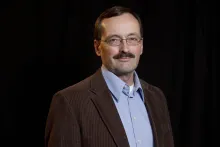
Randy Stiver is pastor of the United Church of God congregation in Rapid City, South Dakota.

