
Joe Dobson
Part 9 of the Acts bible study series presented by Gary Antion and Randy Stiver.
We certainly want to welcome you to the continuation of the book of Acts. And this evening, Mr. Randy Stiver and I will be doing the honors of going through this wonderful book that God has inspired for us, that we could learn about first-century Christianity, and take a look and see how we would do in comparison to these wonderful Christians of that first-century era. To ask God's blessing, I'll ask Mr. Randy Stiver. Okay, Phil, hold by your heads, please.
Our Father in Heaven, we come before you this evening, and we realize that you were there when Paul and Barnabas were traveling, and Asia Minor, and the very events that we're going to be reading about tonight you inspired through Jesus Christ, inspired the words that were written down by Luke here in the book of Acts. So, thinking of that great historical continuity that you provide us, we just pray for your inspiration. As we look at these words, these inspired words of your Bible, and help us to understand the great spiritual lessons we need to draw from them, please increase our knowledge and appreciation of those apostles of the early era, and of all the brethren and the tests and trials that they faced. And help us all to realize that we face somewhat similar trials, slightly different, but still of the same tenor. We pray for your strength for the faith of the brethren in the church around the world, your blessing upon the gospel that it will go out more powerfully than ever. We thank you for this wonderful opportunity to be together here at the home office, and in those who are watching in their homes or at their computers, where they can see the Bible study. We pray your guidance and blessing on every detail of it, in Jesus Christ's name. Amen. Amen. Thank you. One reminder, do you have a question? Those of you who are on webcast, email it to ucgbiblestudyatgmail.com, and we will do our very best to answer your question on the live webcast. Those in the audience here, our live audience, if you have any Bible study questions, just write them up, just sign your name to it, make sure it's legible. And I think Aaron or one of the men will bring it up to us. I think Ken O'Brien can do that from the back. Can pick them up and bring them up to us in the front. If you have any questions, you can just pass them to the aisle, and they can hold them out there as we go along. We're going to be covering the book of Acts, chapter 13 and 14, tonight. And Mr. Stiver and I will be trading off. I'll do the first several verses, I think it's 18 verses or 22 verses, of Acts 13. He'll finish it up. I'll start off with Acts 14, and he'll conclude it. So we shared some of the wonderful events. I didn't quite steal all the thunder. I did steal one of the thunders, and that is David, a man after God's own heart. So I took that one, but I did let him have Paul being stoned. You have to go to the middle of a paragraph to get that first one. That's right, I have to go to the middle of a paragraph. I actually let him have that one, even though it really belongs into my section. Anyway, we fight over the wonderful scriptures of God. And I thought I would share with you just one comment. Do you know in the book of Revelation, it says that when you read the book of Revelation, you will be blessed. And it is my hope that as you go through this Bible study and read the book of Acts with us, that you will also be blessed. It's interesting, in Revelation 1 and verse 3, he said, Blessed is he that reads, and they that hear the words of this prophecy, and keep those things which are written therein, for the time is at hand. So when I was going through the book of Revelation, I said, you know, just reading this book together, God says we will be blessed. It is a blessing to do it.
It is also a blessing to read the book of Acts and any of the Word of God. So we'll try to do our best to convey the Word of God to you with appropriate commentary that helps you clarify and understand it. In Acts 13, we're going to see verses 1 to 5, Paul and Barnabas, being selected and used by God. We're going to see verses 6 to 13. We're going to see Paul and Barnabas face some opposition.
14 to 43, we're going to see a sermon that he gives. I'll break into the middle of that and turn it over to Mr. Stiver, and then we're going to see more opposition coming at the end of the chapter as he concludes verses 44 to 52. That's what we'll be covering in chapter 13, verses 1 to 5, Paul and Barnabas, verses 6 to 13, opposition, and then we begin to see the sermon that was given by them. Let's look at Acts 13, verses 1. Now in the church that was at Antioch, there were certain prophets and teachers, Barnabas, Simeon, who was called Niger, which means black, Lucius of Cyrene, and Manaiian, who had been brought up with Herod, the tetrarch. There was a man who either was sort of like a servant in his household or actually kind of like a quasi-son to him, and Saul. There were certain teachers who were there at the church in Antioch, Antioch of Syria, which later became Antioch of Turkey, because it's an al-city in Turkey, very much of a city that's dying, but at that time it was a very burgeoning city.
So that's chapter 13 in verse 1. Notice these men were inspired teachers. They were teachers. They were prophets. Interesting in Ephesians 4 verse 11 he talks about, he gave some apostles, some prophets, some evangelists, some pastors, and some teachers.
It really depends. Like today, I was a teacher. I was also a pastor. I was also, I guess, a lecturer or whatever, and tried to convey the word. So I taught my class. I helped teach the new pastors who were in, so I tried to help them and instruct them. And when I preach tonight, I'm a pastor to you as well, interim pastor here in Cincinnati. And so I'm also fulfilling that role. So it really depends on what role you have and what you're doing. Verse 2. You were also a prophet because you declared the counsel of God. That's right. I was a prophet. So there. All right, verse 2.
As they ministered to the Lord and fasted, the Holy Spirit said, Now separate to me Barnabas and Saul for the work to which I have called them.
Any time we recommend somebody for ordination, especially as elders, but even as deacons, we pray and fast over it. I do. And most of us ministers and all of us ministers are supposed to before we put their name forth. God, is there anything about this person that we should see? Please help us to see and know whether this person is ready, whether this person can carry this responsibility. Maybe we're blinded. Maybe we don't see anything. Bring it out and let us see. And trust me, I have seen this happen. I had a man I was ready to recommend for ordination as an elder in Canada. And I was ready to put his name forth. And in the one year they said, no, no, wait on him. He needs a little bit of this. So I worked with him on that for a year. The next year I was ready to put his name forth. The whole year went by. I was ready to put his name forth. And all types of things came out from all different people that I didn't go looking for. It just came to my attention and I said, with all this being spoken about this person, I cannot in good conscience put his name forth. So God can make a difference. He also can bring to light issues where you say, well, that person is. And maybe bring to light someone else's characteristics and qualities. So as you know, we asked for the membership here to give us some input on deacons. And we've asked for the elders to give us some input on elders. So to try to get some consensus. But I fasted before I would ever recommend anybody for any of those positions to ask God for his help in doing it. And here we find they were fasting. And the Holy Spirit said, now I don't know how it said it, because we know the Holy Spirit is not pictured in Scripture as a person, but how did it say it? Did it convey to him? Did it put it in his mind? Was there an angel saying it, carrying a message from God that the Holy Spirit, you know, that God is Holy Spirit, he's made, he composed of the Spirit of God, now separate to me Barnabas and Saul for the work to which I have called them. So we find them being separated. 1 Timothy 3 and Titus 1 gives a list of qualifications. And we're so grateful to the Apostle Paul for writing both of those, because it gives us a clear idea as to what to expect and what to look for in men that are going to be set apart to be elders. And I've known men who are brilliant and bright but cannot teach. I've known of men who can teach, but their character may not be very good. So it takes a rare combination. I've known of people who can teach and have good character, but their family is not very good.
So again, there are a lot of issues involved when you talk about 1 Timothy 3 and Titus 1 as to the qualifications. So these individuals were to be set apart indicating for the work.
And it says, if a person desires to be a bishop, 1 Timothy 3, he desires a good work.
Nothing wrong with wanting to serve in the ministry as long as you're wanting it for the work, not wanting it for the glory that you think is there. And trust me, there's not as much glory as people think. There's a lot of satisfaction. There's a lot of joy. There's also a lot of headaches, a lot of heartaches that come as well, as the Apostle Paul so clearly enunciated that in his second epistle to the Corinthians. Verse 3, then having fasted and prayed and laid hands on them, they sent them away. So we see the brethren and the elders, we see the brethren having some things to do with it. We have people there, they're certainly recommending it, they sent them away. So it's not Peter sent them away. It's a collaborative effort. It's people working together to do it. They sent them away. That's interesting in verse 3. They fasted, laid hands on them, and does not say anointed them. In the Old Testament, as you know, kings were anointed when they were given a position. But any time we see ordinations, we don't see where it says, ordain elders in every city and anoint them. We just say, lay hands on, but no anointing, no oil. So we don't see oil. I don't think oil would be wrong if that was a tradition of the church, but our tradition, when we ordain, we just lay hands on. And it's not always that we have to, everybody's hands have to go on the head. Because if you have six or eight elders, that person's, your hands are going to be on somebody else's hand. You're laying hands on somebody else's hands. You're not laying hands on that person. So sometimes they might just put their hand on their shoulder. Sometimes they put their hands, somebody else's put their hands, and that's laying hands on them. Most of the time I try, we try to put two hands on. I try to, unless they're just a whole slew of elders up there, in which case you may only put, reach a hand out on them. And all you're doing is they set this person aside for God's special notice and to give them the special strength and help that they need to fulfill the job of being an elder in God's church, which is a serious responsibility. So verse 4, they laid hands on them, sent them away. So being sent out by the Holy Spirit. So it was God's Spirit that had them directed, that was working through them and in them. So God's Spirit, he says, being sent out by the Holy Spirit, they went down to Seleucia, and from there they sailed to Cyprus. So Seleucia was right near the Mediterranean Sea. My Bible has a map of it. They went down from Antioch of Syria at that time to Seleucia, kind of like a port city, and they traveled. And they sailed to Cyprus. So Cyprus is that little island that's down south of Turkey, down below Turkey, sticking out there, Asia Minor. And that's where they went. In verse 5, and they arrived in Seleucus. And Seleucus was on the eastern end of the island of Cyprus. So they landed on the eastern end of the island, and they preached the word of God in the synagogues of the Jews. Where did they go initially? They initially went, remember they're supposed to go to the tribes of Israel. Now even though Paul was a Gentile, Paul when he went into the cities, he immediately went into the synagogues. The synagogues were also kind of a meeting place. And so he immediately went to the synagogues of the Jews, and they also had John as their assistant. It's interesting that they bring this out in verse 5, the last part of it, because we're going to see that John didn't last long.
And that became a source of controversy later on, because John, who's John Mark, this is Mark, John Mark was apparently a young man and couldn't take it. And we'll, we could talk about that later. I don't know if that's in my section or Mr. Stivers, but anyway, we'll come to it.
So John was their assistant, so they had him to go along with them. Now when they had gone through the island of Paphos, so they've gone through the island to Paphos, so Paphos is on the other side of the island. It's on right on the sea on the other side of the island, so they traveled across there probably, I'd say 30, 40, 50 miles, 30 miles maybe, and here it shows 200, probably 30, 40, 50 miles away. And when they had gone to the island, to the other side, they found a certain sorcerer, a false prophet, a Jew whose name was Bar-Jesus, son of Jesus. Jesus being a, not necessarily just the name of Jesus Christ. So here they found, interesting, the Jews were active in this area. There was a synagogue. They went through the island. They had, they had to walk.
They found a sorcerer called Bar-Jesus, and he was a Jew. So here you find this man, this false prophet, interesting, a sorcerer. Why is a Jew worshiping another god? Sorcerers look to other special powers from others. Why are they doing this? Why aren't they yielded to and serving the one living God? Well, they turn away too. Verse 7, who was with the proconsul, Sergius Paulus, an intelligent man. Well, it's nice that he was an intelligent man, but what's he doing shacking up or being with this sorcerer? This man called for Barnabas and Saul.
It's interesting if you notice the order of the names. At this point in time, Barnabas looked like he was the one that saved Paul and introduced Paul. He's sort of the lead man in this situation. He was the one that was kind of listed first. So Barnabas and Saul are called Barnabas and Saul here, as opposed to Saul and Barnabas. He sought to hear the Word of God. He wanted to hear from these men. Either he had heard what they preached, or somebody reported that he heard what they preached. He was an intelligent man. He wanted to find out what is going on. In verse 8, but Elamis, the sorcerer for his name, so was his name translated. So Elamis, his real name was Elamis, was hindering them, withstood them, seeking to turn the proconsul away from the faith.
What does Satan the devil like to do to people? Turn them away. The God of this world, who does not want people to understand the gospel. The God of this world, who does not want the truth to go forth. Who does all he can to hinder by any type of means. So he didn't want this proconsul to hear.
Then Saul, interesting, verse 9, then Saul, we see a name switch, who is also called Paul, filled with the Holy Spirit, looked intently at him. I've been in some situations where I think there was obvious demonism in the past. And boy, I eyeballed that person, and I kept eyeballing them, eyeballing them. He fastened his eyes on them. You'll see several times in the scriptures where people were healed, or there were special miracles, fastened his eyes on that person, and then he dealt with them. So Paul is giving him a real once-over, and twice-over, and thrice-over.
He was looking at them. But notice also what it says, filled with the Holy Spirit. To me, you could have the Holy Spirit, or you could be filled with it. You could have it, or be filled with it. And I think each one of us needs that good filling with God's Holy Spirit in us, so we can have the strength by which to give out, from God, not from us. So he's filled with the Holy Spirit. He looked intently at him, and he said, O, full of all deceit and all fraud, you son of the devil, you enemy of all righteousness. Satan the devil is the enemy of all righteousness, and this is the one who's, you child, you son of the devil, you enemy of all righteousness. Will you not cease perverting the straight ways of the Lord? So not only was he a sorcerer, he was perverting the ways of God. He was adding into it. He was taking away from it. He was changing it, perverting it, distorting it, so that people would have a hard time to grasp and understand.
Now, just to backtrack for a moment and explain to you about the name Paul. Paul is Greek.
The Greek name and Saul is the Hebrew name, and apparently it was quite customary. I read from Berkeley. This is the daily Bible study series Acts of the Apostles, page 100. What's it here? He says, the governor of Cyprus was Sergius Paulus. These were intensely superstitious times, and most great men, even intelligent men like Sergius Paulus, kept private wizards, fortune tellers, who dealt in magic and spells. Barjesus, or Elamis, an Arabic word which means the skillful one, saw that if the governor was one for Christianity, his day was done. He was toast.
If this governor becomes converted, he's going to lop off Elamis.
So, it's interesting, if Paul dealt effectively with him, he'd be one for Christianity, his day was done.
From this point on, Saul is called Paul. In those days, nearly all Jews had two names.
One was a Jewish name by which they were known in their own circle. The other was a Greek name by which they were known in the wider world. Sometimes the Greek name translated the Hebrew.
So, Cephas, C-E-P-H-A-S, is the Hebrew, and Peter, the Greek, for the word rock. Thomas is the Hebrew, and Didymus, the Greek, for a twin. Sometimes it echoed the sound. So, Eliakim in Hebrew becomes alchemists in Greek, and Joshua in the Hebrew becomes Jesus. So, sometimes it's a similarity of sound. Other times it's the same meaning of a word. So, Saul was also Paul. It may be well that from this time, he was so fully accepted his mission as the apostle of the Gentiles that he determined to use only his Gentile name. After all, he was named the apostle of the Gentiles. So, now he's going to take and use the name Paul. But up till this point, he had been Saul. If so, it was a mark from this time he was launched on the career for which the Holy Spirit had marked him out, and that there would be no turning back. So, that's an interesting section of Scripture.
So, he rebukes this demon, or this man who is certainly flirting with demons.
Verse 11, and now indeed the hand of the Lord is upon you. You shall be blind, not seeing the sun for a time. Old King James says, for a season. And immediately a dark mist fell on him. So, everything became clouded, everything became dark, and he could not see anymore. And he went around seeking someone to lead him by the hand. Well, that kind of shot down his sorceries, didn't it? Can't even see where he's going. Couldn't see to pull the, find the magic hat from which to pull the bunny. Because he couldn't see the bunny, couldn't see the hat. So, hey, take this guy out of here, lead him away. So, God has a way of dealing with people to blunt their efforts, especially when they're not doing what was right.
I also want to mention, Philippians 1.19 talks about a supply of the Holy Spirit. When Paul was filled with the Holy Spirit, verse 9, Philippians 1.19 says God gives us a supply of the Holy Spirit. In verse 12, then the proconsul believed. So, this man was not only blind, he lost his job. Proconsul believed that when he saw what had been done, being astonished, not only at that action, but at the teaching of the Lord. So, the Apostle Paul brings his teaching to them. Now, when Paul and his party, now notice verse 13, a real switch here, a real switch.
They call it Paul and his company. Doesn't even mention Barnabas.
Barnabas just becomes part of the company of Paul, because now God is now clearly giving Paul the lead in the area. Now, Paul and his party set sail from Paphos, and they came to Perga in Pamphylia. Pamphylia being a section, a southern part of Asia Minor. And he says, and John, notice verse 13, it is in my section, departing from them, returned to Jerusalem.
Now, it doesn't tell us much more, except later on, we'll find in succeeding chapters, that there was a little bit of a row as to who would take with him in Acts 15, whether they should take John Mark again. Because Paul said, no, he departed from us, he deserted us. Let me say that some of our ministerial baptizing tours in the early days were so grueling that some of the men literally wanted to leave and depart.
It was driving when they were driving one, we'd be driving one, we'd be in the back seat trying to address these cards that they had to send to somebody for the next day, find out what their address was and trying to get to a place where they could send it. And from what I understand, every night they stayed in the same room except for Friday night on Sabbath.
So there was no time when you had any down time at all. And if you were the second man, if you were not the lead man on a baptizing tour, you were an inferior. And you're as an inferior, and I don't mean that wrongly, but as one who was not the lead person, you were subject to that other person. And one man tells a story, he walked into the restaurant, and he was lingering reading some news when they were ready to sit him down, when they were ready to be seated by the person who was holding the menus, and the lead man took him out and scolded him for it. So it was like, put people through the pressure cooker, and if you could survive a pressure cooker, then you could be a great pastor. If you could take being belittled, be smurched, and put down, you'll be nice to people afterwards. Really?
I don't know that that necessarily works, okay? So I don't think John was being mistreated here.
It was grueling and acknowledged. And it's acknowledged. It has been on baptizing tours. They came back. They were gaunt. They looked like they lost about 30 pounds because of all the travel. Some of them didn't eat all day long until they finally had something to eat at night. Some of them had diets that were unusual. Some of them liked fruit all day and not much else to eat and didn't like anybody else eating anything else. One man talks about how he went and delivered. He was dropping off the mail. He had the car by himself. While he had the car by himself, he drove past a, drove through a, it was on a Friday, he drove through a McDonald's or a Wap Burger King. He got himself a burger, came back to the room and quickly was woofing down this burger before the guy next door would knock on the door of his lead man. And sure enough, after he was done, the lead man knocked on the door and he could smell burgers. What have you been up to? You know, so, the poor guy, he just couldn't get away with it anyway, but he was, he sure enjoyed his burger, milkshake, and french fries. But the point being, it was tough. And I would take a traveling and walking from one area to another area and traveling by ship that wasn't exactly seaworthy-type ship. There must have been a very difficult time for John Mark, but it only says he departed from them and he returned to Jerusalem. Now, later on, chapter 15, we will see, I give a lot of credit to Barnabas for being willing to give this man a second chance, to humanly give this man another chance. And he worked out, because John, Marcus, both of course, God used Mark to write one of the books and one of the gospels.
Okay, so he leaves. Verse 14, but when they departed from Perga, they came to Antioch, different Antioch. Make a note. Antioch in Pisidia. Antioch in Pisidia goes north of the tip of Turkey, or Asia Minor, and it's kind of in the central area. Antioch in Pisidia, and they went to the synagogue on the Sabbath day and sat down. So they went in there and they just sat down. Of course, they weren't the preachers there, but they had certain credentials. I'll read to you just briefly out of page 106. Antioch in Pisidia was an inflammable city. It was a very mixed place. It had been founded by one Alexander the Great Successors, about 300 BC. Jews very often flooded into new cities in order to get in on the ground floor, to use a modern phrase. Since Antioch was a road center, it had become a Roman colony in 6 BC. In the population, there were therefore Greeks and Jews, Romans, and not a few native Phrygians who were an emotional and unstable people. It was a kind of population where a spark could cause a consecration. So Paul goes into there anyway. Paul's job is to preach the gospel. Paul goes in and he wades in. He goes into the synagogue. I think I had another note on that, but he goes into the synagogue to be able to preach the Word. This isn't the one I'll share with you, the size of another city in a moment. But anyway, he goes into the synagogue and he sits down. Verse 15, after reading of the law and the prophets, as part of their service, the rulers of the synagogue sent to them, saying... I don't know whether he was wearing a doctor's robe or whether he had any stripes on it to show, whatever his robe... whatever there was, it indicated the Apostle Paul, remember, was a trained theologian.
He had trained under Gamaliel. He was no slouch of a person. And so they sent to him, and they sent to them, because they were strangers in the synagogue, and they said, "...met in brethren, if you have any word of exhortation for the people, say on." You're new visitors here? You've come in? You look like you understand things?
We recognize you as teachers or speakers? Or would you like to say something?
Verse 16, so the rulers sent to them, they were recognized and given an opportunity to speak.
Then Paul stood up and motioning with his hands, so he used gestures, and he said to them, "...men of Israel, and you who fear God, listen.
I have something to say to you. You are the people of God. You're called by God. You're the Israelites, the chosen people, and anyone else here who fears God. Listen to me.
The God of this people, Israel, chose our fathers and exalted the people when they dwelt as strangers in the land of Egypt. And with an uplifted arm, he brought them out of it." So God was able to bring these people out. Now, for a time of about 40 years, he put up with their ways in the wilderness. And when he had destroyed seven nations in the land of Canaan, you can find that in Deuteronomy 7 and verse 1, it talks about the Hivites, the Jebusites, the Gergesites, Gerishites, and all the otherites, the Stelagtites, Stelagmites, and even the Mites. He destroyed the Baal. But he got rid of all these ights. They were all gone, seven of them anyway. And he distributed their land to them by allotment. So he apportioned it. Remember, all the tribes had their own. Verse 20, and after he gave them judges for about 450 years. Now, I'm not going to go in and explain all this, but there's a great article. I think it's in Jameson Fawcett and Brown that talks about what this 450 years symbolizes. If Mr. Stiver wants to comment on that, he's welcome to. But 450 years can apply to how long they had the judges, as opposed to how long they were in the land. But anyway, there are a couple of explanations given I brought up, and I'm not going to go into it right now. It's sort of a sidebar issue. Until Samuel the prophet. And afterwards they asked for a king, so God gave them Saul, the son of Kish, a man of the tribe of Benjamin. He gave him as a leader for 40 years. And in verse 22, my last verse before I turned over to Mr. Stiver, and when he had removed him, he raised up for them David as king. So Saul, remember, was when he was little in his own sight.
God said, didn't I make you king? It was God's choice. He said, good, I didn't annoy him.
He's humble. Saul said, picking me out of the out of one of the smallest tribes here? I don't understand this, why you're picking me to be king. He was humble. God even reminded him when you were little in your own sight. Because Saul was head and shoulders above everybody else, but he still was little in his own sight. He said, I raised you up, let you rule over the people, but now you've become big in your own sight. So he raised up David as king, to whom he also gave testimony, and said, I have found David, the son of Jesse, a man after my own heart. Acts 13, 22, is a very good verse to remember, who will do all my will. You know what God, in a sense, said?
If I were a man, that's the attitude I would have. Did he mean that he would do everything David did? No, because David sinned mightily against God. But David also repented mightily against God, toward God. If I were a man, that's the attitude and heart I would have. Oh, if God could say that about any of us, there is a man after my own heart. There is a woman after my own heart, because they have such an attitude of yieldedness. And it says, what did that lead him to do? Who will do all my will.
He's willing to yield to me. He didn't write away because he didn't see his sin.
He saw himself as a king who was able to take anything he wants and have anything he wants. And he wanted this man's wife after he had committed adultery with her. And he wanted her, and he took the steps to do it. And it wasn't until it brought to his attention how rotten and how evil he had become. So again, he was willing to yield to God and serve him. I have found David, the son of Jesse, a man after my own heart, who will do all my will. Mr. Stiver, continue with this sermon. Okay, what you'll notice is that Paul is reciting history when he gets up to David here. He's proving his point through the recitation of history. In other words, there is a space-time continuum for those who used to watch Star Trek back when it was an antique TV show. There is a timeline of history. And if you study the history of Israel, study the history of how God has worked with man, you will learn very important things. And Paul is using this. Stephen did the same thing in chapter 7, and it's done by others elsewhere. But Paul was doing it very similar to the way Stephen was. And interestingly, Paul, though he was still known as Saul, was standing there watching Stephen be stoned. He was the one who was approving of it in that sense. So here he's using the same technique.
And it's actually one that if we recite the history in our minds from learning from the Bible, it locks us into an understanding that stays. It gives us pegs to hang events and places of the Bible on, and it gives us valuable lessons we learn from history. So that's what he's doing. He gets up to the point of talking about David, and we continue with the theme of David from this man's seed, in other words, David's descendants. According to the promise, God raised up for Israel a Savior, Jesus. So he makes a statement to this synagogue that's brand new to the apostle Paul. He said, from King David, who I've just established as a man after God's own heart, came one of his descendants according to the promise that God made, and that was Jesus, meaning Jesus of Nazareth. And then he interjects, and he says, And after John had first preached before his coming, and presumably there was a knowledge of John, even in Antioch. Bear in mind, the apostle Paul went clear to Ephesus later and found ten men who seemed to understand the truth. And when he questioned them more thoroughly, he found out they only understood the teaching of John the Baptist. They had been there during his six-month ministry, but they were not there in Jerusalem during Christ's ministry, so they didn't know about Jesus. And this is many years later, but they had stuck with what they learned from John. So the knowledge of John the Baptist had actually spread far and wide.
John had first preached before his coming, before Christ's coming, the baptism of repentance to all the people of Israel. And John was finishing his course. He was coming to the end of his ministry, and he said, and you remember reading this, Who do you think that I am? I am not him, or not he, I am not he, meaning I am not the Messiah. But behold, there comes one after me, the sandals of whose feet I am not worthy to live.
And that was Jesus Christ, who in fact, physically was a distant relative of John, because Elizabeth, John's mother, and Mary, the mother of Jesus, were related.
So it's like a fifth cousin or something like that.
Now, remember, Paul is speaking to an audience who doesn't understand who Jesus was. He has to establish in their minds that Jesus Christ of Nazareth is the Messiah. So he continues laying the proofs down. He's cited the history, and so he comes to this point. Men and brethren, sons of the family of Abraham, and those among you who fear God.
Now, who are those among them that fear God? Weren't they some more Israelites? No, they were Gentiles. They were Gentile proselytes. There are only two kinds of people in the Bible, for the most part. They're Israelites, the nation, and they're Gentiles, which is the nations, which is actually what the Hebrew word for Gentiles means. Goim means the nations.
So they were of the Gentiles who believed. They believed in the God of the Bible, at least what they understood of them. And they were the God-fearers, and in fact, the Apostle Paul often ended up with many of them coming into the Church. So those of you who fear God, to you, the word of this salvation has been sent. For those who dwell in Jerusalem, they're rulers, because they did not know Him. The rulers in Jerusalem did not know or recognize Christ as Messiah, nor even the voices of the prophets, which are read in every Sabbath. They didn't even understand the voices of the prophets. So it's a little bit of a dig at the Pharisees and Sadducees. They have fulfilled them. Even though they didn't fully know what the prophets said, they fulfilled what the prophets said in condemning Him, meaning this Jesus of Nazareth.
Him they asked Pilate that He should be put to death. They cried out for Him to be crucified. And now when they had fulfilled all that was written concerning Him, they took Him out down from the tree or the stake or whatever it was He was crucified on and laid Him in a tomb. You think, well, hold it. You just said they laid Him in a tomb? That was Joseph of Arimathea.
He wasn't a hostile. He was a friendly. Well, but Joseph had to get the permission of Pilate to be able to do that. And thus, the permission for the burial came from them. You know, the us versus them point that Paul is making here. And as he's using the us and them, he's building his case in the minds of the listeners.
And so they laid Him in the tomb, but God, verse 30, God raised Him from the dead. So here was the proof, the beginning of the proof that Jesus was the Messiah. He was seen for many days by those who came up with Him from Galilee to Jerusalem. For 40 days, actually. He appeared to the disciples regularly and to others. Who are His witnesses to the people? There were eyewitnesses that spoke with and met with Jesus after His resurrection. And He would manifest Himself so they could see Him. And we, now Paul and Barnabas are the we, we declare to you glad tidings. Because Paul and Barnabas, because Mark is gone. By the way, there's even more good news about Mark.
In late in Paul's ministry and in his life, he said, send Mark, told Timothy, send Mark to me and tell him to bring the parchments. He is of great profit to my ministry. So the two of them eventually came to work together very closely, possibly working on part of the canon for the New Testament. We wonder about the comment about the parchments. But that's another story. Mark's a fascinating character in the Bible, that's for sure.
Where was I? But God raised Him from the dead. He was seen by many who came from Jerusalem, who are His witnesses to the people, eyewitnesses of His resurrection. And we declare to you good news, glad tidings, that promise which was made to the fathers. We declare to you the good tidings, that promise which was made to the fathers, a promise of the resurrection of the Messiah. God has fulfilled this for us, their children, the descendants of Abraham and so on, in that He has raised up Jesus as it is also written in the second Psalm. You are my Son, today I have begotten you. Paul used that as scriptural proof of Christ being the Messiah. Today I have begotten you, and that He raised Him from the dead, no more to return to corruption. He has spoken thus. So He is making His points, He is backing them of Scripture. And He speaks thus, He says, I will give you the sure mercies of David. And we read that and think, alright, how does that prove the point you are making?
Well, let's go back to Isaiah 55, because that's where it comes from, the sure mercies of David. Isaiah 55, the first three verses, starts out with, Ho, everyone who thirsts, come to the waters. Thank you, I think I will.
Ah, yes, and those who have no money, come, buy and eat. You have no money, you can buy and eat. Oh, what kind of a... That's a great deal. Let's go. Did they have McDonald's back in those days? I think so.
Really? Man, that must have been a historic place. A lovely Jewish restaurant at that time. There was an A&W. It could have been A&W. Yeah, they made better burgers.
Come, buy and eat. Yes, buy wine and milk. Without money and without price.
And then here's an interesting comment in verse 2. Why do you spend money for that which is not bread? We used to cite this scripture in the church when we stressed the importance of eating good food. Refined flour is not good food. And we've gotten away from that, and maybe we need to get back to that. Maybe. We definitely do. And eat healthier. Take care, better care of what God has given us, which is our health. And eating whole grain flours and things like that is much more nourishing than eating bread which is not bread. And your wages for that which does not satisfy. People spend their money and they're not happy. We know what brings happiness and joy.
Listen carefully to me and eat what is good, physically and spiritually. And let your soul delight itself in abundance. Incline your ear and come to me, here and your soul shall live. And I will make an everlasting covenant with you, the sure mercies of David. There we go.
The everlasting covenant that God will make with each individual is a part of the sure mercies of David. It speaks of the grace of God by which we're saved. When he forgives our sins, no other way to be saved. So when we go back to Acts now, Paul said, and that he raised him from the dead. No more to return to corruption. He has spoken thus, I will give you the sure mercies of David. That's the everlasting covenant with God. Therefore, he says in another Psalm, you will not allow your holy one to see corruption. By corruption, we mean decompose.
Beethoven's first name, Frederick. Ludwig. Sorry, Ludwig. Ludwig, yes. When he was alive, he composed. When he died, that's a punchline I don't even need to say. He decomposed.
So he saw corruption. But you will not allow your holy one to see corruption.
For David, after he served his generation, you know, comparing David now with Jesus, and David is, you know, glorious as a figure in Israel's history. For David, even after he served his own generation by the will of God, fell asleep. That means he died, he croaked, and was buried with his fathers, and he saw corruption. He decomposed. Because, bear in mind, like Ludwig, David also composed. That's why we have all those Psalms. He composed music and Psalms while he was alive, but not afterwards. But he whom God raised up, this Jesus of Nazareth, he whom God raised up, saw no corruption. He didn't decompose. Therefore, let it be known to you, brethren, through this man, let it be known to you that through this man is preached to you the forgiveness of sins. He died for the sins of mankind, including yours and mine, but he didn't sin himself. So his death, being worth all of our lives because he's the Son of God, pays the penalty for us. And by him, everyone who believes is justified from all things, from which you could not be justified by the law of Moses. The law of Moses was based on the principle of lex talionis, taliconis. I think I'm getting the last word mispronounced, but the Latin words it means the law of retaliation. Eye for an eye and a tooth for a tooth, wound for a wound, and a life for a life. And to break the law, the divine law of God, is like taking a life.
And therefore, we lose our lives for doing so. The wages of sin is death. And there was no mechanism in the teaching of Moses because it was unfolding. There was no known mechanism at that time as to how God would forgive. For those who do not recognize Christ as Messiah even today simply seemed to teach that God simply waves away the penalty of sin as if he didn't really mean it.
But that doesn't work. There's no justice served. Justice has to be served. Somebody has to die for your sins and mine. And that's what Paul, the point Paul's making.
So by him everyone who believes is justified from all things, from which you could not be justified by the law of Moses. Beware, therefore, there's a little stinger on the end of this message, beware therefore, lest that which has spoken to the prophets come upon you.
Behold, you despisers, marvel and perish, for I work a work in your days, a work which you will by no means believe, though one were there to declare it to you. In the Jewish audience, I guess you get away with that. As he was just got in their face is what he did. He just challenged them. And you know, you're going to be like the people of old who rejected the prophets of God?
Well, there was this was a there's a lot of punch that he packed into this message that he gave on sort of an impromptu basis there in the synagogue. So when the Jews went out from the synagogue, the Gentiles begged that these words, these were the Gentiles who had heard it, and maybe some others who heard about it from them, might be preached to them the next Sabbath. So we find the Apostle Paul keeping the Sabbath consistently. Now, when the congregation had broken up, many of the Jews and devout proselytes followed Paul and Barnabas, who, speaking to them, persuaded them to continue in the grace of God. So God was calling people. They were becoming converts to the truth. And Randy, two things. Two things I just wanted to interject. First of all, that verse 41, for I will work a work in your days, comes from Habakkuk 1.5. Habakkuk 1.5, he's really referring to the Chaldeans. So it shows you how sometimes God can apply a scripture one way, literally, in prophecy, and bring it another way about the work of God. And when you think about the Church of God starting out with 100 watts of radio power free up in Eugene, Oregon, and expanding to the whole country, and to eventually become the greatest consumer of television time, I believe we had more time on television as a religious telecaster than anyone, and tons of radio all over the country blanketing it from one little 100 watt power station free. So I thought that was interesting. In verse 42, he talks about, the Gentiles begged that these words might be preached to them the next Sabbath. They could have said, hey Paul, I know we're Gentiles, let's meet on Sunday. Because Sabbath's been done away. I know you're out here trying to save the Jews. Can we have you come back to us on Sunday? But even the Gentiles wanted them to come back the next Sabbath. Exactly. Fascinating point. Now, when the congregation had broken up, and there was some talk, many of the Jews and devout proselytes followed Paul and Barnabas, who speaking to them persuaded them that they should continue in the grace of God. So the nucleus of the congregation is starting to be developed. In the next Sabbath, almost the whole city came out. You know, the word spread. An inflammatory city was ready to listen to whatever there was to listen to. To hear the word of God. But the Jews, the Jewish leaders, they saw the multitudes, and that didn't sit well. They were filled with envy. Now, we've seen that before. And contradicting and blaspheming, they opposed the things spoken by Paul. They started an accusation campaign. Discredit Paul and Barnabas. You know, as fast as they possibly could, because they were envious. Envy is deadly. Then Paul and Barnabas grew bold, and they said this.
And this is an important verse. It was necessary. He said this right back in the face of these Jews who were accusing them. It is necessary that the word of God should be spoken to you first, because you're Jewish. You're part of the Israelites. But since you rejected it and judge yourselves unworthy of everlasting life, behold, we turn to the Gentiles, the non-Israelites. For the Lord has so commanded us. And now, you remember Paul said in Romans, he spoke to the Jew first and then to the Gentiles. And thus he did. But this is where the ministry of Paul and Barnabas is taking a very decided turn. That they will speak, obviously, to anybody who listens, but they begin to see more and more clearly their mission was to go primarily to the non-Israelite peoples. I have set you as a light to the Gentiles, that you should be for salvation to the ends of the earth. That's a prophecy of Christ. And when the Gentiles heard this, they were glad and glorified the word of the Lord, and as many as were appointed to eternal life believed. Those that God was calling. And the word of God was being spread through all the region. The Jews stirred up devout and prominent women and chief men of the city. They raised a persecution against Paul and Barnabas and expelled them from the region. But they shook the dust, Paul and Barnabas, shook the dust off their feet, as Jesus had said, against them as they were walking away and came to, I aconium. And the disciples were filled with joy and with the Holy Spirit. They had made progress.
They got persecuted, but you're going to be persecuted if you're a true follower of Jesus Christ.
Thank you. Just before I go to chapter 14, I had a couple of quick questions that came in. The same one said, wasn't Paul the tribe of Benjamin? Did I say Paul was a Gentile? I said he was the apostle to the Gentiles. If I said he was a Gentile, I was mistaken. I misspoke. I said, Mr. Andy and said, Paul was a Gentile. I assume this was a slip. Paul said he was a Hebrew. Philippians 3, 4, and 5 came from the tribe of Benjamin, which was associated with the Jews.
He was a Pharisee, strict Pharisee, trained by Gamaliel so that he was not a Gentile. He was appointed to be the apostle to the Gentiles. His name, Paul, was Gentile because he began to work with, was commissioned to go to the Gentiles. So I'm sorry if I misspoke. If you misheard me or if I misstated it, certainly I do know that Paul is not a Gentile. The bulk of the Jews were from Judah, but there were two tribes, and the other tribe was Benjamin, although a few of Benjamin went with the ten tribes, and then there were some of the Levites, the priesthood mainly, that formed what we know today is the Jews or the ancestors of the Jews.
Okay, chapter 14, we're going to see them go to Iconium, which was about 90 miles away, and that's in verses 1 to 5. We're going to see Derbe and Lystra in verses 1 to 19. So Paul is on this tour of Asia Minor. And one thing I wanted to point out to you that I forgot to mention, when they went to Antioch in Pisidia, in page 102 of Barclay's Acts of the Apostles, it said, one of the amazing things about Acts is the heroism that is passed over in a sentence.
Pisidian Antioch stood on a plateau 3,600 feet above sea level. To get to it, Paul and Barnabas would have to cross the Tarsus range of mountains by one of the hardest roads in Asia Minor, a road which was also notorious for robbers and brigands. But we are bound to ask why they did not speak preach in Pamphylia. Why did they leave the coast with the word, unproclaimed, and set out for a difficult and dangerous way?
Not very long afterwards, Paul wrote a letter to the people of Antioch and Pisidia, Iconium, Lystra and Derbe. It is the letter called the letter to the Galatians, for all of these towns were in the Roman province of Galatia. In it says, in it he says, you know it was because of a bodily ailment that I preached to you at first.
So when he came to Galatia, he was a sick man, Galatians 4, 13. Now Paul had a thorn in his flesh, which in spite of much prayer remained with him. 2 Corinthians 12 verses 7 and 8. In fact, he said, I ask God for this three times. So our normal procedure, somebody's sick, we would normally for the same ailment anoint them three different times if that was what they choose, unless there was improvement and then regression or improvement and regression, or it worsened.
But if it's the same thing, same status, we might anoint the person three times based on that principle. I'm not saying it's hard and fast, it's just a principle we used. 2 Corinthians 12 verses 7 and 8. Many guesses have been made as what that thorn was, or stake as it might be translated.
Oldest tradition is that Paul suffered from prostrating headaches and the most likely explanation that he was a victim of virulent recurring malaria fever, which haunted the low coastal strip of Asia Minor. A traveler says that the headache characteristic of this malaria was like a red hot bar thrust through the forehead, and another likens it to a dentist drill boring through a man's temple.
It is most likely that this malaria attacked Paul in the low-lying pamphylia that he had to make for the plateau country to shake it off. So note that it never struck him to turn back. He didn't say, I got this recurring malaria, let's go back to Jerusalem, let's cancel the trip, let's go back to Antioch. He pursued. But I think it was really interesting. One of the amazing things is that they came to Pisidia.
You don't even think about what he had to do to get there. He just has him arriving there magically. Chapter 14. Now they go to Iconium.
And here we're going to find Paul running into some trouble. Now it happened in Iconium that they went together to the synagogue of the Jews and so spoke that a great multitude, both of the Jews and Greeks, believed. God's Word held out a message of hope. You see, it was a message of salvation. Many people in the Roman Empire were slaves. Slave didn't always mean that they had to be chained up at night. But they were dominated and dominated by the Romans. And many of them were slaves. And when Paul came and offered them salvation, when he came and offered them, you could have a part in the family of God. You could be a child of God. What a powerful message this was.
People were listening. God was opening the doors and calling and drawing them. Verse 2, But the unbelieving Jews stirred up the Gentiles and poisoned their minds against the brethren.
What kind of a person are you when you go around poisoning people's minds?
Like I mentioned about terrorists. What joy does a person get out of ruining something?
You take a magnificent structure that's built and you set a few explosives and you level it. Does that give you joy? Is there some great joy in looking at this mess that you just created?
There's no joy? You talk about poison-mindedness. You talk about people who spread poison.
What must they be like? How do they live with themselves to spread filth and swill about others?
What kind of person must that be? They poisoned their minds against the brethren. And verse 3, Therefore they stayed there a long time, because they were refuting it and working against something that was devilish, speaking boldly in the Lord, who was bearing witness to the word of His grace, granting signs and wonders to be done by their hands. So not only did they speak powerfully, God punctuated their speaking with miracles. But the multitude of the city was divided, part sided with the Jews and part sided with the apostles. So you have a divided city.
Brethren, people being divided, one from another. Amazing. Iconium, by the way, was 90 miles from Antioch, Antioch of Pisidia, and it's called Konya, K-O-N-Y-A, today. Today's population is about 30,000.
Therefore, and let's see, verse 5.
And when a violent attempt was made by both the Gentiles and Jews with their rulers to abuse and stone them, we can't poison people's minds enough. Let's use a little bit of abuse, and let's use a little bit of force against them.
They became aware of it, and they fled to Lystra and Derby, cities of Laconia, still in Galatia, to the surrounding, and to the surrounding region. And they were preaching the gospel there. Again, the gospel has to go forth, and it keeps on going forth. We don't stop because we have some persecution. We don't stop because we have somebody trying to cause division or difficulties. We keep moving forward. We keep preaching the gospel. You find that again and again. They didn't quit. They didn't go hole up in someplace away from everybody. They didn't go hide. They kept on doing the work. You're going to see the great enthusiasm of the apostle Paul, and what he did as he carried on doing the work. So they preached the gospel there, and in Lystra, a certain man without strength in his feet was sitting, a cripple from his mother's womb who had never walked.
I think of some of the people that I know very well, and it hurts my heart to know some of those people have never walked. They've been in a wheelchair their entire life. They don't know what it's like to get up and walk around. They don't know what it's like to get up and get themselves a glass of water. They don't know what it's like to move their feet by themselves.
Here's a man sitting there, verse 9. This man heard Paul speaking, Paul observing him intently. And again, I find they fasten his eyes on him. He sees him. He has compassion on him. He sees him, fastening his eyes on him intently and seeing that he had the faith to be healed. I don't know how he saw he had the faith, except this man was looking back, maybe longing and wanting to be healed. He said with a loud voice, Stand up straight on your feet. And he leaped and walked. You ever notice some of the faith healers on television? No matter what it is the people are healed from, they're leaping and jumping. Probably get it from this verse. But they push him over first. Well, they knock him over. Then after they get up, they're happy to leap after they've been knocked out. Where is he? Where is he? The bell is ringing.
What round is it? He just walloped me in the head. But the point being, here was a man who had never walked before in his life. Now all of a sudden his leg, his feet become strengthened. And he stands up and he's so thrilled to be able to walk, he leaps. If I'm healed, if I'm blind, all of a sudden healed, do I leap? No, I look. Wow, look at that, look at that, look at that. I'm excited. I'm leaping. The guy leaps because he's never walked before. But somehow or another, they pick this up. Here's a healing. You should leap. Okay, start leaping. It's really amazing what people do. But anyhow, it's a great message here. Also, there's two types of healings. There's one where you pray and ask God, there's another where you just say, be well. And boy, do I long for those days. I hope and pray that God will one day give that to us. Won't that be something?
You see somebody who's hurting, he just say, be better. And they're better. What an awesome thing that will be. God did it before. He can do it again. Verse 11. Now when the people saw what Paul had done, they raised their voices, saying in Laconian language, that gods have come down to us in the likeness of men. Well, we have the gods here. These people worshiped other gods. We have the gods here. And Barnabas, they called Zeus. The Barnabas was the king of the gods. So what Barkley points out is that he must have been a very distinguished man.
So they thought Barnabas was the king of the gods, Zeus. And of course, they thought that Paul, they called Hermes or Mercury, as it says in the Old King James, because he was the chief speaker. So I guess Hermes was a good speaker. And so they were the messenger. So he was the one who could be bringing the message. And they thought them both to be gods. Then the priest of Zeus, whose temple was in the front of their city, brought oxen and garlands to the gates, intending to sacrifice with the multitudes. Well, we've got two gods here. Look at this special miracle. Look at the power by which these men are preaching. These must be the gods come to the earth incarnate. They're about ready to start offering sacrifices to Paul and Barnabas.
And verse 14, and when the apostles, Barnabas calls Barnabas an apostle, by the way, and Paul saw, heard this, they tore their clothes and ran it among the people. Now gods don't tear their clothes. They tore their clothes. Don't do this. We're like you. We're men. Just like you, crying and saying, men, why are you doing these things? We also are men with the same nature as you. We preach to you that you should turn from these useless things to the living God. Quit doing this.
Turn from these useless things and turn to the living God who made the heaven, the earth, the sea, and all things that are in them, who in bygone generations allowed all nations to walk in their own ways. You know what? In past generations, God let people do things their own. But now He sends messengers to you to tell you you need to repent. Acts 17, 30 says He winked at those things. Some of those things He winked at, okay, I'm just not going to see that. I'm not going to pay attention to that. But now He does. He tells you, you better shape up, get rid of your gods, and start worshipping the true God. And what's really interesting here is we find these people ready to worship Paul and Barnabas in one breath, and we're going to see in verse 19 what they're prepared to do shortly thereafter in another city. So He says, who in bygone generations He allowed all these nations to walk in their own ways. Verse 17, nevertheless He did not leave Himself without witness in that He did good, gave us rain from heaven, and fruitful seasons, filling our hearts with food and gladness. He gives us every blessing, every good and perfect gift comes down from God, James 1.17. And with these sayings, they could scarcely restrain the multitudes from sacrificing to them. No, no, no, no, don't do this. Don't do this. They tore their shirts, ran into the crowd. No, don't do this. And they barely kept them from worshiping them. Mr. Ruck Steiber. Interesting. On that section, you'll see shades of it again in Acts 17 later on in Paul's sermon about the unknown God and how He explains the Creator God to the Gentile mind. We had two Bible questions. One is, is it true that the Jewish calendar doesn't allow for tandem Sabbath during the fall Holy Days accomplished by the postponements? If this is true, does UZG keep this Jewish calendar rule? Do you have knowledge of that specifically, or do we need to save that one for later? We probably will need to save this one. I think I know the answer, but I would rather give you a studied answer on this one than an off-the-cuff answer. So I will take it. I do believe that is the case, but simply because they do not allow for it, simply because the Sabbath is considered the Sabbath according to the commandment, which are forbidden to work, which feast days do allow you to have a certain amount of food preparation on them. So I'll do a study on it. Thank you for sending it in. Okay, and then before I get into Paul's being stoned here, there's a quick announcement for the Cincinnati East Church here. Sabbath school classes for May 14 are canceled, and classes will be held on May 21st, which will be the last class and the last chance to rehearse our songs for graduation. So that's a note to parents here in the Cincinnati East Church. And the other Bible question we had, gentlemen, do we know if God will bring all of the different groups of his church back together as one body before the Great Tribulation? And the short answer is no. We don't know. That's Christ's business. We hope so. You know, we pray for unity of God's people. You know, that's, I mean, unity is important to the United Church of God. Look at our adjective.
But these things are in the hands of the boss, of Jesus Christ, and how he leads things in orchestrates things and teaches us all lessons. But that's a good and thoughtful question as well.
And now we get into another big headache for the Apostle Paul. In verse 19 of Acts 14, then the Jews from Antioch and Iconium, you know, irritate somebody and they just won't leave you alone. They traveled, what was it, 90 miles, you said? 90 miles on foot, probably. Rich ones on chariots, maybe, but on foot. And they came there and having persuaded, this is to Lystra, and having persuaded the multitudes, they stoned Paul and dragged him out of the city, supposing him to be dead. Now the question is, was he dead, or was he only mostly dead?
We don't know. You know, he very well could have been dead, and God brought him back to life. Or maybe he just looked like he was dead. Or maybe he feigned deadness. That's not a right, that's not a word. You know, you get hit in the head with a rock and you think, well, that hurts. Maybe I'll just pretend I'm dead and he'll leave me alone. There's a little bit of unanswered information there. However, one thing that it does tell this story is quite remarkable. And by the way, you know somebody else who came from Lystra, because he was one of the Apostle Paul's leading proteges, Timothy. Timothy and his mother and his grandmother were all from Lystra.
And I suspect, we'll get into that when you get to chapter 16. It's more they come back to visit Lystra later, and that's when Timothy travels with Paul. I suspect that this next sentence could have included Timothy as a young boy. They stone Paul, drag him out of the city, suppose he wanted to be dead. However, when the disciples gathered around him, he rose up.
They come out here, they've just learned God's truth. Some have been baptized. They're believing the gospel. They're understanding about there to be a church of God, a necklace of God. And then the one who brought the message, the one who they talked to, they counseled with, who helped to baptize them, is laying there. And for all they can tell, he's dead as a doornail. And then he starts to move. And he moves again and shakes his head. And then he turns over and he starts to get up on his hands and knees. And finally he stands up. And I suspect, I'm just imagining the scene, they were dumbstruck. Doubt if there were very many emergency medical technicians on hand.
Maybe they had something similar to that back in those days. But it says that he rose up. It doesn't say they helped him up. And he went where? As far as he could from Lystra? No. When Paul cleared his head, he looked at the nearest city gate and he says, I'm going back in there. And he went back to the town where the people who had stoned him had come from and were probably still lodged.
This was a man with an irrepressible spirit and dogged determination and would not back away from a fight. And back in he went. However, when the disciples gathered around him, rose up and went back into the city. And the next day, when it pleased him, he left. And with Barnabas to go to Derby. So that's a remarkable scene, that tiny paragraph of verses 19 and 20. And when they preached the gospel in that city in Derby and made many disciples, they returned to Lystra and Iconium and Antioch. It didn't go around them. They walked right through them, strengthening the souls of the disciples, exhorting them to continue in the faith. And then here comes, in verse 22, a very important saying from Paul that we need to memorize. We must, through many tribulations, enter the kingdom of God. Being a part of the true church of God in the age of the devil, because this is his world, not God's, not right now, but being a part of the true church of God at this time in history, is not a cakewalk. It's not a cakewalk or anything that means a cakewalk, as we use that idiom in English. You know, there are troubles that we will face, and we must face them faithfully. We must bear our burdens like Christ bore the burden of our sins. And so when they had appointed elders in every church, and again we're appointing elders as they were appointed, but there were elders in every church or congregation, and prayed with fasting. Again, fasting was a part of prayer in the selection process. Then Paul and Barnabas commended them to the Lord in whom they had believed, so they didn't leave them without leadership. They prepared elders, some of whom would be pastors for the brethren. And when they passed through Pisidia, they came to Pamphylia, and now when they preached the word in Perga, they went down to Atalia, and from there they sailed to Antioch, meaning Antioch of Syria, which is where they started from. And when they had been commended to the grace of God for the work which they had completed. And when they had come and gathered the church together, they reported that all that God had done for them, and that He had opened the door of faith, and that He had opened the door of faith to the Gentiles. So they stayed there a long time with the disciples. Now it says they proclaimed or told the brethren that God had opened the door of faith to the Gentiles. That door actually had been opened by the Apostle Peter. Well, was the one that Christ opened it through. But it hadn't been acted on very much, up until Paul was converted and brought into the ministry. And now there was an active and almost aggressive ministry, aggressive in the sense that, you know, he went back into the city from which the people who stoned him came from, ministry, an active and aggressive ministry to get the gospel out to the non-Israelites as well. And thus the ministry of the Apostle Paul was in full swing for he was sent to the Gentile people. And they stayed at Antioch for a long while.
It's interesting, just a couple of comments. I was looking at the margin of my Bible in Acts 14.23, where he talks about the appointed elders in every church. It says, literally, chose, that is, by the raising of hands. That's one scripture that seems to indicate that they took a poll of the brethren or of the ministry, in this case, to see if these individuals would be ready. That's one scripture that indicates that, the appointing. Also, Psalm 34.19 is a Goodman to go along with verse 22 that talks about, we have many trials, many are the afflictions of the righteous, but God will deliver them out of them all.
So, God, there are, we can expect difficulties, and certainly the Apostle Paul was no one to shy away from it. And I try to think about how you would feel if you had an Apostle Paul today.
And what he would do for you. And what you would feel. This man who'd just been left stoned to death. And, you know, I don't know, a stoning and then they dragged him out of the city. I don't think they hit him with one stone. Usually they hit him with one, and then they pout the body with others unless they thought he was dead already. But they dragged him out of the city and left his lifeless body. He could have been dead and God raised him. We'll never know, because it just says, he rose up. But why would they leave him? Wouldn't they check his, wouldn't they check his pulse?
Wouldn't they check to see if there was any breath coming out since they hated the man so much?
And here he is. And what a hero to have been stoned. And he must have had scars on him from the bruises. He gets up and he goes to preach in Derby. One day later, turns around, says, well, let's go back through the city where I was just stoned. The courage, the faith, the actions of this man, the Apostle Paul, I don't know how big he is. I mean, there's a book that describes him. It says he was just a little, he wasn't a real big man, hook-nosed, wasn't very handsome at all. I think we'd be amazed if we saw him today. I think we'd be amazed if we saw even him in a suit coat. I think we'd be amazed. We would say, what? But this man was dynamic, as God can use anybody at any time, anywhere, because it's to his glory and honor, not to ours, not to people, not to the individuals. But I just think of this, what an awesome man, Mr. Stiver describes so vividly, what an awesome man this was that we had to relate to.
Can you stop and think about the experience of the brethren standing around, probably in a circle around the dead Paul, the dead apostle, and if my guess is accurate, and it could certainly be the case, that Timothy as a young lad was standing there too. Here was a man who had already grown rapidly in his estimation, which shows you, it shows the youngsters who are watching the Bible study and listening to it tonight. You know, Timothy was just a kid at this time, either in his early teens or maybe not even in his teens. But I suspect that this event was a switch flipper for him, that this brought a light on in his mind, a lit a fire in his belly, that he was going to follow the example of this man who followed the example of Jesus Christ, and was motivated to become one of the greatest ministers in the New Testament Church. As the apostle Paul said of Timothy, he had no one who had more concern for the state of others than Timothy.
So you can stop and think about the electrifying effect that this had on the members there, young and old, but especially the young. For them to be standing there and watch the apostle Paul get up when they probably thought he was dead, because they all rushed to him and thought he was dead, probably went there to drag his body away and bury it, and they go stand around him and this man gets up. The change of emotions, the range of emotions that must have been present for this man, for this group, as they saw the apostle Paul get up. It is amazing. It also shows you the fickleness of people, because, you know, here before this other group was ready to worship him and this other group was ready to kill him. It also shows you the effect that people can have on others who are not thinking. I talked to my class today. We were talking about the difference between, as we wind up the year in practical Christianity, what they take with them when they go and talk about the difference between knowledge and understanding and wisdom and character.
And I urge them to take with them, take with them, seeking understanding. Don't be afraid to ask questions. Don't just swallow swill that's put out there. Ask some pretty hard questions of those who would deal in swill. What are you doing? What do you mean? What do you mean by that? What do you prove that? How do you say that? How do you know that? Don't be afraid to ask the questions. Ask them hard. Think. Let it go through your mind. You know, I talk about understanding. I think of a car being hoisted on a, putting up, put up on a hoist, put up so you could look underneath it and you could look and change the oil, see what's going on with the exhaust system, whatever. And when you see that, you have understanding. You're standing under and you're seeing the car from all sides. Saw it from the top. Now you're seeing it underneath. Same way with knowledge. We need to have knowledge with understanding and follow that understanding with wisdom to make right choices. But wisdom is not enough. You have to make the next choice to do what's right, to practice, not just choose it, to do it. And encourage them and urge them. Ask the hard questions. People. There are lots of people out there, lots of individuals out there, lots of churches out there that would try to distort your faith. Pervert your faith. Don't listen to them. Ask the hard questions. Think. So the scriptures are wonderful and it's amazing what people do when they don't really follow the scriptures.
Next time we're going to see in Acts 15, I think Mr. Stiver and I are both on for the 25th. So we'll be back next time on the 25th, two weeks from today, to do our next Bible study. Syria will be doing Acts 15, which is amazing. I don't know if we'll get beyond that, but Acts 15 and possibly 16.
But we see that they have come to the council in Jerusalem. So they came to gather together for a decision. They have questions in the decision. We'll see that the message is sent forth and what is called the second journey for Paul. We've just seen the first one. We'll see the second journey for the Apostle Paul as he goes forth, reaching out, preaching the gospel, ever moving forward, as each one of us needs to do. Any final comments? What did Lowell Thomas used to say? Tomorrow, the stars. Good night, everybody. Thank you for coming. Thank you for your attention. And I hope it's been an inspirational evening for you.
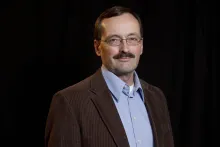
Randy Stiver is pastor of the United Church of God congregation in Rapid City, South Dakota.
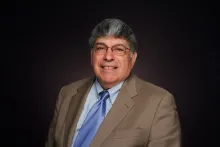
Gary Antion is a long-time minister, having served as a pastor in both the United States and Canada. He is also a certified counselor. Before his retirement in 2015, he was an instructor at Ambassador Bible College, where he had most recently also served as Coordinator.

